Other Mommy (2026)
Your mommy won’t save you.
There’s a monster in the closet, a sinister double lurking around the house and, judging by the storytelling, a few missing pieces somewhere on the cutting-room floor. Other Mommy arrives with an intriguing premise, a genuinely creepy antagonist and enough visual trickery to deliver some memorable frights. Unfortunately, while this supernatural horror has its moments, it also has a rather unfortunate habit of jumping from one idea to another without giving much of anything time to settle.
Directed by Rob Savage, whose previous horror efforts include Host (2020) and The Boogeyman (2023), Other Mommy is adapted by screenwriter Nathan Elston from Josh Malerman’s 2024 novel Incidents Around the House. Produced by horror heavyweight James Wan, the film certainly has some promising talent behind it. And with Jessica Chastain taking on dual roles as both a mother and her terrifying supernatural counterpart, there’s plenty of potential for something deliciously unsettling.
The story centers on eight-year-old Bela (Arabella Olivia Clark), a young girl whose seemingly ordinary home life is already showing signs of trouble. Her mother, Ursula (Jessica Chastain), is frequently occupied with work, while her father, affectionately known as Daddo (Jay Duplass), provides a more constant presence. Beneath the surface, however, their marriage is far from perfect. Needless to say, those domestic problems are about to become the least of the family’s worries when Bela encounters a mysterious presence emerging from her closet. Calling itself Other Mommy, the entity assumes an increasingly disturbing resemblance to Ursula, offering affection and reassurance while repeatedly asking the little girl for permission to enter her heart.
Naturally, nothing good ever comes from a creepy stranger making requests from inside a bedroom closet.
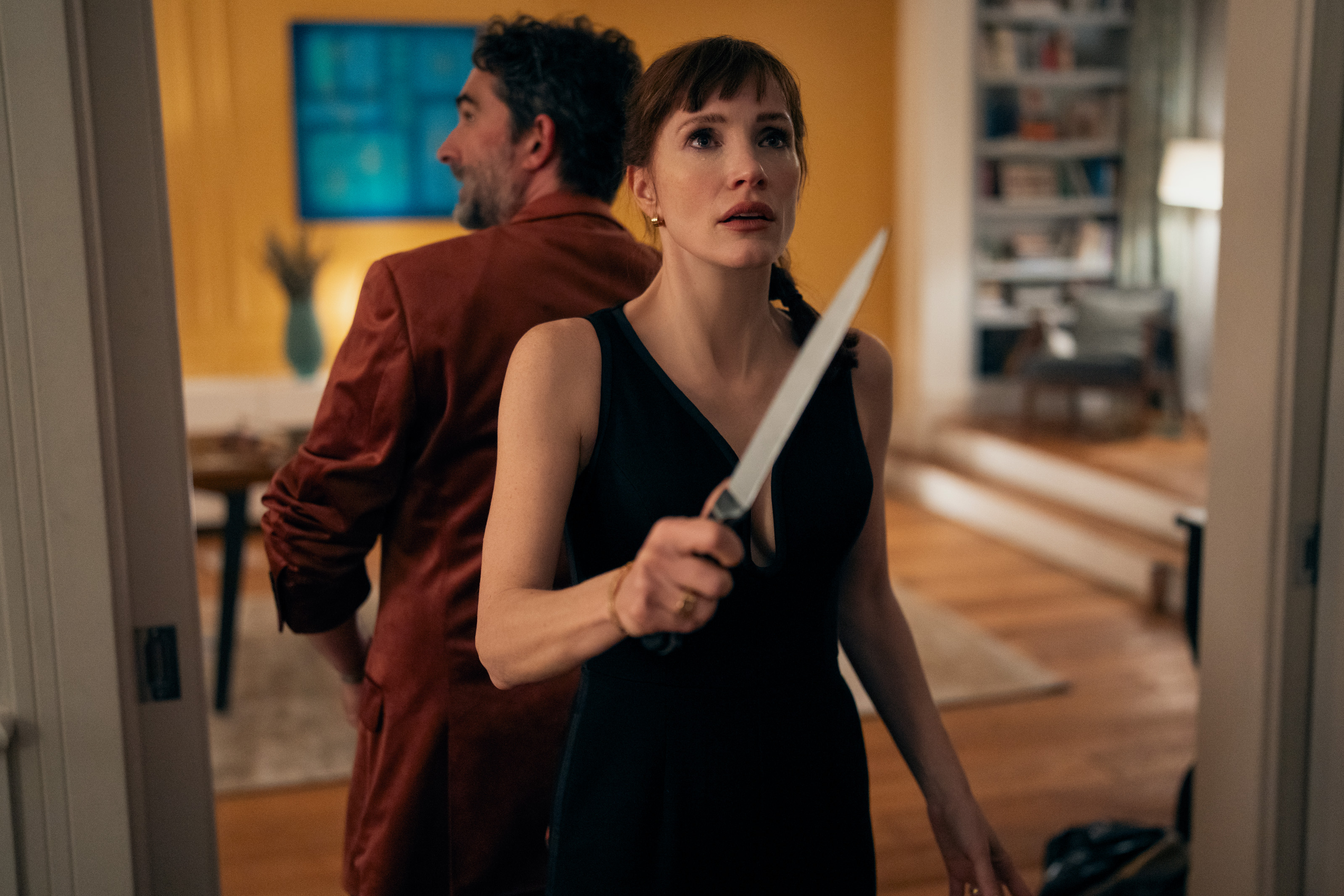
To its credit, Other Mommy occasionally delivers precisely the sort of imaginative horror its premise promises. Savage demonstrates a flair for staging elaborate supernatural encounters, with several sequences making striking use of distorted anatomy, unnatural movements and the unsettling spectacle of something familiar behaving in ways it absolutely shouldn’t. An early encounter involving the creature contorting itself beneath a kitchen table — a moment prominently featured in the marketing — is particularly effective. A wedding anniversary celebration also takes a nightmarish turn during a wonderfully surreal sequence involving the ceiling and a collection of balloons. It’s an imaginative piece of supernatural spectacle that turns an otherwise happy occasion into something decidedly sinister.
A later play-center sequence offers another opportunity for some wonderfully chaotic visual mayhem, demonstrating Savage’s enthusiasm for transforming seemingly innocent environments into elaborate nightmares. There’s even a particularly gnarly kill that delivers a welcome dose of gruesome shock value, proving that Other Mommy is capable of considerably worse than simply lurking inside a wardrobe. Throw in several well-executed jump scares that manage to catch audiences off guard, and it becomes clear that Savage still knows how to deliver a decent fright when the moment calls for it.
The entity itself is arguably the film’s greatest asset. Its ability to imitate familiar faces, twist its body into monstrous shapes and distort the world around its victims gives Other Mommy a distinct visual personality. There is something wonderfully unpleasant about its exaggerated expressions and unnaturally affectionate behavior, particularly when the creature attempts to convince Bela that it offers a better alternative to her actual family. However, the filmmakers also appear increasingly determined to make everything bigger, louder and more elaborate. Computer-generated imagery becomes a little too dominant, occasionally stripping away the discomfort that comes from simply allowing an unnatural figure to occupy an otherwise ordinary space. Sometimes, a disturbing smile in a darkened room can accomplish far more than an entire digital effects department.
The film’s most persistent problem lies with its storytelling. Elston’s screenplay introduces several potentially interesting ideas but struggles to connect them into a satisfying narrative. Characters arrive, important revelations are dropped into conversations, and entire developments seem to be hurried along before their dramatic significance has properly registered. The result is an oddly fragmented experience, almost as though crucial connecting material has been misplaced somewhere between scenes.
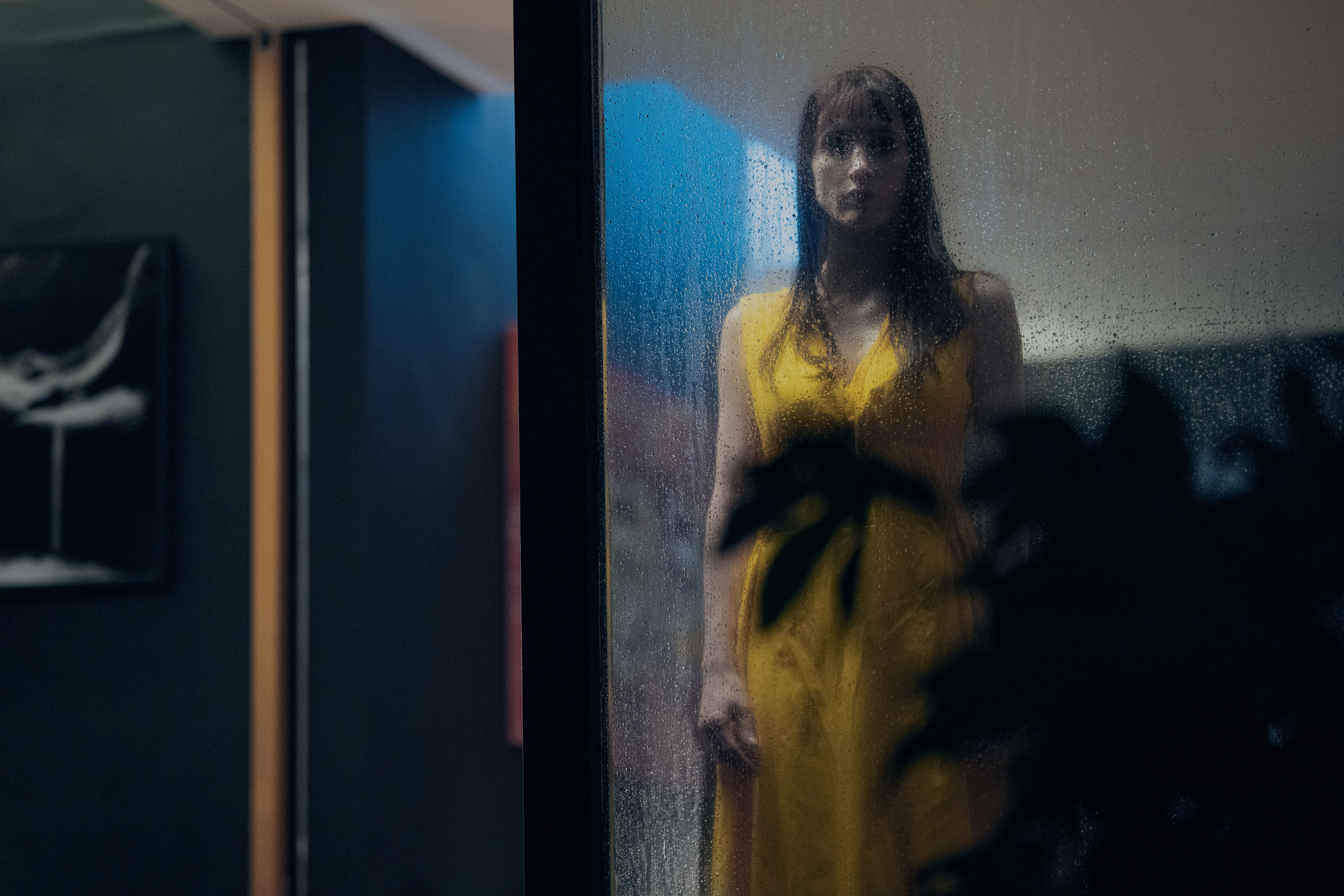
Take the subplot involving Ursula’s relationship with Uncle Frank (Arian Moayed), for example. What should be a meaningful source of tension within an already fractured family instead feels strangely underdeveloped. The affair is largely presented through revelations rather than any substantial exploration of the relationship itself, leaving its dramatic consequences feeling more convenient than convincing. Frank’s involvement suggests the possibility of a much more complicated character dynamic, but the film moves through it with remarkably little patience.
Then there is the introduction of a paranormal investigation and séance, involving a character named Lois played by Dichen Lachman. It initially appears that the story is heading towards an intriguing new direction, only for the sequence to become another supernatural diversion that contributes surprisingly little to the overall progression. Even Karen Allen’s appearance as Bela’s grandmother hints at family history and emotional complications that never receive quite enough attention. These aren’t necessarily bad ideas. There are simply too many of them competing for space in a film that rarely seems interested in exploring any particular thread for very long.
At just 93 minutes, Other Mommy is hardly a lengthy affair, yet its brisk running time becomes something of a double-edged sword. Rather than creating a tightly constructed horror experience, the relentless pacing makes the narrative feel unusually compressed. One dramatic moment has barely concluded before another arrives, frequently without the connective tissue needed to make the transition feel natural.
That impression is only strengthened by the promotional material, with certain moments featured in the trailers seemingly absent from the finished film, most notably a bathtub sequence. While trailers frequently contain alternative footage or material that doesn’t survive the final edit, its absence here is particularly noticeable given how disjointed the finished narrative can feel. Whether substantial material was actually removed remains unclear, but there is certainly a lingering sense that Other Mommy might have benefited from additional time to develop its characters and supernatural mythology.
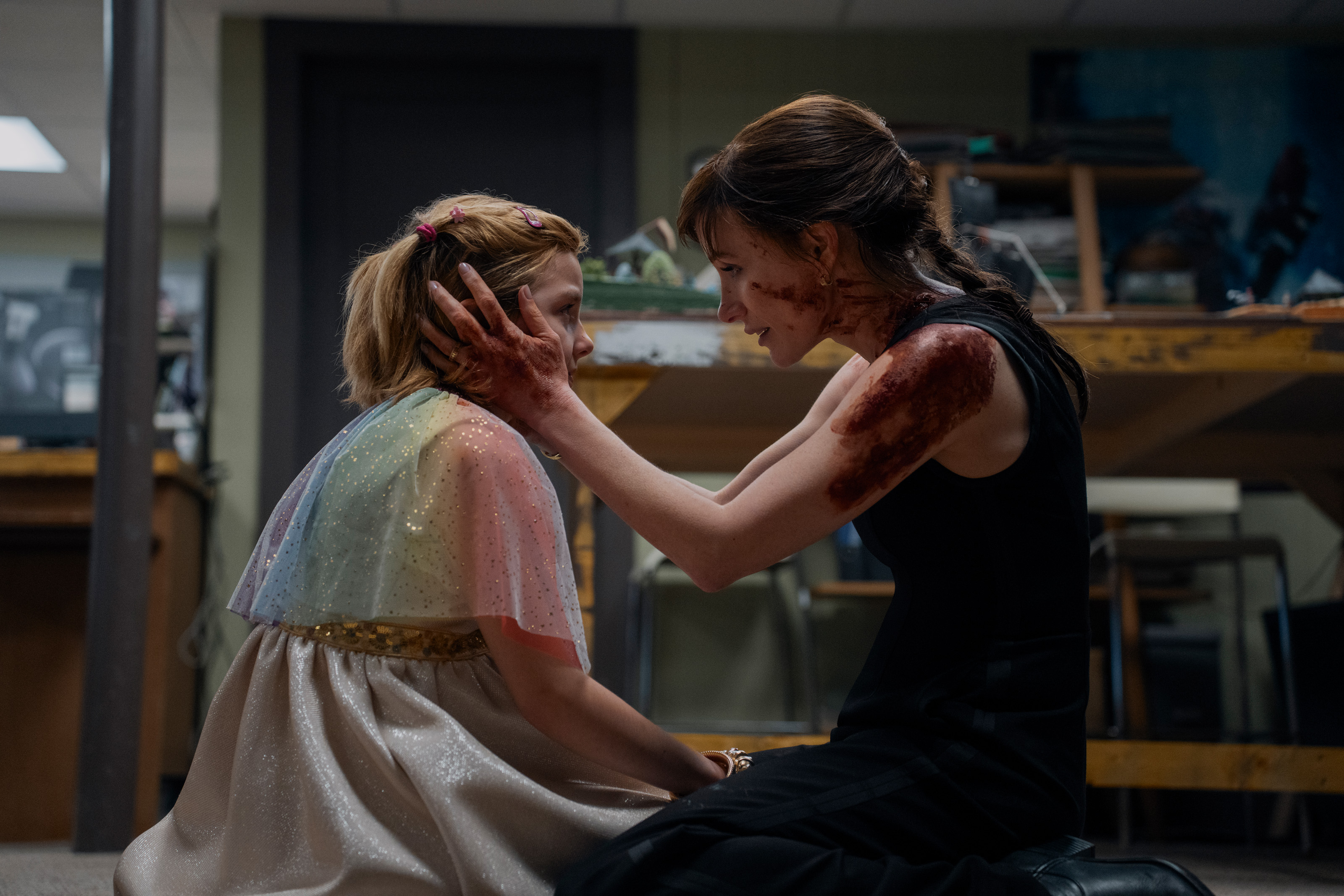
Performance-wise, the cast does respectable work with the material provided. Chastain is suitably convincing as both the troubled Ursula and her increasingly grotesque counterpart, embracing the physical demands of the creature without completely abandoning the unsettling humanity beneath its appearance. Clark handles the movie’s considerable emotional and physical requirements reasonably well, while Duplass provides a grounded presence amid the escalating madness. The supporting players also acquit themselves adequately, although several are left stranded by the screenplay’s tendency to treat character development as something best squeezed between the next two scares.
Perhaps the biggest disappointment, however, comes during the final act. Throughout the story, Other Mommy is established as an extraordinarily powerful and virtually unstoppable presence, capable of altering its appearance, contorting its body and manipulating entire environments. Yet its abilities have few discernible limits, with each new supernatural spectacle introducing another convenient trick. By the time the film arrives at its resolution, the rules have become so loosely defined that the climax feels insufficiently explained. There is a clear emotional intention behind the conclusion, linking Bela’s resistance to her acceptance of her family’s imperfections and the pain they have caused. Yet the connection between that breakthrough and the entity’s sudden weakness is hardly convincing. For something capable of bending reality with such ease, its apparent defeat feels surprisingly straightforward and rather underwhelming.
Still, Other Mommy isn’t without its charms. There’s enough creativity in its central monster, energy in Savage’s direction and genuine effectiveness in several of its horror sequences to prevent the experience from becoming a complete misfire. Its more ambitious moments are often entertaining, even when the surrounding storyline struggles to hold everything together.
All things considered, Other Mommy is a reasonably diverting supernatural chiller with a wonderfully grotesque antagonist and a handful of memorable scares, undermined by hurried storytelling, excessive digital spectacle and a conclusion that raises more questions than it answers. The ingredients for something considerably more frightening are certainly present. Somewhere between the family secrets, paranormal detours and increasingly frantic set pieces, however, the filmmakers seem to have misplaced the recipe. Perhaps somebody should check Bela’s closet.
Two mommies, plenty of scares, but a story that could have used a little more nurturing.
2.5 / 5 – Alright
Reviewed by Stu Cachia (S-Littner)
Other Mommy is distributed by Universal Pictures Australia

