Sense and Sensibility (2026)
No one knows your heart like a sister.
First published in 1811, Jane Austen’s Sense and Sensibility introduced readers to a world where love, marriage and money were frequently tangled together, and where expressing one’s feelings could be considerably more complicated than having them. The novel has enjoyed numerous screen adaptations over the years, most notably Ang Lee’s acclaimed 1995 version starring Emma Thompson and Kate Winslet, with Thompson winning an Academy Award for her screenplay. More than thirty years later, director Georgia Oakley, Blue Jean (2022), and Australian screenwriter Diana Reid have decided that the Dashwood sisters deserve another opportunity to navigate romantic disappointment, social expectations and the general inconvenience of being a woman in Georgian England.
Following the death of their father, sisters Elinor (Daisy Edgar-Jones), Marianne (Esmé Creed-Miles) and Margaret Dashwood (Bodhi Rae Breathnach), along with their widowed mother (Caitríona Balfe), find themselves displaced from their comfortable family estate when the inheritance passes to their half-brother, John (Tom Brooke). Forced to relocate to a modest cottage in Devonshire, the family must adjust to a considerably less privileged existence. For the two eldest daughters, finding love becomes an increasingly complicated business. The sensible and reserved Elinor quietly harbours feelings for Edward Ferrars (George MacKay), the shy, kind-hearted brother of her rather unpleasant sister-in-law Fanny (Stacy Martin). Meanwhile, the passionate Marianne becomes captivated by the charming John Willoughby (Frank Dillane), seemingly oblivious to the affections of the more mature Colonel Brandon (Herbert Nordrum). With limited financial security and marriage representing one of the few opportunities for a stable future, both sisters must discover whether following their hearts is worth the potential consequences.
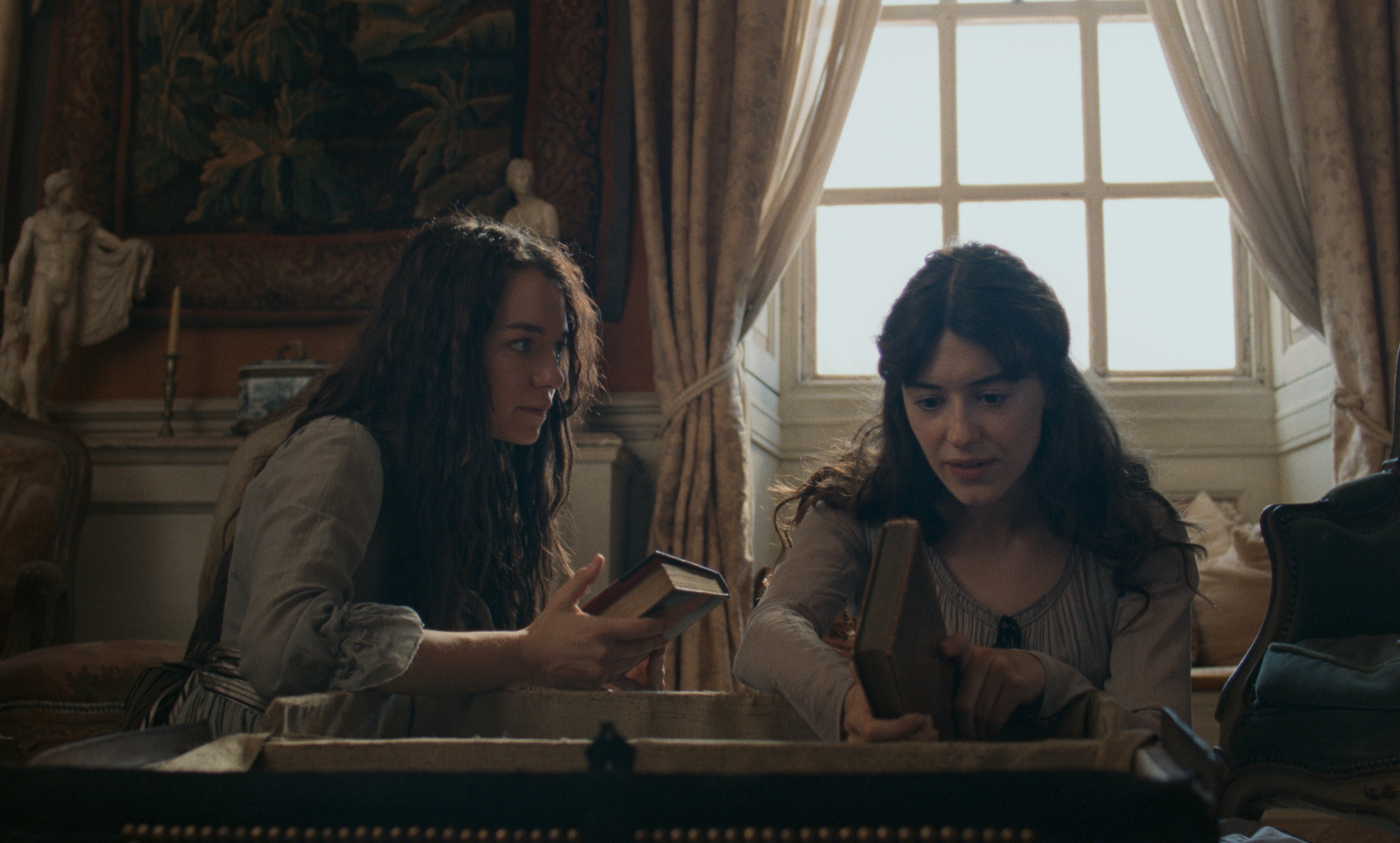
There is always a degree of risk involved in revisiting a literary classic, particularly one that has already received such an accomplished adaptation. Fortunately, Oakley delivers a handsome, thoughtful and thoroughly enjoyable interpretation that understands the appeal of Austen’s writing without feeling obligated to reproduce everything that made the ’95 version successful. It may not possess quite the same sparkling wit or emotional impact as its predecessor, but there’s a sincerity to this retelling that gives it a personality of its own. Rather than attempting to reinvent the material, Oakley concentrates on the characters and their relationships, particularly the contrasting personalities of the Dashwood sisters. The result is a good adaptation that feels respectful of its source while remaining accessible to audiences unfamiliar with the novel.
Reid’s screenplay also deserves credit for bringing a contemporary understanding to a story written more than two centuries ago. Although the dialogue lacks some of the sharper humor associated with Austen, the writing successfully captures the frustrations, insecurities and romantic misunderstandings that continue to make these characters relatable. There are occasional stretches where the narrative loses a little momentum, particularly once the action moves into London, but the storytelling remains engaging. More importantly, Oakley resists the temptation to turn everything into a modern romantic comedy dressed in period clothing. The characters inhabit their historical surroundings, and their behavior is informed by the restrictions of the society in which they live.
Visually, Sense and Sensibility is an attractive production, although its beauty comes from a somewhat different approach to the usual polished period drama. Costume designer Grace Snell favors natural fabrics, understated colors and clothing that looks as though it has actually been worn rather than freshly removed from the costume department. There is a practical, lived-in quality to the Dashwoods’ wardrobe that reflects their changing financial circumstances, while the more elaborate clothing worn by wealthier characters provides an effective contrast. Francesca Di Mottola’s production design is equally impressive, with carefully detailed interiors and locations that establish the differences between social classes without making everything look unnecessarily extravagant.

Arnaud Potier’s cinematography makes particularly effective use of the English countryside, with rolling hills, rugged coastlines and atmospheric natural lighting contributing to the picture’s romantic character. The imagery has a rich, natural texture, while the occasionally gloomy weather and windswept landscapes complement the emotional uncertainties facing the characters. This is a world where romance is rarely straightforward, although suffering through heartbreak with scenery this beautiful must surely soften the blow.
Beneath the courtship rituals and romantic complications, Sense and Sensibility remains an examination of the relationship between emotional expression and personal responsibility. Elinor believes in maintaining composure and exercising good judgement, often suppressing her own feelings to protect those around her. Marianne, meanwhile, approaches life with almost reckless enthusiasm, allowing her emotions to dictate her decisions regardless of the consequences. Neither philosophy is presented as entirely correct, and the story finds much of its strength in demonstrating how both women have something to learn from one another.
Beyond these contrasting personalities, the story also explores the uncomfortable relationship between marriage and financial security, particularly for women whose independence is severely restricted by the conventions of their time. Love may be desirable, but it’s not always practical, and personal happiness can easily become secondary to wealth, reputation and social standing. These ideas remain surprisingly relevant, even if modern relationships no longer require quite so many formal introductions and awkward drawing-room conversations.

The performances are consistently good, with Daisy Edgar-Jones bringing a gentle intelligence and understated vulnerability to Elinor. Much of her character’s emotional struggle takes place beneath the surface, and Edgar-Jones is particularly effective at conveying feelings that Elinor is either unable or unwilling to express. She gives the character a quiet strength without making her seem cold or emotionally distant, creating a convincing contrast with her more impulsive sister.
However, the standout is Esmé Creed-Miles as Marianne, who brings a wonderful energy and emotional openness to the role. There is something refreshingly uninhibited about her performance, whether Marianne is enthusiastically embracing the possibilities of romance or struggling to comprehend why the world refuses to behave according to her expectations. Creed-Miles makes her passionate, occasionally frustrating and entirely believable, avoiding the temptation to turn her into little more than a lovesick young woman in a pretty dress. Her more vulnerable moments are equally effective, revealing the genuine hurt beneath Marianne’s youthful idealism. It’s a lively and engaging performance that gives the adaptation much of its emotional character.
The supporting cast is equally accomplished. Caitríona Balfe is touching as Mrs. Dashwood, a mother trying to keep her family together after losing both her husband and the comforts of their former life. George MacKay makes Edward Ferrars an appealingly awkward romantic prospect, while Frank Dillane gives Willoughby enough charm to explain why Marianne falls for him so completely, even if his behavior eventually raises a few eyebrows. Herbert Nordrum brings a quiet, slightly melancholy quality to Colonel Brandon, a man whose feelings run considerably deeper than his reserved manner suggests. Fiona Shaw, meanwhile, is a delight as the outspoken Mrs. Jennings, a well-meaning family acquaintance who helps the Dashwoods settle into their new home while taking an apparently limitless interest in other people’s romantic affairs. Subtlety, it seems, is not one of her preferred social accomplishments.

Ultimately, Sense and Sensibility isn’t about to knock Ang Lee’s beloved 1995 adaptation off its pedestal, but that doesn’t make this latest version any less worthwhile. With an excellent cast, plenty of visual charm and two sisters whose romantic misfortunes are easy to become invested in, there’s more than enough here to keep Austen enthusiasts satisfied. Those with little interest in period romances, restrained emotions and people taking an extraordinarily long time to declare their affections are unlikely to find themselves converted. However, for audiences who enjoy this particular style of storytelling, there’s plenty to appreciate. It may not sweep everyone off their feet, but Sense and Sensibility is a perfectly agreeable romantic affair. If longing glances, complicated courtships and a little Georgian heartbreak are your cup of tea, then it makes perfect sense to indulge your sensibility.
3 / 5 – Good
Reviewed by Dan Cachia (Mr. Movie)
Sense and Sensibility is distributed by Universal Pictures Australia

