Digger (2026)
A man. A plan. A meltdown.
Digger is likely to be one of the most divisive movies of the year, though it is difficult to imagine the majority of audiences embracing it. Alejandro G. Iñárritu’s latest is part black comedy, part climate-change satire, part disaster story and part metafictional experiment, with Tom Cruise buried under prosthetics as Digger Rockwell, an obscenely wealthy Texas oil tycoon whose drilling operation helps trigger a catastrophic ecological event. On paper, that sounds like two hours of Cruise going full Les Grossman while trying to save the world from a calamity he helped create. Sold.
Cruise as an ageing, vulgar billionaire, stomping around in prosthetics whilst trying to undo the mess he’d made? I’d watch that. Few releases this year came with more excitement attached. None have delivered a bigger disappointment. Because the marketing lied. Or, to put it more politely, it sold something very different from what Digger actually is.
Rather than the wild, entertaining disaster comedy suggested by the trailers, Iñárritu delivers a mean-spirited lecture dressed up as satire, with remarkably little beneath the surface beyond grotesque characters screaming at one another — and, eventually, at us. He seems convinced he is making the climate-change generation’s Dr. Strangelove, but filmmaker Stanley Kubrick used absurdity like a scalpel; Digger uses it like a shovel to the face. The bigger problem is that, for something positioning itself as a black comedy, Digger simply isn’t very funny. There is a difference between challenging an audience and treating one with contempt, and Digger spends 129 minutes confusing the two. Talk about striking oil and finding sewage.

Plot details will be kept brief to avoid spoilers. Digger Rockwell (Tom Cruise) is one of the most powerful men on Earth, an oil magnate living in grotesque luxury while doting on his ailing white cat, Maggie, and largely ignoring everyone around him. When an incident at one of his Greenland drilling operations causes a massive section of ice to break away and threaten Europe with catastrophe, Digger suddenly needs to convince the world that he can fix the very disaster his empire helped unleash. Around him are Ganesh (Riz Ahmed), a scientist advising the administration; the blustering President Compson (John Goodman); and Digger’s half-sister Emma (Sandra Hüller), an outspoken environmentalist who runs her own clean-energy company while remaining firmly connected to the Rockwell fortune.
The screenplay, credited to Iñárritu, Alexander Dinelaris, Nicolás Giacobone and Sabina Berman, clearly believes it has assembled a devastatingly clever attack on climate inaction, fossil-fuel dependence, obscene wealth, political cowardice, artistic complacency and the stories powerful people tell to excuse themselves. There are worthwhile subjects buried somewhere in there. Unfortunately, the script attacks them with all the subtlety of someone smashing a shovel against a dinner table while shouting, “Do you get it?” Yes. We get it. That is part of the problem.
Digger does not explore ideas so much as announce them. It wants to tell us that future generations will condemn the way previous generations lived, that wealthy people have sold the world a comforting story, that governments compromise, that corporations protect themselves and that ordinary people are complicit because modern life runs on systems they continue to use. Fine. Those are ideas worth interrogating. But interrogation requires curiosity. Digger has already decided who is stupid, who is evil and who should feel guilty before the conversation has even started.

The hypocrisy is difficult to ignore too. This is a giant Hollywood production, reportedly costing well over $100 million, using enormous sets, international talent, elaborate prosthetics, specialized equipment and all the other machinery required to mount a major studio release — all to wag a finger at the audience about consumption and the comfort of modern life. The problem is not acknowledging the environmental cost of fossil fuels. The problem is the smugness of scolding ordinary people for participating in the world they were born into while delivering that message through one of the most resource-intensive art forms on the planet. Apparently the “fossil fools” are us. That might have worked if the picture had any warmth, curiosity or self-doubt.
Worse, it looks miserable while doing it. Emmanuel Lubezki is one of the stronger cinematographers out there, which makes the visual ugliness here even more baffling. Huge stretches are drained into dirty greys, sickly creams and nicotine yellows. The world is supposed to feel poisoned and artificial, sure, but knowing why something looks ugly does not magically make it pleasant to stare at. At times, Digger looks as though someone pissed on the negative and called it color grading.
Even Maggie, Digger’s animatronic white cat, loses some of her charm. At first, the wonderfully strange practical creation feels like a perfect fit for the movie’s warped world. But once Digger reveals its larger meta intentions, Maggie becomes just another part of the trick, stripping away some of what made her so aesthetically pleasing to begin with. The meta element is meant to deepen everything. Instead, it frequently gives the film an excuse for its own shortcomings. Characters are caricatures? That’s intentional. The dialogue sounds like bad theatre? Also, intentional. The world looks fake? Intentional, too. Everyone is screaming? Yep, intentional. Not entertaining.
There are interesting ideas hidden inside the self-awareness: whether art about catastrophe can actually change anyone; whether political satire merely flatters people who already agree with it; whether performers can humanize terrible people without accidentally making them appealing; whether audiences use stories to feel morally cleansed without changing a thing. There is even a potentially fascinating thread about performance itself and how stories become inherited myths. But Digger keeps burying those ideas beneath noise. A subplot involving the man behind Digger and his missing daughter is another example. It’s clearly there to try and inject humanity into all the shouting and create a contrast between a global catastrophe and one painfully personal consequence. Instead, it feels bolted onto an already overstuffed narrative and adds more running time to a film desperately in need of a shovel-wielding editor.
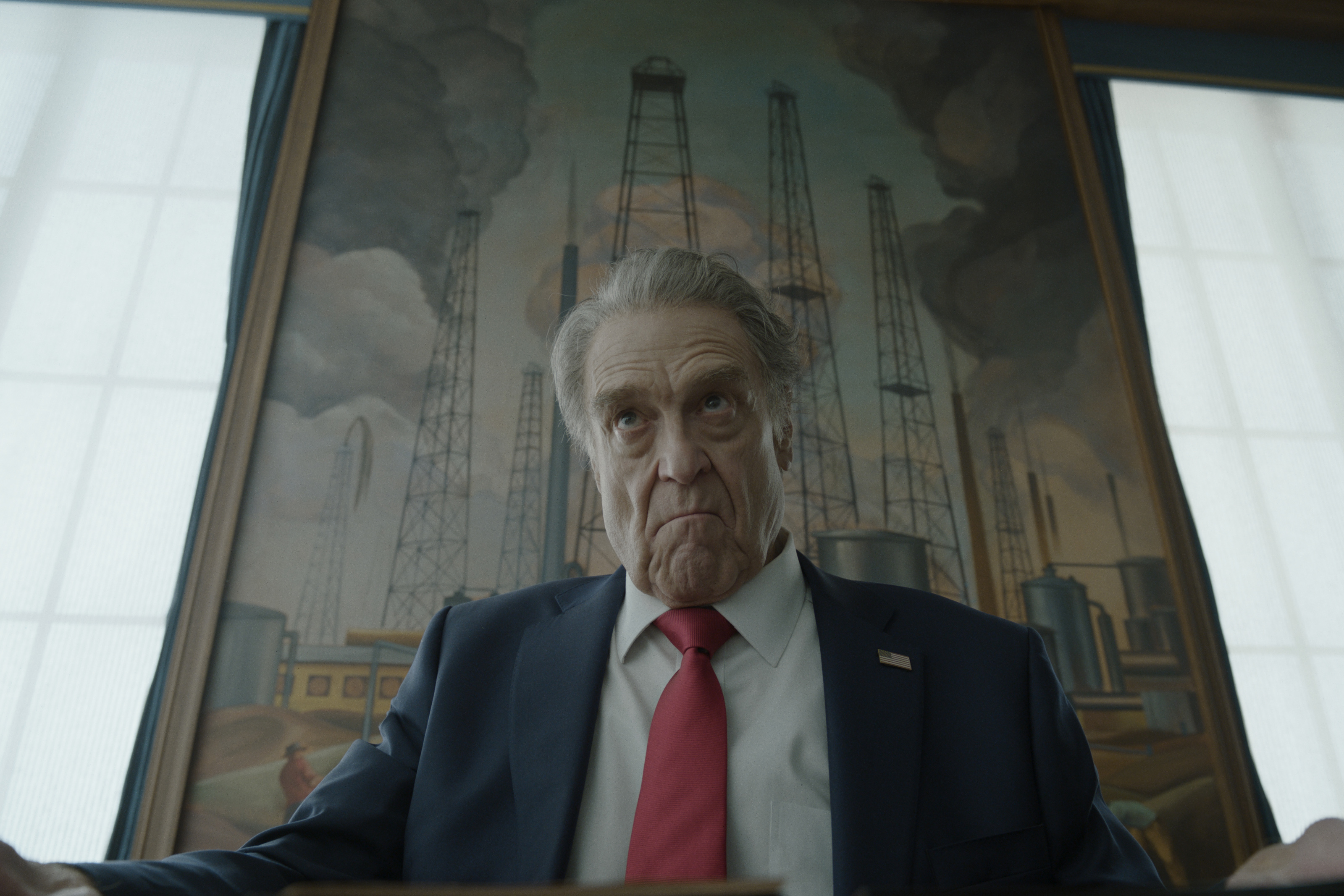
The only genuinely great thing about Digger is Tom Cruise. Cruise is excellent. Buried beneath heavy prosthetics, thinning hair and an exaggerated Texan drawl, one of the most recognizable movie stars on the planet almost disappears into Digger Rockwell. It is exactly the kind of strange, committed character work Cruise has rarely had the chance to explore during a decade spent hanging from airplanes, jumping motorcycles off cliffs and sprinting away from explosions. He throws himself completely into Rockwell’s arrogance, vulgarity and occasional flashes of humanity. There is even a monologue scene midway through the film where Cruise absolutely commands the screen. It’s the kind of showpiece that could easily put him in awards conversations — which, given everything Digger has to say about self-importance, prestige and hypocrisy, would be rather amusing in itself. It’s just such a shame that one of Cruise’s most interesting performances in years is trapped inside something this insufferable.
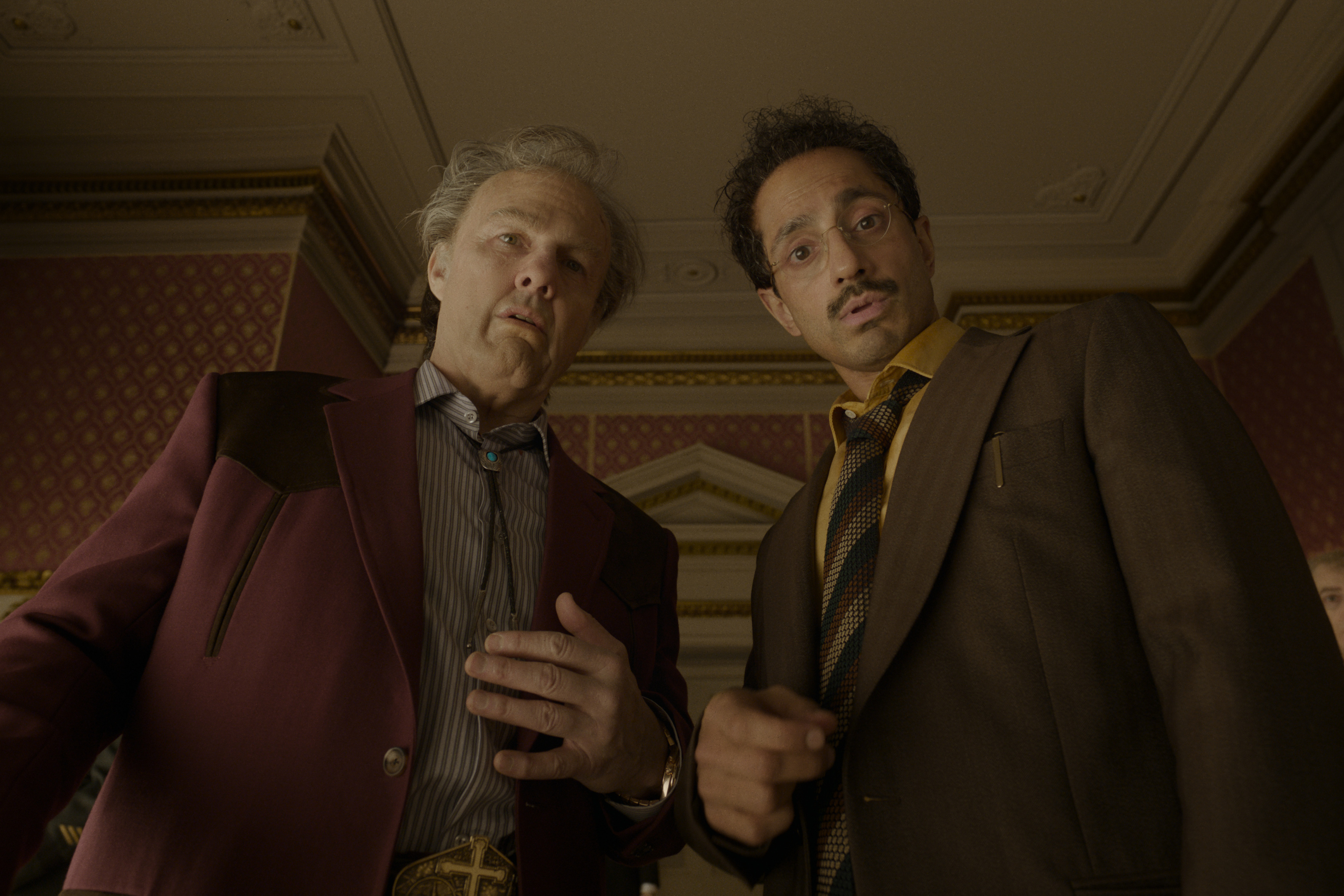
Riz Ahmed is also good as Ganesh, a concerned scientist caught in the middle of the increasingly absurd political response to the crisis. Ahmed finds little pockets of humanity and nervous humor that the rest of the movie badly needs. John Goodman is fine as President Compson, but the character is such a detestable caricature that there is almost nothing left to play beyond volume, bodily functions and ugliness. The point is obvious within seconds and then gets hammered for the rest of the running time. Sandra Hüller, meanwhile, is wasted as Emma Rockwell, Digger’s half-sister, who has built her public identity around environmental advocacy and renewable energy. That should make her one of the movie’s more interesting contradictions, but Digger gives Hüller very little to work with. An actress this good should not feel like expensive furniture.
Jesse Plemons turns up as Kenny, an important figure once the story begins pulling itself apart, but the character is awful — less a human being than another smug device designed to explain why the smugness is apparently clever. Michael Stuhlbarg fares even worse as the Vice President, while Robert John Burke’s militaristic government figure is another screaming, overcooked caricature. Both are talented performers asked to play cartoons in a movie already drowning in them. There is no oxygen in the room because everyone is trying to be the loudest person in it.
Thousands of movies have passed through these eyes over the years, from masterpieces to zero-budget garbage, bargain-bin horror, forgotten sequels and things that probably should never have escaped a hard drive. Never has walking out felt like a serious option. Until Digger. Perhaps the most irritating thing is that Digger seems convinced discomfort automatically equals profundity. If the audience is annoyed, maybe that means the satire worked. If the audience feels insulted, perhaps that means it struck a nerve.
After spending more than two hours pounding viewers with guilt about the comforts, compromises and contradictions of modern life, Iñárritu had better be prepared to take his own sermon literally. If the message is that ordinary people should feel ashamed for living within the systems that make contemporary life possible, then taking that message onto the awards circuit while enjoying the comforts of prestige moviemaking starts to look rather awkward. Go live in a cave. Light the place with a candle. Eat berries. Otherwise, the lecture starts to look less like moral courage and more like very expensive guilt being outsourced to the paying audience. That is the part that leaves the nastiest aftertaste. Not the climate-change argument. Not the criticism of wealth. Not even the deliberately abrasive style. The contempt.
Digger does not invite the audience into a conversation. It shouts at them, mocks them, explains the joke, explains why explaining the joke is part of the joke, then waits for applause because the whole thing is supposedly self-aware. There may be people who adore that. Good luck to them. For everyone else, bring a shovel. Digger spends more than two hours digging its own grave. Do everyone a favor. Bury it.
1.5 / 5 – Poor
Reviewed by Dan Cachia (Mr. Movie)
Digger is distributed by Warner Bros. Australia


🔥
What a stupid review, what did you want? Let the message of the film be subtle so that you think you are intelligent and say “WOW!, Catch a message that the vast majority don’t! I am very intelligent! I am superior!” It seems to be, and without offending, that you did not understand the film, more also, the film is not a criticism of consumerism, (this was just a dialogue of Digger in the stage play, so you took it very seriously) or the oil industry, Could have been easily from any other industry, It is a film about human nature, especially between distinguishing the perception of reality (By God, there is a whole dialogue talking about perception vs reality in the film),
(spoilers) That’s why Digger tries to control the narrative, but fails, 25 years later, the survivors are telling the facts, but not the real story, The characters are exaggerated because it is a play, they are making fun of those imcompetent people who destroyed the world, In the same film they explain that Digger was not a clown at all, he was not a one-dimensional supervillain, It is simply that they are telling an exaggerated version, with the facts, but not with the story as such (How Digger says in the trailer), Honestly, this movie can only offend certain people from a certain political party, and those people who simply didn’t understand anything about the movie.
Do you complain about the cartoon characters? Surprise friend, it’s a STAGE PLAY, In order to ridicule the characters that triggered the disaster, narratively it is justified that the characters are cartoonish or absurd, Once everything about the stage play ends, everything becomes serious, even Curtis’ talk with the producer.
And still, do you complain that political characters act like this? Knowing who is the president of USA currently?