Ramayana: Rise of a Legend (2026)
Our Truth, Our History
Few stories carry quite the cultural significance of the Ramayana, an ancient Hindu epic traditionally attributed to the Sanskrit poet Valmiki, whose tale of gods, kings, demons and extraordinary acts of heroism has been passed down through generations for thousands of years. Deeply embedded in India’s religious traditions, literature and popular culture, the story has inspired countless adaptations, although bringing its enormous mythology to the big screen presents a challenge of almost unimaginable proportions. Enter director Nitesh Tiwari, best known for Dangal (2016), and producer Namit Malhotra, who have assembled an extraordinary collection of talent and considerable resources to present the legend across two epic films. The first, Ramayana: Rise of a Legend, is an ambitious fantasy adventure that introduces one of India’s most celebrated stories to a worldwide audience. Despite its enormous cultural importance, I went into this one largely unfamiliar with the mythology and its characters. By the time the credits rolled, however, I was wondering why it had taken me so long to discover them.
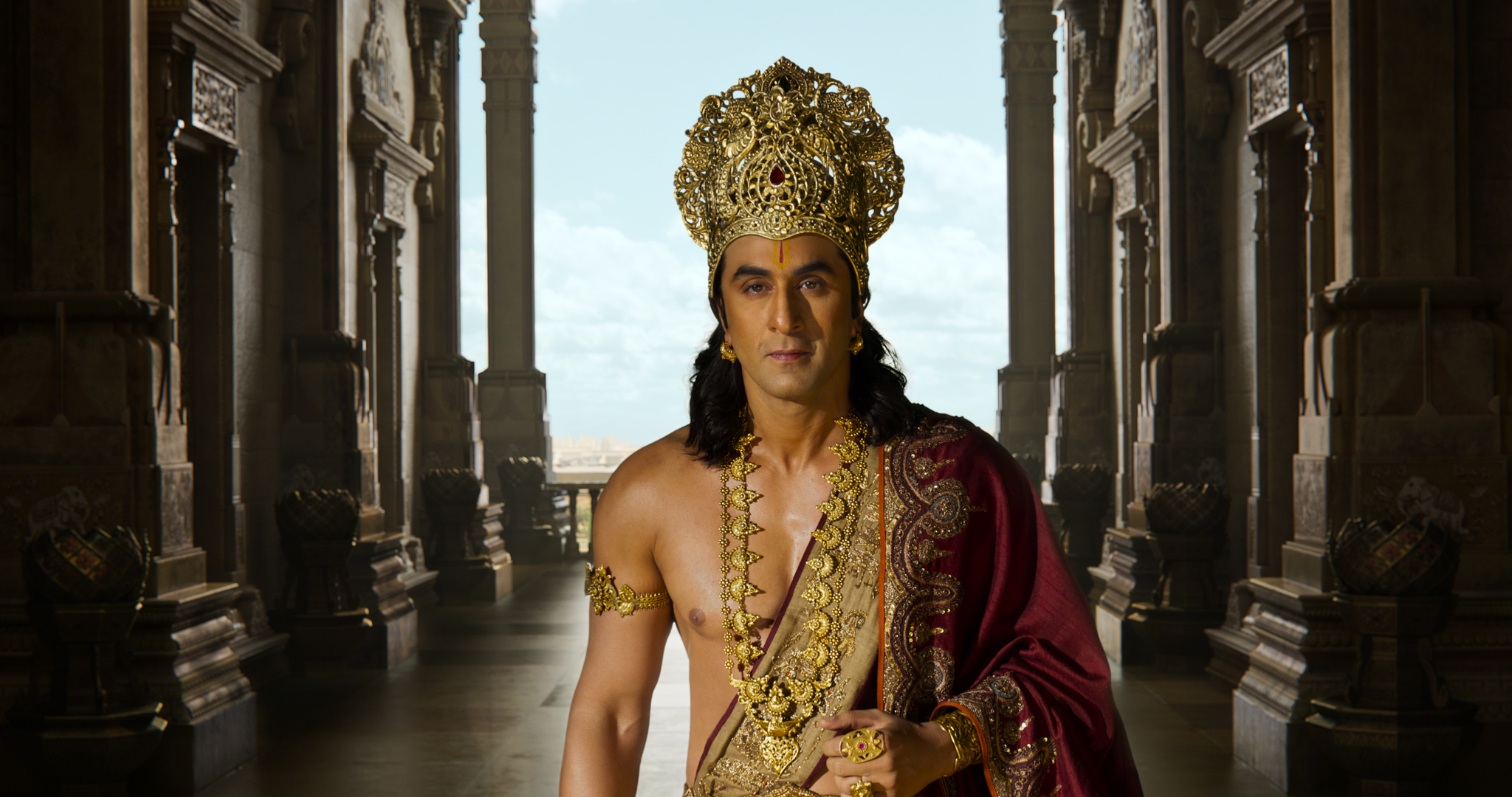
The story begins with the rise of Ravana (Yash), the immensely powerful king of Lanka, whose devotion to the god Shiva and extraordinary acts of penance earn him a divine blessing from Brahma, the Hindu creator god, granting him near invincibility. Consumed by pride, resentment and an increasingly dangerous appetite for power, Ravana threatens the established order of the heavens, prompting the god Vishnu to take human form as Rama (Ranbir Kapoor), a prince born into the royal family of Ayodhya. Raised by King Dasharatha (Arun Govil), Rama develops into a noble warrior whose commitment to righteousness and duty eventually leads him to the kingdom of Mithila, where he wins the hand of Princess Sita (Sai Pallavi).
However, their happiness is threatened when Rama’s stepmother Kaikeyi (Lara Dutta) persuades Dasharatha to honor an old promise, securing the throne for her own son Bharata (Adinath Kothare) and sending Rama into fourteen years of exile. Accompanied by Sita and his loyal younger brother Lakshman (Ravie Dubey), Rama retreats into the wilderness, where an encounter with Ravana’s sister Shurpanakha (Rakul Preet Singh) sets in motion a dangerous chain of events that will eventually bring the prince into conflict with the seemingly unstoppable demon king.
For more than two decades, Hollywood has been desperately searching for a worthy successor to The Lord of the Rings. Following the enormous critical and commercial success of Peter Jackson’s celebrated trilogy, studios attempted to launch similarly ambitious fantasy franchises, with productions such as Eragon (2006) and The Golden Compass (2007) promising expansive new worlds before their planned cinematic adventures came to premature ends. Others have certainly delivered impressive spectacle, but few have captured that wonderful combination of mythology, adventure, emotional investment and genuine cinematic grandeur that made Jackson’s saga so extraordinary.
Remarkably, the closest thing I’ve seen to The Lord of the Rings in terms of scope, scale, storytelling and mythology since The Return of the King (2003) has now arrived from India. Ramayana is enormous. There are gods, demons, giants, supernatural powers and vast armies engaged in battles that threaten the balance of entire worlds. It’s the kind of huge, unapologetically old-fashioned fantasy that Hollywood has been chasing for years. I experienced the full three-hour-and-thirteen-minute Hindi-language version with English subtitles, which I’d strongly recommend over a dubbed alternative. There’s something particularly rewarding about watching a movie in its original language, preserving the authenticity of the performances and the cultural identity of the storytelling.
Fortunately, all that spectacle would mean very little without a compelling story, and the screenplay by Shridhar Raghavan and Tiwari does an excellent job of introducing an exceptionally complicated mythology without overwhelming newcomers. Characters, relationships and the various rules governing this world are established with clarity, allowing audiences unfamiliar with the source material to appreciate its intricacies while providing those already acquainted with the legend an opportunity to enjoy its lavish cinematic interpretation. The opening is particularly captivating, plunging us into the celestial conflict surrounding Ravana’s rise to power and establishing the colossal scale of this thing. It’s a terrific introduction that immediately demonstrates the sheer ambition of the production.
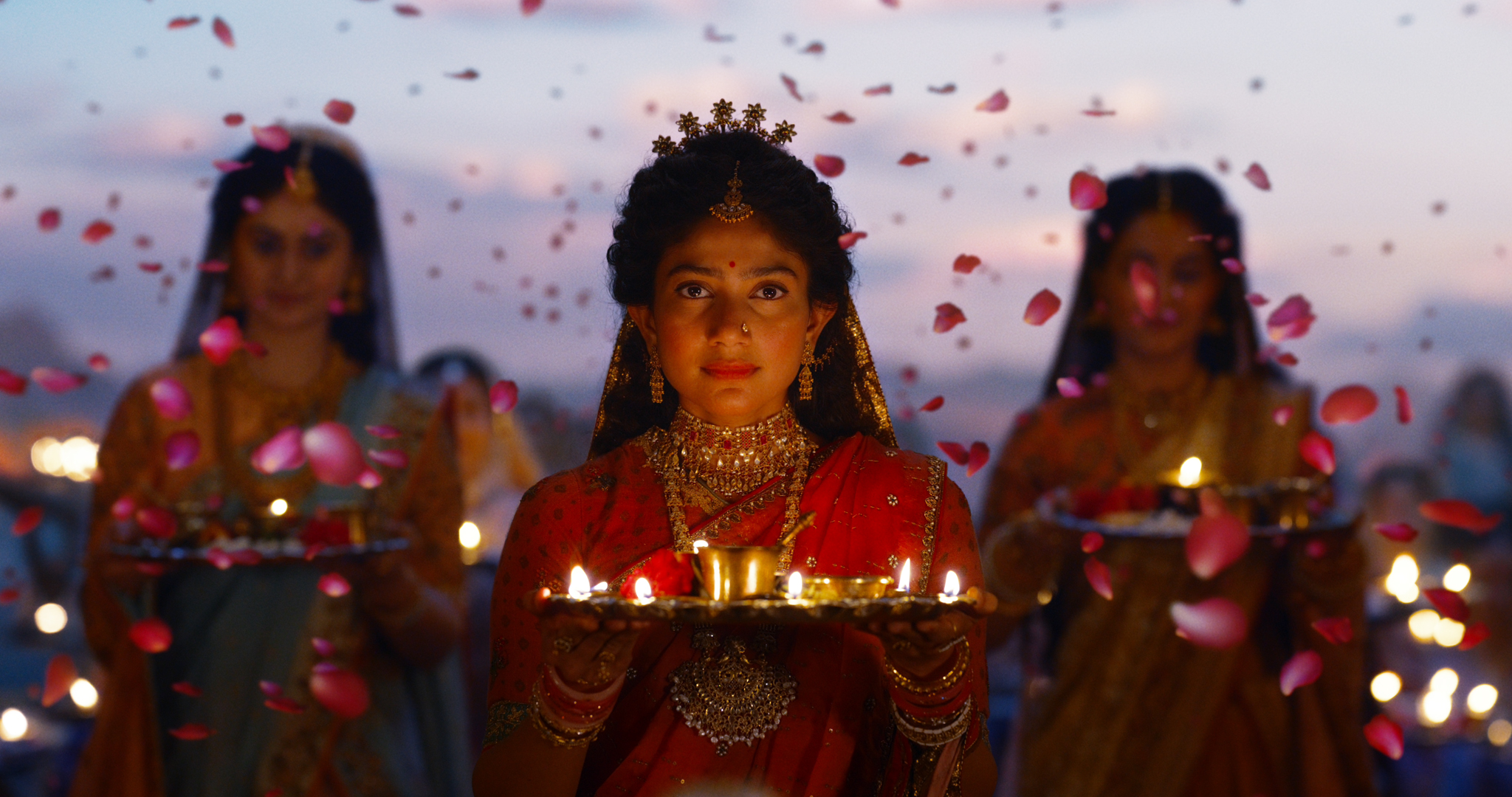
Admittedly, the narrative slows somewhat as the focus shifts to Rama’s upbringing, his relationship with Sita and the circumstances surrounding their marriage. These sequences are important in establishing the emotional foundation of the story, but lack some of the tremendous energy of the opening. Nevertheless, Tiwari maintains a generally impressive pace, allowing the characters sufficient breathing room to develop. The drama is sincere and occasionally touching, but rarely becomes overwrought, with the spectacle and quieter human moments complementing one another rather than competing for attention.
Then comes the final third, and Ramayana really lets loose. The action is spectacular, combining elaborate archery, supernatural confrontations and immense armies of demonic warriors. Battles unfold across enormous landscapes, while characters duke it out with a wonderfully theatrical disregard for ordinary human limitations. The standout sequence involves Ravana’s astonishing aerial confrontation with Jatayu (voiced by Anupam Kher), a giant, divine vulture who attempts to rescue Sita from the demon king. Unfolding around the Pushpak Vimana, Ravana’s magnificent, temple-like flying chariot, the exhilarating battle combines impressive choreography, spectacular imagery and genuine dramatic tension as Jatayu desperately attempts to overcome his seemingly invincible opponent. It’s a marvelous piece of fantasy filmmaking, the sort of sequence that deserves to be experienced on the biggest screen available.
Of course, Ramayana remains a heavily effects-driven production, with many of its enormous environments created or extended digitally by DNEG. However, the combination of practical craftsmanship, physical performances and computer-generated imagery frequently produces a far more satisfying aesthetic than the weightless, artificial-looking spectacle that has become increasingly common in contemporary Hollywood blockbusters, particularly within the MCU. Cinematographers Pankaj Kumar and Mahesh Limaye make excellent use of expansive compositions, dramatic lighting and sweeping overhead shots, often framing the characters against enormous architectural structures or seemingly endless landscapes and vast armies. The costumes by Rimple and Harpreet Narula are equally impressive, featuring richly textured fabrics, intricate embroidery and elaborate detailing that add considerably to the film’s visual splendour. Together, these elements create imagery that occasionally recalls the wonderful grandeur of Middle-earth, where the environment feels like an essential part of the storytelling rather than merely somewhere convenient for people to fight.
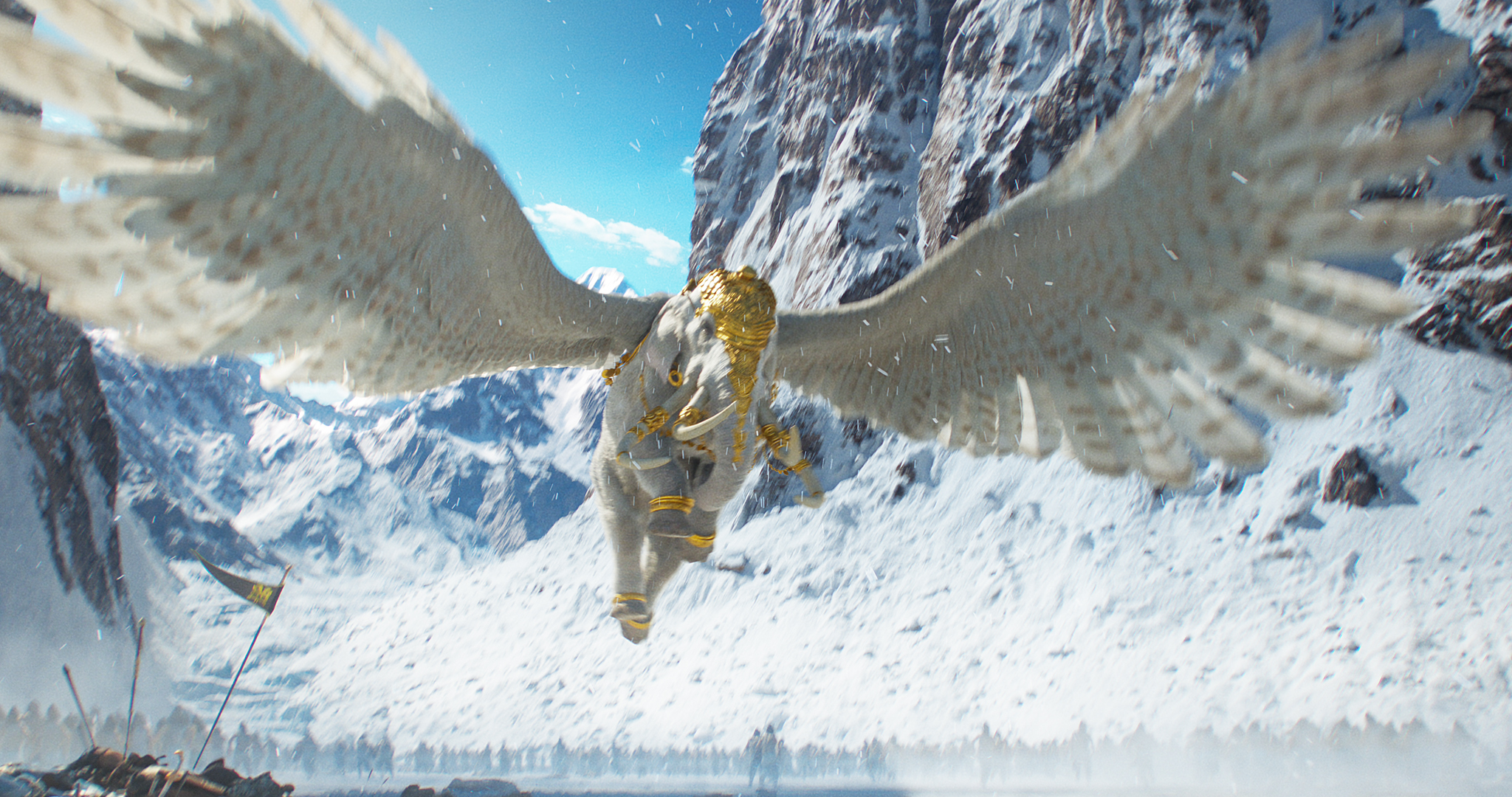
That’s not to say the visual effects are flawless. Some creatures and digital environments look terrific, while others appear considerably less convincing, occasionally revealing the artificiality beneath the spectacle. Yet even Jackson’s Lord of the Rings trilogy contains computer-generated imagery that hasn’t aged particularly gracefully, and those imperfections have hardly diminished its achievements. The same applies here. When the world is this imaginative and the filmmaking this ambitious, a few unconvincing pixels are relatively easy to forgive.
Equally impressive is the musical score by Hans Zimmer and A. R. Rahman, whose collaboration produces one of the most exciting soundtracks of 2026. Their music is rich, thunderous and appropriately dramatic, moving between stirring orchestral passages, traditional Indian musical textures and powerful choral arrangements that lend the larger sequences an almost operatic quality. The score knows precisely when to announce the arrival of something significant, but also possesses enough warmth and restraint to support the quieter exchanges between characters.
Beyond the cinematic grandeur, Ramayana explores the relationship between duty, sacrifice, loyalty and the responsibilities that accompany power. Central to its narrative is the Hindu concept of dharma, broadly understood as righteousness and moral duty, which informs Rama’s determination to honor his father’s wishes even when doing so requires abandoning everything he holds dear. His contrasting relationship with Ravana provides the story with its moral foundation, presenting two immensely powerful figures whose opposing attitudes towards responsibility, pride and personal desire ultimately place them on a collision course. The conflict, however, is not simply about defeating an evil ruler. It also concerns the consequences of ambition, the obligations of family and the importance of maintaining one’s principles when circumstances make doing so extraordinarily difficult.
These ideas help explain why the Ramayana remains so significant within Indian culture, particularly its association with Diwali, the Festival of Lights. In many northern Indian traditions, the celebration commemorates Rama’s eventual return to Ayodhya following his exile and victory over Ravana, symbolizing the triumph of light over darkness and righteousness over evil. The film is therefore adapting something considerably more meaningful than an entertaining fantasy adventure. For countless people, this is a story intrinsically connected to cultural identity, religious devotion and traditions that have endured for generations.
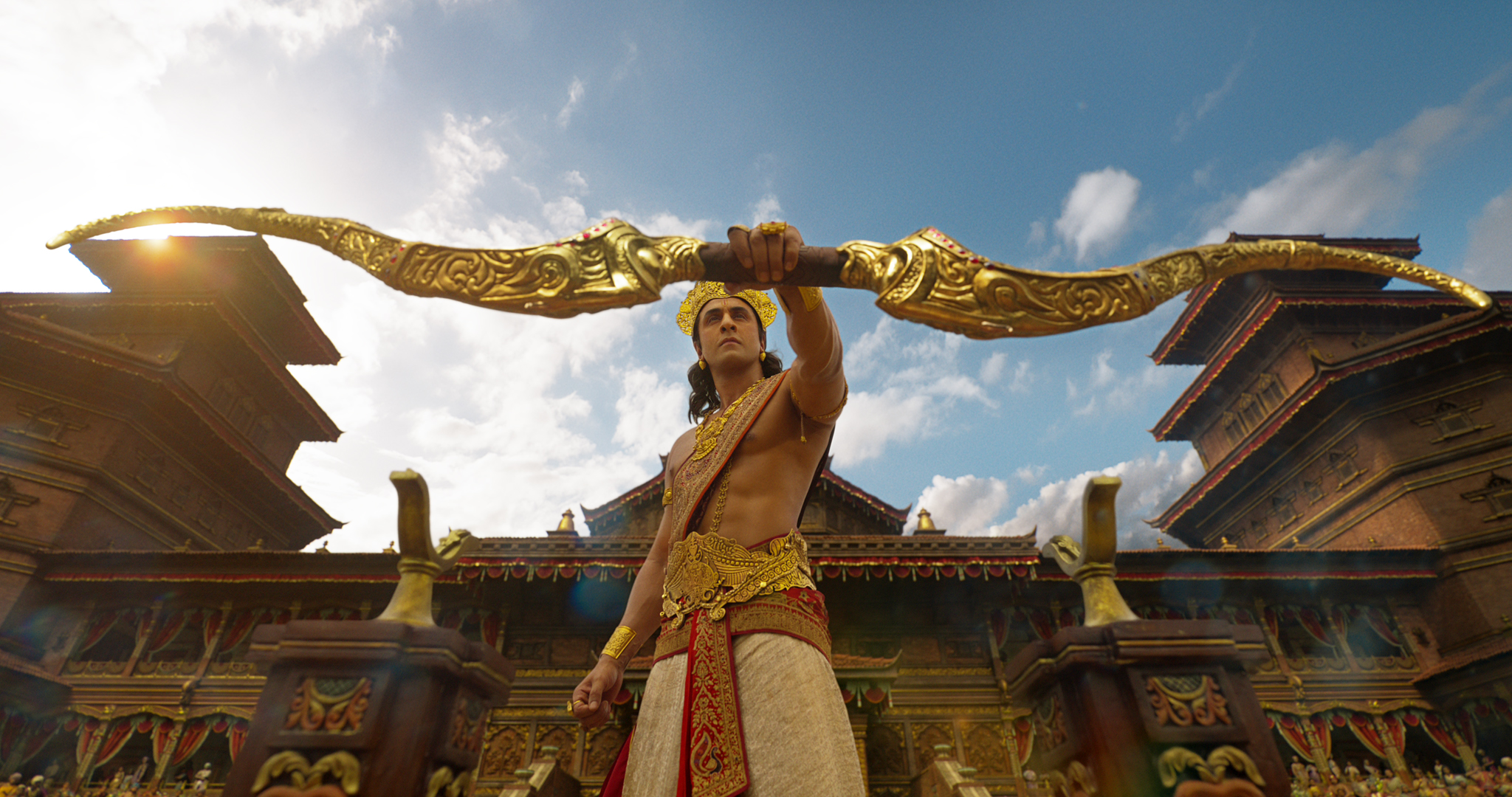
Interestingly, despite my unfamiliarity with the mythology, I was surprised by how many elements reminded me of other ancient stories and familiar Western storytelling traditions. One striking example involves Rama’s attempt to string the enormous bow of Shiva to win Sita’s hand in marriage, a sequence that immediately recalled Homer’s The Odyssey, where Odysseus proves his identity by accomplishing a similarly impossible feat involving his own bow. Having seen Christopher Nolan’s adaptation earlier this year, the resemblance was especially amusing. Elsewhere, Rama’s exile from his kingdom bears certain similarities to Disney’s The Lion King (1994), with both stories following royal princes forced to abandon their homes following conflicts within their families. Although the circumstances are considerably different, both explore themes of duty, responsibility and the struggle to fulfil one’s destiny. These similarities aren’t necessarily evidence of one mythology borrowing from another, but rather demonstrate how certain storytelling traditions, heroic archetypes and moral conflicts appear across remarkably different cultures.
The performances are consistently good, led by Ranbir Kapoor, who takes on the considerable responsibility of portraying Rama and briefly appears as Parashurama, another incarnation of Vishnu. Kapoor brings a dignified, composed presence to the central role, conveying Rama’s compassion, discipline and unwavering commitment to duty without turning him into an excessively solemn figure. Admittedly, his restrained approach occasionally leaves the character feeling a little flat, particularly when compared with the more expressive personalities surrounding him. Still, he remains an appealing protagonist, and his physical performance during the action sequences is equally convincing. Ravie Dubey is very good as Lakshman, Rama’s fiercely protective younger brother, bringing warmth, loyalty and occasional flashes of humor to a character whose devotion provides much of the story’s emotional support. Sai Pallavi is also solid as Sita, presenting her as a compassionate but resilient woman whose intelligence and determination make her considerably more than an unfortunate princess waiting to be rescued.
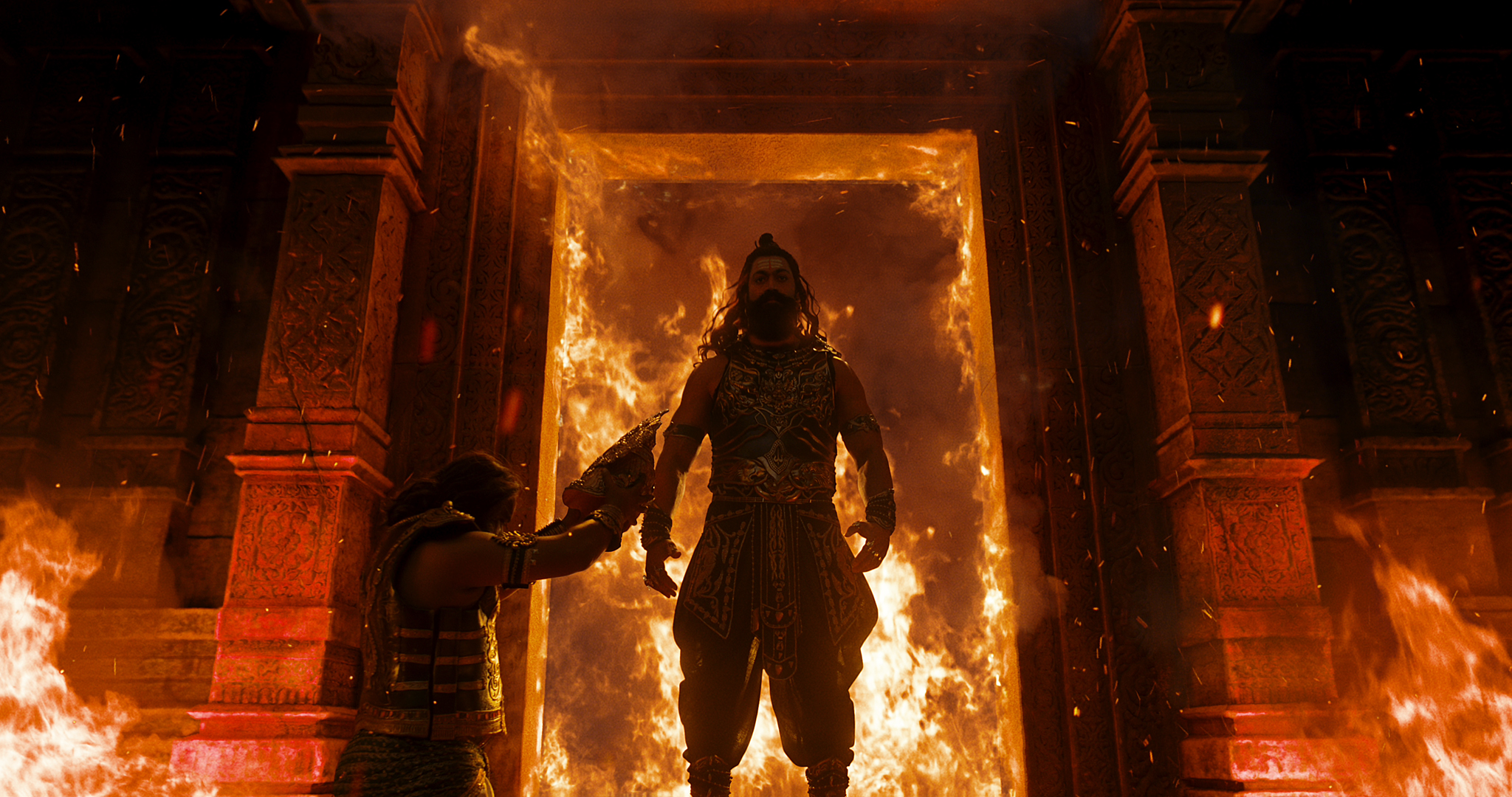
The real standout, however, is Yash as Ravana, who absolutely dominates the screen whenever he appears. Imposing, charismatic and wonderfully theatrical, Yash gives the demon king a commanding presence that makes his enormous ambitions entirely believable. His Ravana is arrogant, frequently terrifying and possessed of an almost limitless confidence in his own superiority, yet there’s sufficient resentment and wounded pride beneath that imposing exterior to make him more interesting than a conventional fantasy villain. Even surrounded by enormous palaces, giant warriors and dark magic, Yash remains the most arresting presence on screen. That’s no small achievement. Rakul Preet Singh is also great as Shurpanakha, Ravana’s sister, whose humiliation following her encounter with Rama and Lakshman plays an important role in escalating the conflict. Finally, there’s something particularly satisfying about hearing the great Amitabh Bachchan delivering the narration, his unmistakable voice adding an additional sense of gravitas to an already monumental production.
Ultimately, Ramayana: Rise of a Legend is a magnificent achievement in large-scale fantasy filmmaking, combining engrossing mythology, terrific performances and breathtaking spectacle. Its occasional pacing issues and uneven CGI are minor shortcomings in an adventure that creates a world so richly imagined that I was reluctant to leave it. For Indian audiences, it must be particularly wonderful to see one of their culture’s most cherished stories receive such lavish big-screen treatment. And after decades of Hollywood searching for a worthy successor to The Lord of the Rings, how ironic that one of the closest contenders has arrived from India. A post-credits appearance by the legendary monkey god Hanuman (Sunny Deol) only makes the wait for the concluding chapter in 2028 more frustrating. Two years! Rama might have endured fourteen years in exile, but I’m not sure I can survive another two without the sequel.
4.5 / 5 – Highly Recommended
Reviewed by Dan Cachia (Mr. Movie)
Ramayana: Rise of a Legend is distributed by Sony Pictures Australia

