You Can See Everything (2026)
Spoiler Warning: This review contains spoilers for You Can See Everything, including discussion of key scenes, revelations and developments throughout the documentary.
For a film called You Can See Everything, it’s rather ironic that you can’t even see the whole screen. Nathan Fielder and Lance Oppenheim’s much talked-about documentary is presented in the old-fashioned 4:3 aspect ratio, leaving almost a quarter of the available widescreen image swallowed by black bars. It’s a wonderfully amusing contradiction for a film promising complete transparency, particularly when its central subject is a woman who once convinced some of the world’s wealthiest investors that she could revolutionize medical science with a single drop of blood. However, as the documentary gradually reveals, the restricted frame is only the beginning of a much larger exercise in what we can see, what we think we see, and what may be deliberately hidden from us. After all, just because something is right in front of our eyes doesn’t necessarily mean we’re looking at the truth.
The origins of You Can See Everything are almost as peculiar as the documentary itself. The project began taking shape in 2023, when comedian Nathan Fielder and filmmaker Lance Oppenheim attended a performance at Hollywood’s famous Magic Castle. During a magic trick, an audience member unexpectedly called out the name Elizabeth Holmes, prompting Oppenheim to mention that the disgraced entrepreneur had reportedly approached independent studio A24 about documenting her life. Fielder, already familiar with the Theranos scandal, was initially skeptical about whether there was anything worthwhile left to explore. After all, Holmes had already been examined through countless newspaper articles, podcasts, books, documentaries and a successful television miniseries. Nevertheless, curiosity eventually prevailed, and the pair found themselves embarking on an unusual production with no predetermined narrative, no guaranteed outcome, and an agreement with A24 that they could abandon the entire project if nothing interesting emerged. What followed was a secretive three-year undertaking that ultimately premiered at the 2026 Telluride Film Festival. For a documentary born from a magic trick, the resulting feature certainly has plenty of surprises up its sleeve.
For those unfamiliar with the scandal, Elizabeth Holmes was once celebrated as one of Silicon Valley’s most promising entrepreneurs, founding the biotechnology company Theranos and claiming to have developed revolutionary technology capable of performing numerous medical tests using only a tiny sample of blood. With her distinctive black turtlenecks, carefully cultivated public persona and seemingly limitless ambition, Holmes became something of a female Steve Jobs, attracting powerful investors and transforming her company into a multibillion-dollar enterprise. Unfortunately, the technology failed to live up to its extraordinary promises, with investigations exposing unreliable testing practices and widespread deception. Theranos collapsed, and Holmes was eventually convicted of defrauding investors, receiving a prison sentence of more than eleven years.
It is against this remarkable backdrop that Fielder and Oppenheim enter the beachfront rental home of Holmes and her family in Del Mar, California, in 2023, just thirty-four days before she is due to begin her sentence. Staying in the property’s adjoining guesthouse, the filmmakers are granted extraordinary access to the lives of Holmes, her partner Billy Evans and their two young children, documenting everything from ordinary domestic routines to uncomfortable conversations about the scandal and Holmes’s impending imprisonment. Holmes maintains that she has been misunderstood, while Evans appears determined to rehabilitate her public image, even entertaining ambitious plans for another medical technology venture. Fielder, meanwhile, takes an increasingly personal interest in understanding the woman behind the headlines, asking questions that range from deceptively simple to almost painfully intrusive. However, as Holmes approaches prison, the documentary gradually transforms into something far stranger than a conventional examination of corporate fraud, and what initially resembles an intimate character study becomes an unpredictable psychological investigation into the very nature of truth.

While You Can See Everything is ostensibly a documentary about Elizabeth Holmes and the notorious Theranos scandal, its real interests extend far beyond the disgraced entrepreneur. At its heart, this is a fascinating exploration of the influence of media portrayals, the difficulties of human communication, power and the unsettling realization that we may never truly understand what goes on inside another person’s head. Rather than simply revisiting the evidence surrounding Holmes’s conviction, Fielder and Oppenheim examine the unsettling distance between public perception and private identity, questioning whether anyone can genuinely understand another individual when every conversation, expression and gesture remains open to interpretation.
The question of media representation is particularly interesting, especially considering how thoroughly Holmes has been scrutinized since the collapse of Theranos. Once celebrated as a visionary entrepreneur who could revolutionize modern medicine, she has since become synonymous with corporate deception, her distinctive black turtlenecks and unusually deep voice transforming her into something resembling a fictional character. However, Holmes insists that the public has misunderstood her, suggesting that the person depicted in countless articles, interviews and television productions bears little resemblance to the woman she believes herself to be. One particularly revealing disagreement concerns a quotation published in a 2023 New York Times profile by journalist Amy Chozick, in which Holmes disputes whether she described herself as creating a public character or having one created for her by others. It’s a seemingly minor difference in wording, but one that fundamentally changes the meaning of her statement. Was Holmes deliberately constructing an image to manipulate the public, or has the media constructed an identity she no longer recognizes? More importantly, when a person’s reputation becomes so firmly established, is it even possible for them to change how the world perceives them?
Communication itself becomes another recurring source of fascination, particularly through Fielder’s attempts to understand Holmes’s unusual explanations of her own behavior. Best known for Nathan for You and The Rehearsal, Fielder employs his familiar approach of deadpan questioning, awkward silences and an almost obsessive determination to examine everyday exchanges until they become profoundly uncomfortable. His ability to ask perfectly reasonable questions while making the people answering them increasingly uneasy is as amusing as ever, although Holmes proves to be a particularly challenging subject. In one memorable sequence, Fielder attempts to explain Abbott and Costello’s famous Who’s on First? comedy routine, only to find that Holmes struggles to understand the joke or its relevance to their conversations. What begins as a humorous exchange gradually becomes an illustration of the documentary’s larger concerns, demonstrating how two people can hear exactly the same words yet interpret them in entirely different ways. Indeed, Fielder often appears less interested in catching Holmes in a lie than understanding how she arrives at conclusions that seem so far removed from others’ understanding of reality.
Power is equally important, with the documentary revealing an increasingly complicated struggle over who controls the narrative. Holmes once possessed an extraordinary ability to influence investors, journalists and powerful business figures, convincing them that her ambitious vision of the future was worth billions of dollars. Following her conviction, however, much of that influence has disappeared, leaving her dependent upon the very media she once attempted to control. Evans, meanwhile, appears determined to rehabilitate her reputation, even pursuing the possibility of a new medical technology venture while encouraging an extraordinary level of public transparency. Yet, some of his interactions with Holmes suggest a more complicated relationship, raising questions about where the balance of power actually lies within their household. Fielder occasionally challenges these dynamics, although his own position as filmmaker introduces another imbalance of power. After all, Holmes and Evans may have invited the cameras into their home, but it’s Fielder and Oppenheim who ultimately decide which moments the audience will see. The documentary consequently becomes an intriguing battle between subjects attempting to control their image and filmmakers attempting to uncover the truth behind it.
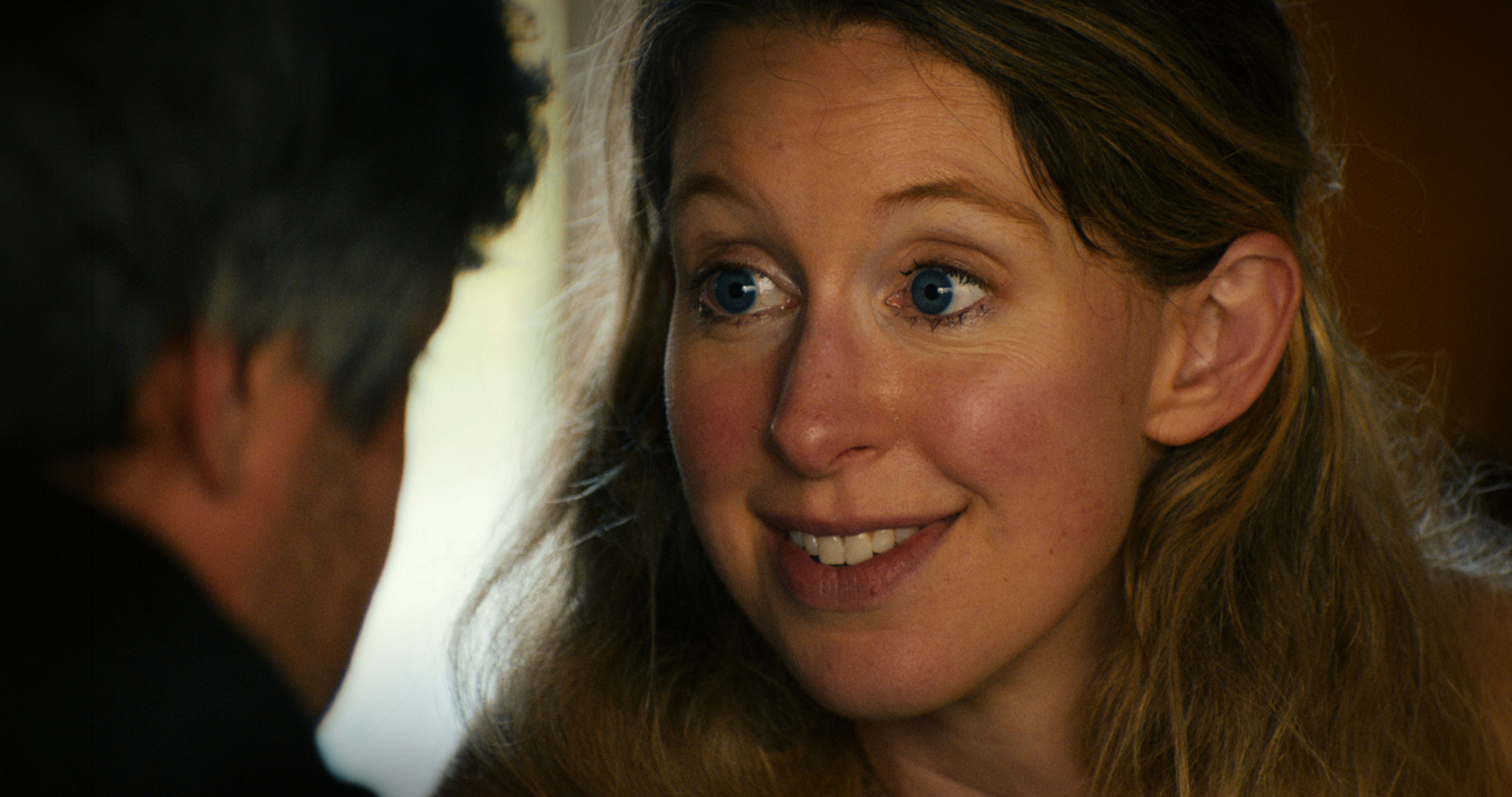
Perhaps its most troubling theme, however, is the unsettling possibility that we may never truly understand what another person is thinking. Throughout the documentary, Fielder repeatedly attempts to determine whether Holmes genuinely believes her own explanations, consciously manipulates those around her, or exists somewhere within the hazy territory between the two. Holmes’s surprising composure, prolonged eye contact and occasionally bewildering responses create an atmosphere of persistent uncertainty, with even her most emotional moments remaining open to interpretation. Does she sincerely believe that she has done nothing wrong, or has she become so accustomed to maintaining a particular version of events that she can no longer acknowledge anything else? Can somebody convince themselves of something so thoroughly that deception eventually becomes indistinguishable from genuine belief? Despite spending weeks in her company, Fielder never appears entirely certain what is happening inside her head, and neither does the audience. It’s a fascinating psychological dilemma that extends beyond Holmes herself, touching upon the uncomfortable reality that even those closest to us remain, to some extent, fundamentally unknowable.
Oppenheim captures this uncertainty with an excellent eye for unease, working alongside cinematographer David Bolen to transform otherwise unremarkable domestic environments into spaces of almost unbearable tension. The restrictive 4:3 framing becomes particularly effective during the numerous close-ups, concentrating attention on facial expressions, fleeting reactions and prolonged silences that might otherwise pass unnoticed. The camera frequently lingers just long enough to make seemingly ordinary encounters feel vaguely threatening, while the atmospheric score reinforces the underlying suspicion that something isn’t quite right. At times, the documentary resembles a psychological thriller, with the smallest gestures generating the kind of suspense usually reserved for fictional mysteries. Still, despite the meticulous presentation, there remains an uncomfortable awareness that the presence of the camera may itself influence the behavior being observed. Are these people revealing their true personalities, or simply performing the versions of themselves they want the filmmakers to see?
The introduction of Amanda Seyfried during the film’s second half adds another strange dimension to an already unconventional experience. Having previously portrayed Holmes in the acclaimed television miniseries The Dropout (2022), Seyfried initially appears as herself, examining the footage and offering her perspective on a woman she spent considerable time researching for the role. However, her involvement gradually develops into something far more unusual, as she reprises her role in a series of dramatic reconstructions depicting encounters that were never captured on camera. Christopher Abbott also joins the proceedings as Evans, further blurring the distinction between documentary and fictional entertainment. It’s an ingenious development that introduces an almost dizzying level of self-reference, with an actress who previously portrayed a fictionalized version of Holmes now recreating actual encounters involving the same woman. Seyfried is particularly compelling, not simply because of her impressive impersonation, but because her presence forces the audience to reconsider what they understand about performance, identity and authenticity.
Indeed, while You Can See Everything is structured as a documentary, there’s a compelling argument that it also operates as a piece of performance art. The second half openly incorporates dramatic reconstructions, some of which are based upon Fielder’s recollections of conversations that took place without cameras present. Naturally, this raises additional questions about their reliability, particularly when the recreated dialogue and behavior depend upon one individual’s memories and interpretation of events. Elsewhere, other encounters unfold with such peculiar precision that it becomes tempting to question whether their circumstances were deliberately arranged. The filmmakers distinguish the dramatic reconstructions from their otherwise unscripted interactions, but that doesn’t entirely remove the feeling that the audience is participating in an elaborate experiment. What are we supposed to believe when the boundaries between reality, interpretation and performance become increasingly difficult to identify? Is the documentary revealing the truth, or demonstrating how easily the truth can be reshaped through the process of filmmaking itself?
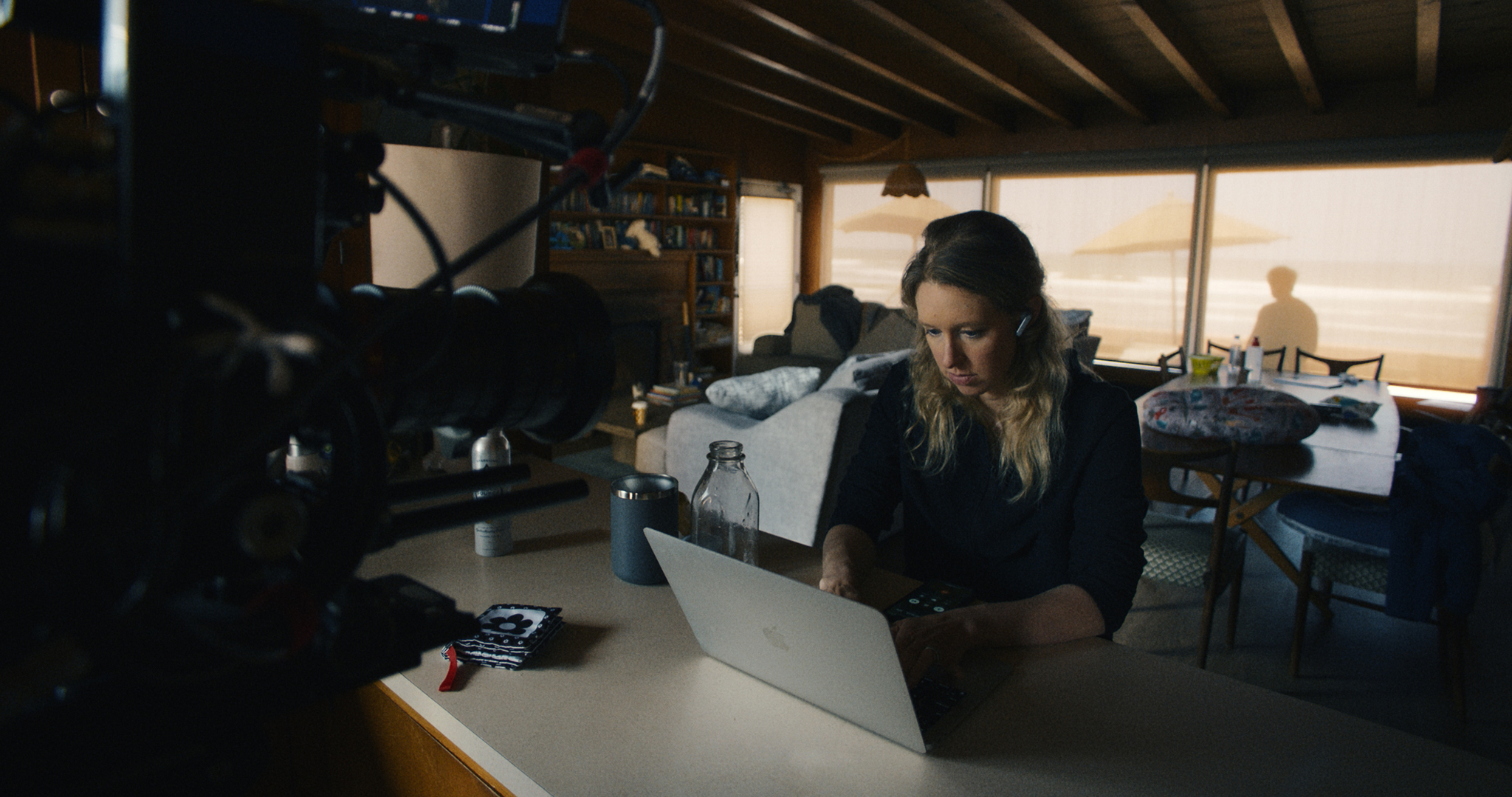
These questions become particularly fascinating towards the conclusion, when Seyfried challenges Fielder over whether he has become emotionally invested in Holmes, potentially protecting her through the way he recalls their conversations. It’s an interesting reversal, transforming the filmmaker from an apparently objective observer into another individual whose intentions must be scrutinized. Yet, by this point, even Seyfried’s confrontation becomes difficult to interpret. Did she independently arrive at this suspicion, or was she encouraged to raise it? Was the exchange entirely spontaneous, or another carefully constructed moment designed to leave the audience questioning everything? Although the filmmakers maintain that the interactions outside the scripted reconstructions were not directed, the documentary has already conditioned us to become suspicious of almost everything we witness. Perhaps this is its cleverest achievement, turning the investigation back upon its own creators and asking whether any documentary can ever be entirely objective when the people making it are responsible for determining how reality is presented.
There is also something surprisingly human beneath all this elaborate uncertainty. While Holmes’s conviction and the consequences of her actions remain impossible to ignore, witnessing her final weeks with her young children introduces an emotional complexity that cannot be comfortably reduced to the familiar image of a corporate villain. Seeing her as a mother confronting a lengthy separation from her family can generate a degree of sympathy, although understanding someone’s humanity does not necessarily mean accepting their version of events. The film also raises uncomfortable questions about the ethics of documentary filmmaking, particularly when private family moments become public entertainment. Are Fielder and Oppenheim genuinely attempting to understand their subject, or are they exploiting her circumstances to create something more entertaining? And, as viewers, are we any different when we find ourselves fascinated by these intimate moments? By involving the audience in its examination of truth and manipulation, the documentary makes us increasingly aware of our own willingness to judge, sympathize and speculate about people we don’t really know.
At 174 minutes, You Can See Everything certainly demands a substantial commitment, yet its unpredictability ensures that the running time rarely feels excessive. Every apparent revelation introduces another uncertainty, while the increasingly unconventional structure keeps the experience captivating long after a more traditional documentary might have exhausted its subject. Fielder and Oppenheim have combined investigative curiosity, uncomfortable humor, psychological unease and experimental filmmaking to create a genuinely distinctive cinematic experience. It may not provide definitive answers about Elizabeth Holmes, nor does it necessarily intend to, but its willingness to challenge our understanding of truth, perception and human behavior makes it considerably more compelling than another straightforward account of the Theranos scandal. Ultimately, for a documentary that promises to show us everything, its greatest achievement is demonstrating how much remains beyond our understanding. Holmes may have built an empire on the promise of drawing answers from a single drop of blood, but Fielder discovers that drawing out the truth is an altogether more complicated procedure.
4.5 / 5 – Highly Recommended
Reviewed by Dan Cachia (Mr. Movie)
You Can See Everything is distributed by A24

