Verity (2026)
There is no light where we’re going.
Colleen Hoover has become one of those authors whose name alone is enough to start an argument. Some readers adore her, others roll their eyes, and the truth probably sits somewhere in the middle. Hoover is not a brilliant writer, but there is something immensely readable about her brand of pulpy, emotionally overwrought melodrama. Relationships explode, secrets crawl out from underneath the furniture and attractive people make questionable decisions. Sometimes that’s exactly what the doctor ordered.
Verity was something slightly different for Hoover. Originally independently published in 2018, the psychological thriller became a phenomenon in its own right before Grand Central Publishing acquired it in 2021. A film version had already entered development at Amazon Studios by then, but the project eventually found its shape with director Michael Showalter, screenwriter Nick Antosca and the rather impressive trio of Anne Hathaway, Dakota Johnson and Josh Hartnett. While I haven’t read the novel on which it’s based, Verity is deliciously silly stuff.
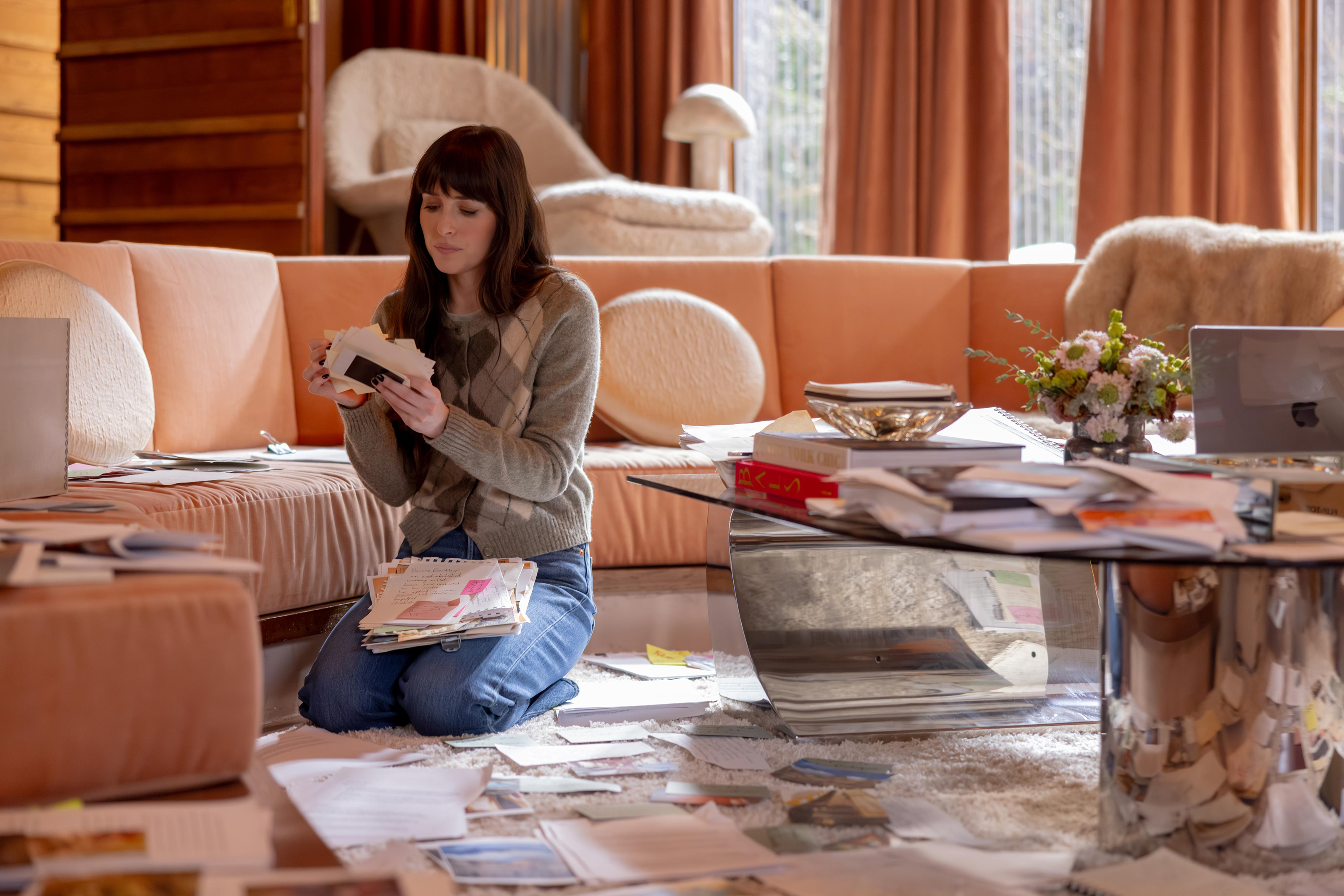
Dakota Johnson plays Lowen Ashleigh, a talented but commercially unsuccessful writer whose career isn’t exactly setting the bestseller charts on fire. After an extraordinarily messy encounter with a traffic accident leaves her covered in a stranger’s blood, Lowen meets the handsome Jeremy Crawford (Josh Hartnett), who helps her clean herself up. Then, because Verity has absolutely no interest in wasting a perfectly good coincidence, Lowen discovers Jeremy is connected to the mysterious job meeting she happens to be attending.
Jeremy’s wife is Verity Crawford (Anne Hathaway), a phenomenally successful author who has been left incapacitated following a car accident. The Crawfords are also grieving the death of their daughter Harper, leaving her twin brother Crew (Brady Wagner) as the family’s only surviving child. Verity’s bestselling book series needs finishing and Lowen is offered the lucrative job of stepping into her considerably more expensive shoes. That requires travelling to the Crawford family’s secluded home, digging through Verity’s notes and attempting to work out exactly how another writer’s mind ticks. While going through her papers, Lowen discovers a secret autobiographical manuscript and begins reading. Probably not the best idea.
It isn’t long before strange things begin happening around the house, attraction starts bubbling between Lowen and Jeremy and the supposedly unresponsive Verity begins feeling considerably more present than someone in her condition probably should. Sex, thunder and buried secrets soon follow, while Hathaway stares like she could murder someone without moving anything at all.
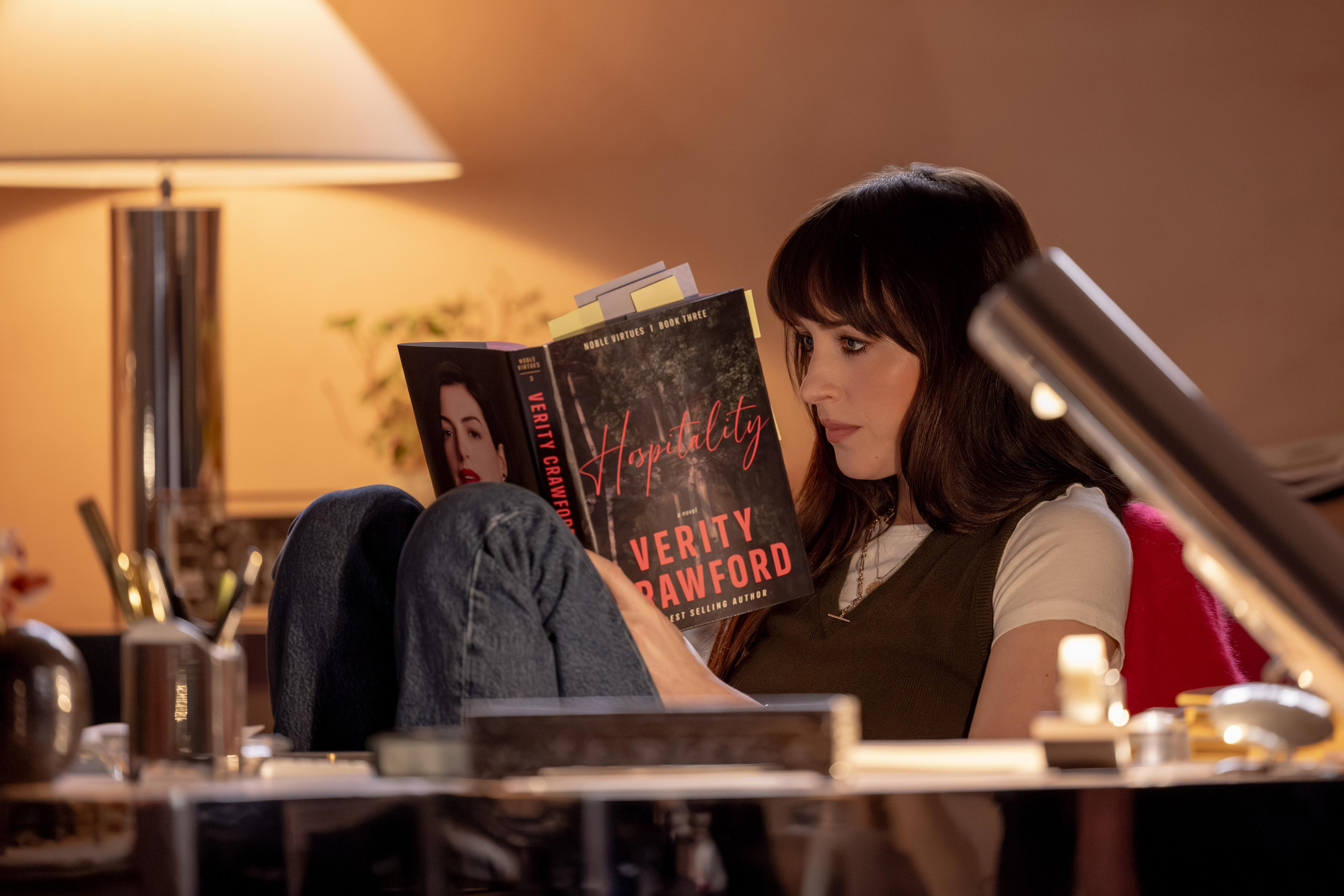
Verity wears its influences proudly. Director Michael Showalter is clearly reaching back to the erotic thrillers of the 1980s and ’90s — films like Body Double (1984), Jagged Edge (1985), Fatal Attraction (1987) and Sliver (1993), where sex, wealth and suspicion usually shared the same bedroom. It gives the picture a wonderfully glossy wickedness that feels increasingly rare on the big screen. Showalter gets the tone right. There is nothing particularly subtle about Verity, nor should there be. Things become increasingly heightened once Lowen enters the Crawford home, where even a bedroom encounter involving some particularly enthusiastic biting feels perfectly at home. Sex, voyeurism and secrets are piled on with the confidence of a film that knows exactly what sort of potboiler it wants to be.
The house itself does half the work. Shot at a 1960s mid-century modern property in Armonk, New York, its glass walls, lakeside setting and Japanese-influenced architecture initially look luxurious before gradually becoming sinister. The pointed V-shaped structures above the entrance even resemble teeth, adding another unsettling detail to a home that becomes less inviting the longer Lowen remains inside. Production designer Amy Williams extends that look through the interiors, turning the Crawford estate into something seductive, expensive and increasingly claustrophobic. That exaggerated approach could have very easily tipped into parody, but Showalter largely keeps it on the right side of ridiculous. He allows the material to be pulpy without constantly nudging the audience in the ribs. Verity knows it is trashy. More importantly, it knows that can be a compliment.
Underneath all the expensive furniture and bedroom gymnastics, Verity is playing with some genuinely interesting ideas about truth, authorship and who gets to control a narrative. It shows how something as simple as a manuscript can become evidence simply because someone believes what is written, while grief, maternal resentment, jealousy and obsession are filtered through a story that may or may not be true. It also becomes a tale about one woman gradually slipping into another’s life. Lowen is hired to finish Verity’s books, moves into her house, becomes attracted to her husband and even wears one of her dresses. The ghostwriting job starts to feel considerably more literal as the film goes on. That gives the melodrama some welcome substance. Verity is a professional storyteller and Lowen is being paid to imitate her voice, yet both are capable of shaping events into whatever version best suits them. The film never digs particularly deeply into these ideas, but it leaves one effective question hanging over everything: just because somebody wrote it down, does that make it true?
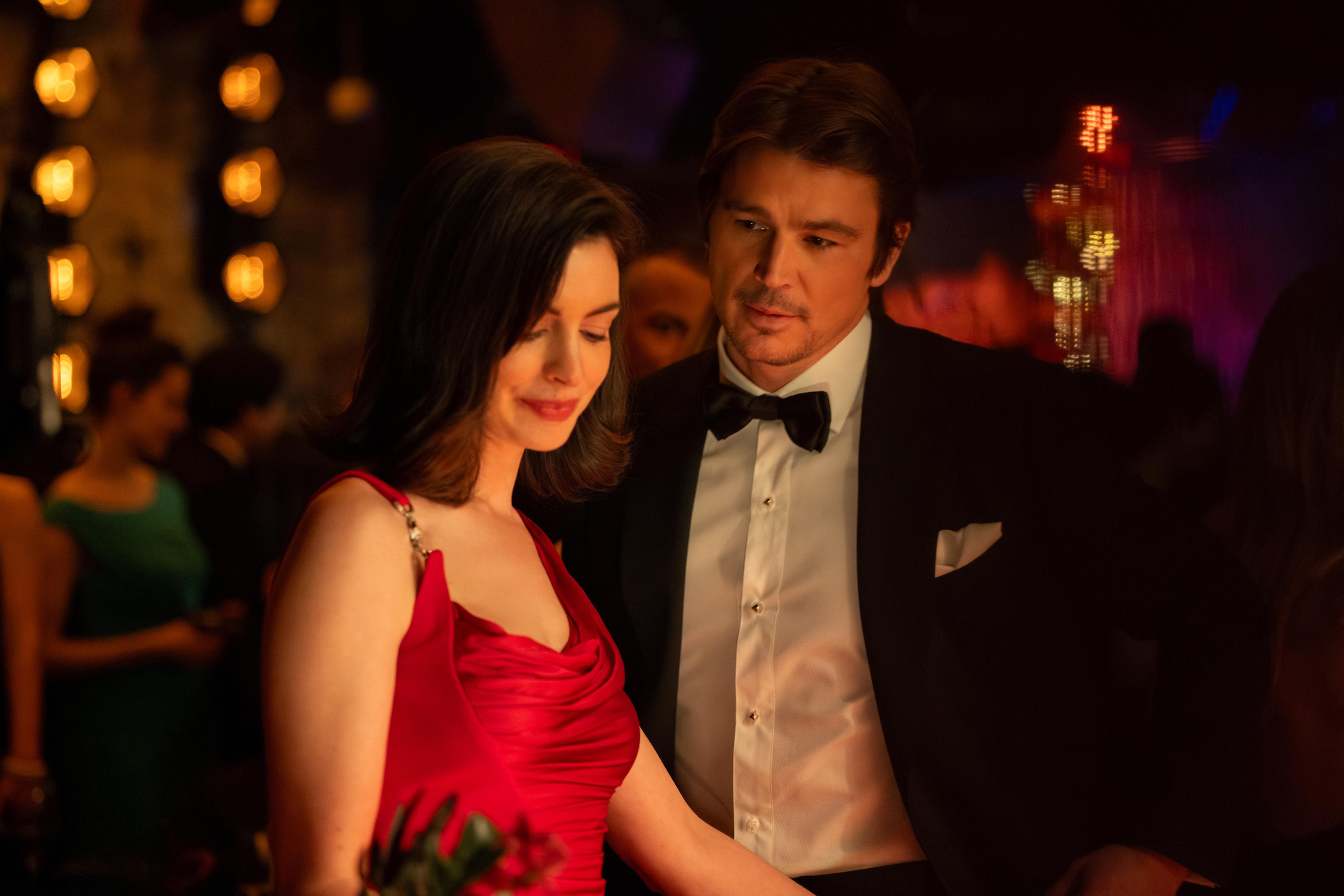
Anne Hathaway is clearly having fun as Verity, giving the character a strange gravitational pull even when she’s physically restricted. Flashbacks allow her to go bigger, and she embraces the film’s more theatrical side without ever becoming too much. Dakota Johnson’s naturally detached screen presence works particularly well for Lowen. That coolness can sometimes create distance in the wrong role, but here it suits a character who spends much of her screentime watching, reading and quietly wondering whether everyone around her has lost their minds. Johnson allows small flashes of humor, suspicion and unease to creep through without overselling them. Josh Hartnett is equally effective as Jeremy, balancing wounded charm with just enough uncertainty to make trusting him feel dangerous. He remains convincing as romantic fantasy, grieving father and possible walking red flag, often all at once. Ismael Cruz Córdova also makes good use of his smaller role as Corey, Lowen’s literary agent and former boyfriend, bringing some welcome friction to the edges of the story.
Verity does not always make complete sense, but that hardly matters. The film is glossy, twisted and knowingly melodramatic, with enough craft, conviction and star power to make its more ludicrous turns part of the fun. Those expecting another Gone Girl may find considerably more pulp than prestige, but that is exactly where much of its appeal lies. Sexy, sinister and occasionally absurd, Verity is the kind of thriller designed to leave audiences arguing over what was truth and what was fiction long after the credits roll. Consider that the final word.
3.5 / 5 – Great
Reviewed by Dan Cachia (Mr. Movie)
Verity is distributed by Amazon MGM Studios

