Heart of the Beast (2026)
Survival depends on their bond.
Apparently 2026 is the year Hollywood decided what cinema really needed was men, dogs, small aircraft and absolutely no nearby hospitals.
Heart of the Beast is somehow the second film released within almost comical proximity this year about a guy flying around with his four-legged co-pilot before disappearing into some very unfriendly wilderness.
Barely a month ago came Ridley Scott’s The Dog Stars, another survival story involving a pilot, his dog and a whole lot of wilderness. Now David Ayer arrives with Heart of the Beast, where Brad Pitt plays James Belmont, a Special Forces veteran traveling with his combat dog Odin when a plane crash leaves man and canine stranded miles from civilization.
From 30,000 feet, these things look suspiciously like somebody copied the homework. Get down on the ground, though, and they’re significantly different movies.
The Dog Stars is a post-apocalyptic story about grief, loneliness and searching for some remaining piece of humanity. Heart of the Beast is much more immediate and stripped back. There’s no apocalypse here. No end of the world. Just one man, one very good boy and Mother Nature repeatedly attempting to murder both of them. And that simplicity actually works in its favor.
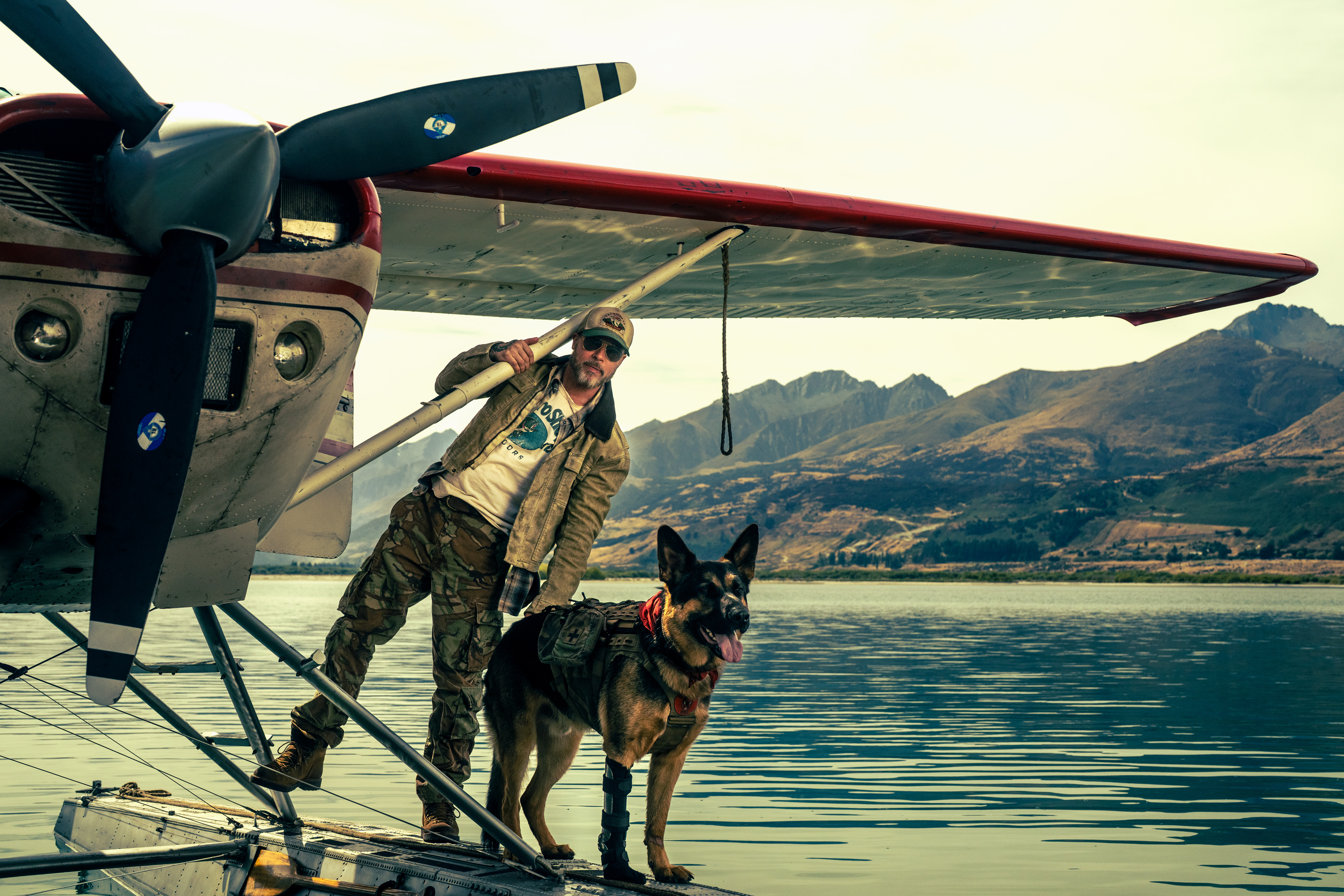
Written by Cameron Alexander — whose screenplay appeared on the 2017 Black List — the story follows Belmont and Odin as they attempt to trek back towards civilization through the Alaskan wilderness following their crash. Injuries, freezing conditions, rivers, difficult terrain and increasingly aggressive wildlife turn the journey into one long test of endurance. It’s basically survival cinema with paws.
But underneath all the mud, blood and Brad Pitt looking increasingly like he desperately needs a shower, Heart of the Beast is really an ode to military working dogs and the bond that develops between a soldier and the animal fighting alongside him.
James and Odin aren’t simply companions — they’re two veterans carrying the same war home with them, both dealing with PTSD and trying to live with what they survived together. Odin wears those scars more visibly, with a prosthetic leg and silver teeth replacing what he lost in combat, while James carries most of his damage internally. That shared trauma gives their relationship more weight than the usual man-and-his-dog setup; they understand each other because, in their own ways, they’re both trying to work out how to live after the fighting stops.
Alexander’s screenplay isn’t particularly complicated, and the emotional beats are often visible well before they arrive, but there’s something refreshingly sincere about it.
David Ayer is also a pretty natural fit for this material. The director of Fury (2014) and End of Watch (2012) understands wounded soldiers, loyalty and masculine characters who would apparently rather be mauled by wildlife than spend five minutes discussing their feelings. There’s surprisingly little traditional action compared with some of Ayer’s other movies, but when things go bad, they go very bad.
The crash landing, river crossings and animal encounters are staged with real intensity, and Ayer squeezes an impressive amount of suspense out of watching one man and his furry wingman simply trying to get from Point A to Point B without becoming something else’s lunch.
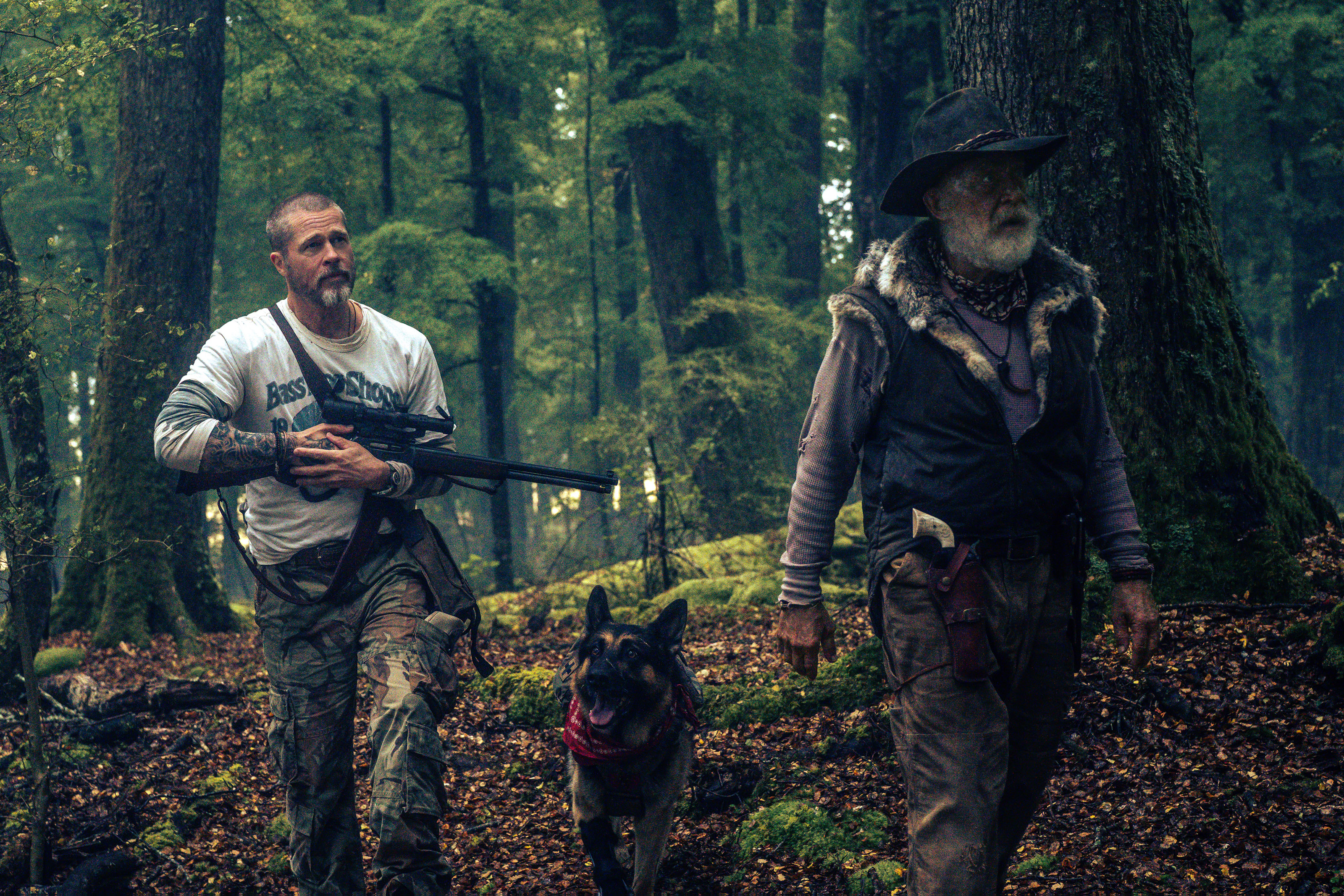
The biggest problem is that whenever the movie puts its real dog against its digital wildlife, you can see the join. The CGI animals are obvious. Not catastrophic. Not Cats levels of “what have humans done?” But obvious enough that some sequences lose part of their danger because instead of thinking, Brad Pitt is about to be eaten, you occasionally find yourself thinking, Brad Pitt is wrestling the VFX department.
Thankfully, everything surrounding them looks fantastic.
Oscar-winning Avatar cinematographer Mauro Fiore shoots New Zealand as a convincing Alaskan wilderness, filling the movie with enormous mountains, forests, freezing water and landscapes that are gorgeous right up until you remember the characters are stuck in them. It gives what is fundamentally a fairly modest survival story some genuine big-screen scale, with nature itself frequently feeling like another character determined to make Belmont’s day substantially worse.
Pitt is fully committed too. For huge portions of the 101-minute runtime, there isn’t another human performer around for him to bounce off. It’s Pitt, the elements and a German Shepherd. And he plays it completely straight. There’s no movie-star winking and very little attempt to make Belmont some invincible action hero. Pitt looks exhausted, injured, frightened and genuinely attached to the animal beside him.
J.K. Simmons brings some welcome personality in his brief appearance, playing a gruff, colorful presence in Belmont’s otherwise isolated existence and giving Pitt someone human to bounce off before the film largely leaves him alone with Odin and whatever the landscape throws at him. It’s a small role, but Simmons makes an impression quickly. After that, though, this is overwhelmingly Pitt’s movie.
Well…
Pitt and Uber’s movie.
Because Odin is played primarily by a German Shepherd named Uber, and this magnificent furry bastard nearly walks away with the whole thing. Pitt is committed. The dog might be more committed.
Uber gives what may genuinely be the best animal performance in recent memory. There are moments where Odin appears frightened, traumatized, protective, exhausted or completely locked onto Belmont, and somehow every second of it works. Pitt can deliver all the emotional dialogue he wants; sometimes this pooch just looks at him and wins the scene.
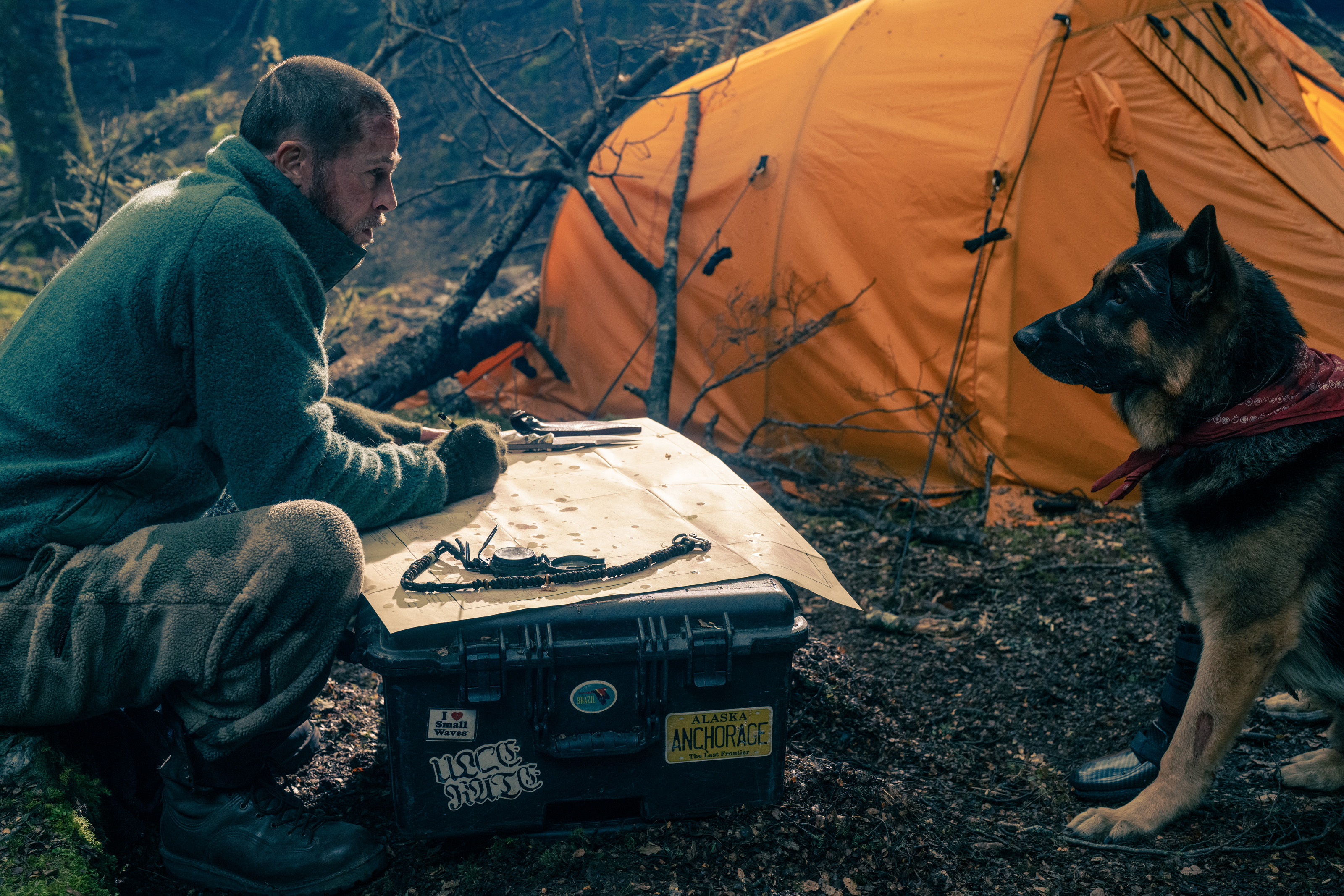
Uber was a real mountain-rescue dog, with his three sons also used during production for some of Odin’s work, which probably explains why the physicality feels so convincing. Pitt has spoken about Uber as a genuine co-star rather than simply an animal appearing in the movie. Somebody get this canine an agent. Or a better agent. The Uber cinematic universe surely can’t be far away.
Ultimately, Heart of the Beast isn’t reinventing the survival thriller, but there’s enough bite here to stop it from feeling completely familiar. The screenplay can be predictable, the sentiment occasionally gets laid on pretty thick and the computer-generated creatures aren’t always convincing enough to match the otherwise immersive survival filmmaking around them. But the central relationship works. That matters.
Ayer understands that audiences aren’t really watching to see whether Brad Pitt can defeat the wilderness. They become invested in whether this battered man and his loyal companion can get each other home.
And when the film concentrates on that relationship, it’s surprisingly effective. It’s straightforward. Well shot. Occasionally thrilling. More heartfelt than expected. And somehow, despite arriving almost immediately after another movie involving a pilot, his dog and a whole lot of hostile terrain, it manages to feel like its own beast.
Better than it probably could have been.
Brad Pitt: good.
David Ayer: good.
Uber?
Very good boy.
3 / 5 – Good
Reviewed by Stu Cachia (S-Littner)
Heart of the Beast is distributed by Paramount Pictures Australia

