Whalefall (2026)
Hold your breath.
Some actors spend their breakout year enjoying the spotlight. Austin Abrams seems determined to spend his being put through absolute hell. Having already endured the horrors of Resident Evil just a few weeks ago, the rising star now finds himself facing an altogether different nightmare in Whalefall, a wildly imaginative survival thriller that takes the expression ‘thrown in at the deep end’ to a whole new level.
Directed by Brian Duffield, No One Will Save You (2023), and adapted from Daniel Kraus’s acclaimed novel of the same name, Whalefall follows Jay Gardiner (Austin Abrams), a young man struggling to come to terms with the death of his estranged father, Mitt (Josh Brolin). Haunted by their fractured relationship and desperate to find some sense of closure, Jay ventures into the Pacific Ocean off the Californian coast to recover his father’s remains. As fate would have it, his underwater expedition takes a spectacularly disastrous turn when he becomes caught in an encounter between a colossal sperm whale and a giant squid, resulting in him being swallowed alive. Trapped inside the creature’s enormous body with barely an hour’s worth of oxygen remaining in his tank, Jay must somehow find a way out before his surroundings become his final resting place.
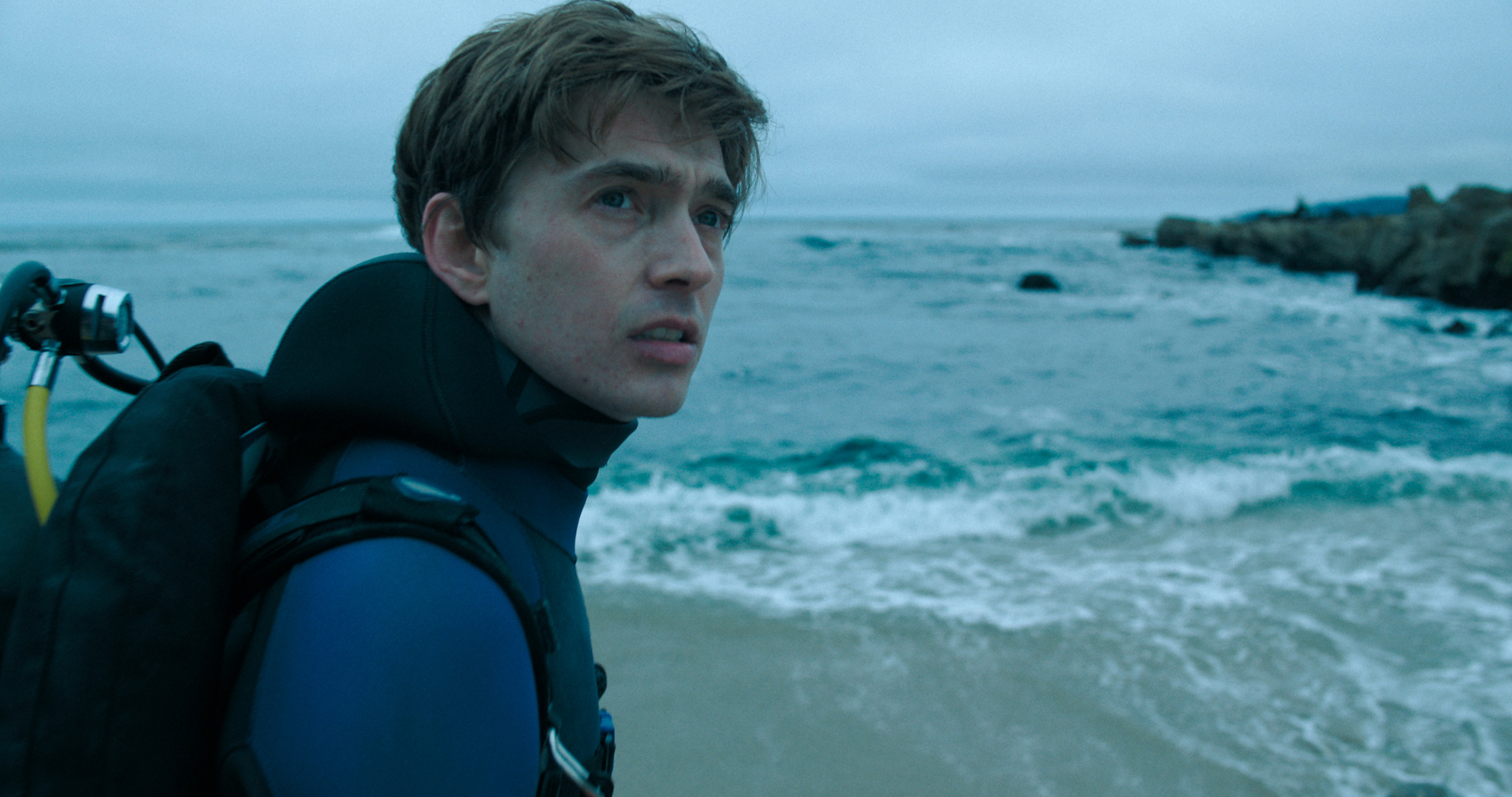
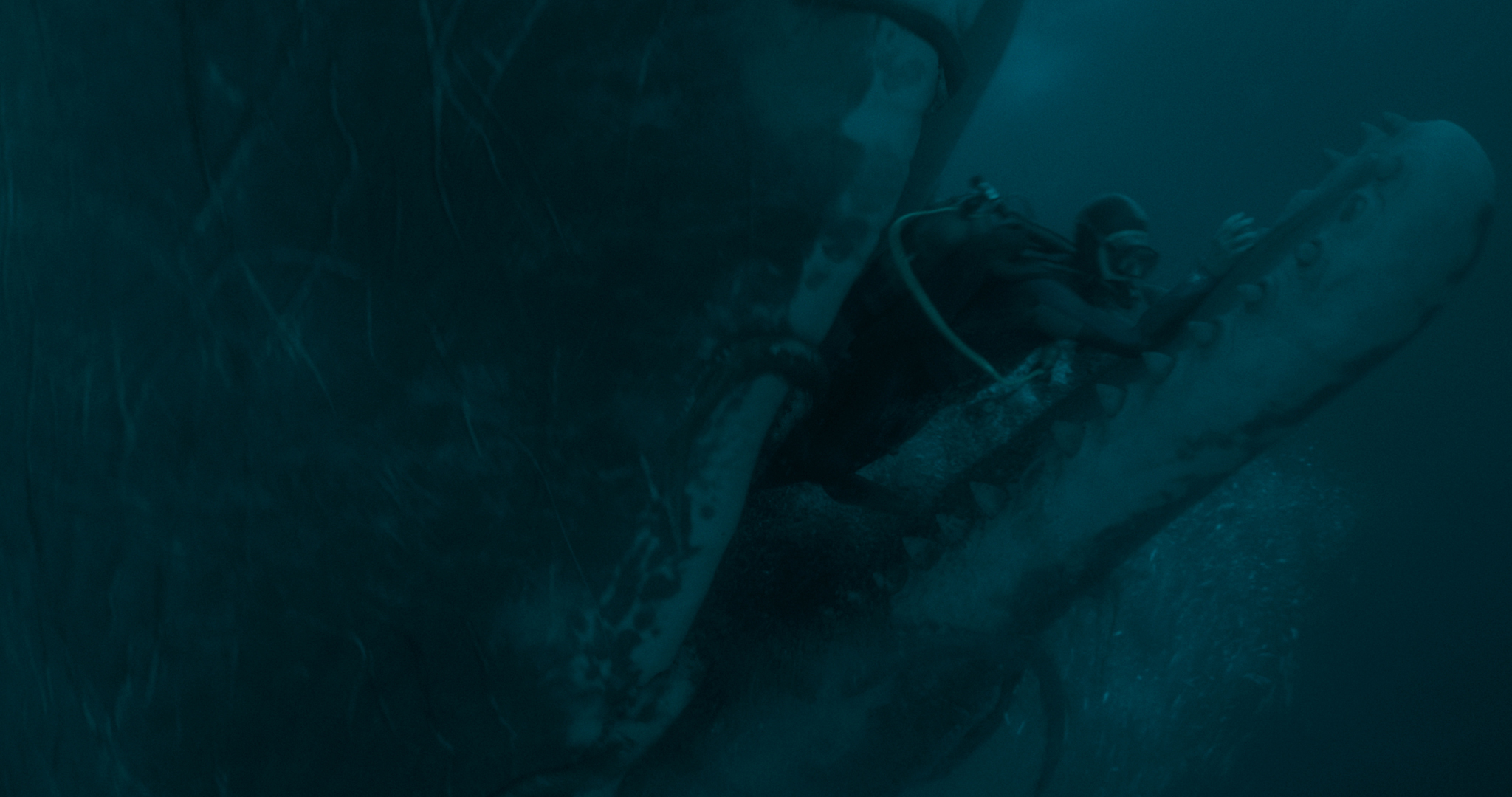
It’s an outrageous premise, certainly, but one that Duffield approaches with admirable conviction. The sequence in which Jay is swallowed is nothing short of incredible, combining an overwhelming sense of scale with some genuinely spectacular visual effects. The sheer size and power of the marine giant are communicated brilliantly, creating a terrifying encounter that ranks among the film’s most memorable achievements. The sound design is equally impressive, particularly during the opening sequences, where deep, ominous rumbles and thunderous underwater effects intensify the sensation of being completely overwhelmed. Unfortunately, much of this extraordinary spectacle has already been revealed in the promotional trailers, diminishing some of the surprise when it finally unfolds on screen.
Nevertheless, the initial stretch inside the whale is tremendous fun. Duffield wastes little time establishing the extraordinary dangers of Jay’s predicament, transforming the creature’s internal anatomy into a grotesque and unpredictable environment. Particularly impressive is the action involving the gigantic squid, whose writhing tentacles introduce an additional layer of chaos to an already nightmarish situation. This cephalopod confrontation is among the picture’s most exhilarating moments, delivering a wonderful combination of creature-feature thrills, inventive staging and stomach-churning suspense.
Visually, Whalefall has plenty to admire. Ramsey Avery’s production design creates a fleshy, pulsating labyrinth of organic chambers, digestive fluids and slippery surfaces, making the surroundings feel almost like an alien world. There’s a wonderfully unpleasant tactile quality to it all, with every movement reinforcing the sensation of being trapped inside something enormous, living and decidedly inhospitable. Suffice to say, this is not an experience recommended for the squeamish or anyone suffering from claustrophobia. At times, however, the photography becomes so dark that following the action proves unnecessarily difficult. While the limited visibility certainly contributes to the oppressive atmosphere, there are sequences where distinguishing exactly what is happening becomes something of a challenge.
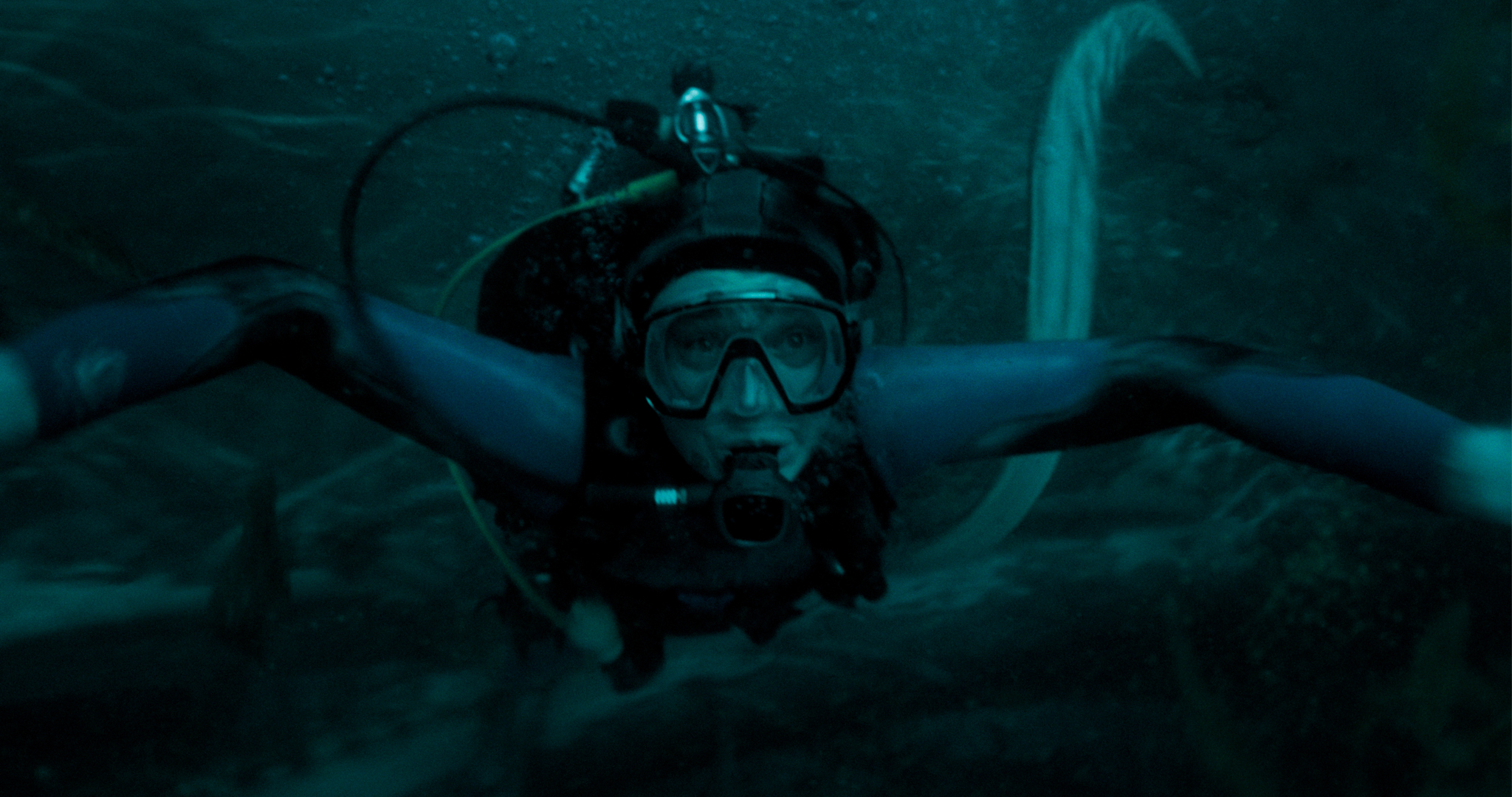
Following his memorable turn in last year’s Weapons and his starring role in Resident Evil earlier this year, Austin Abrams delivers another impressive performance in Whalefall, continuing a particularly strong run for the young actor. Much like his previous survival-horror outing, he once again demonstrates his ability to carry a physically demanding story, conveying desperation, vulnerability and determination with relatively little dialogue. Much of his performance relies upon facial expressions, frantic movements and reactions to an environment that offers precious little comfort. It’s an exhausting role, and he deserves considerable credit for making Jay’s increasingly impossible circumstances feel emotionally convincing.
Yet beneath the extraordinary spectacle lies a considerably more personal story about fathers, sons and the emotional wounds that remain long after someone has gone. Through a series of flashbacks, the screenplay explores Jay’s complicated upbringing and the lasting influence of a parent whose attempts to prepare his child for life’s hardships frequently caused more damage than good. Themes of grief, resentment, forgiveness and inherited trauma gradually emerge, raising questions about whether the lessons passed down by our parents can ultimately help us overcome the very pain they helped create.
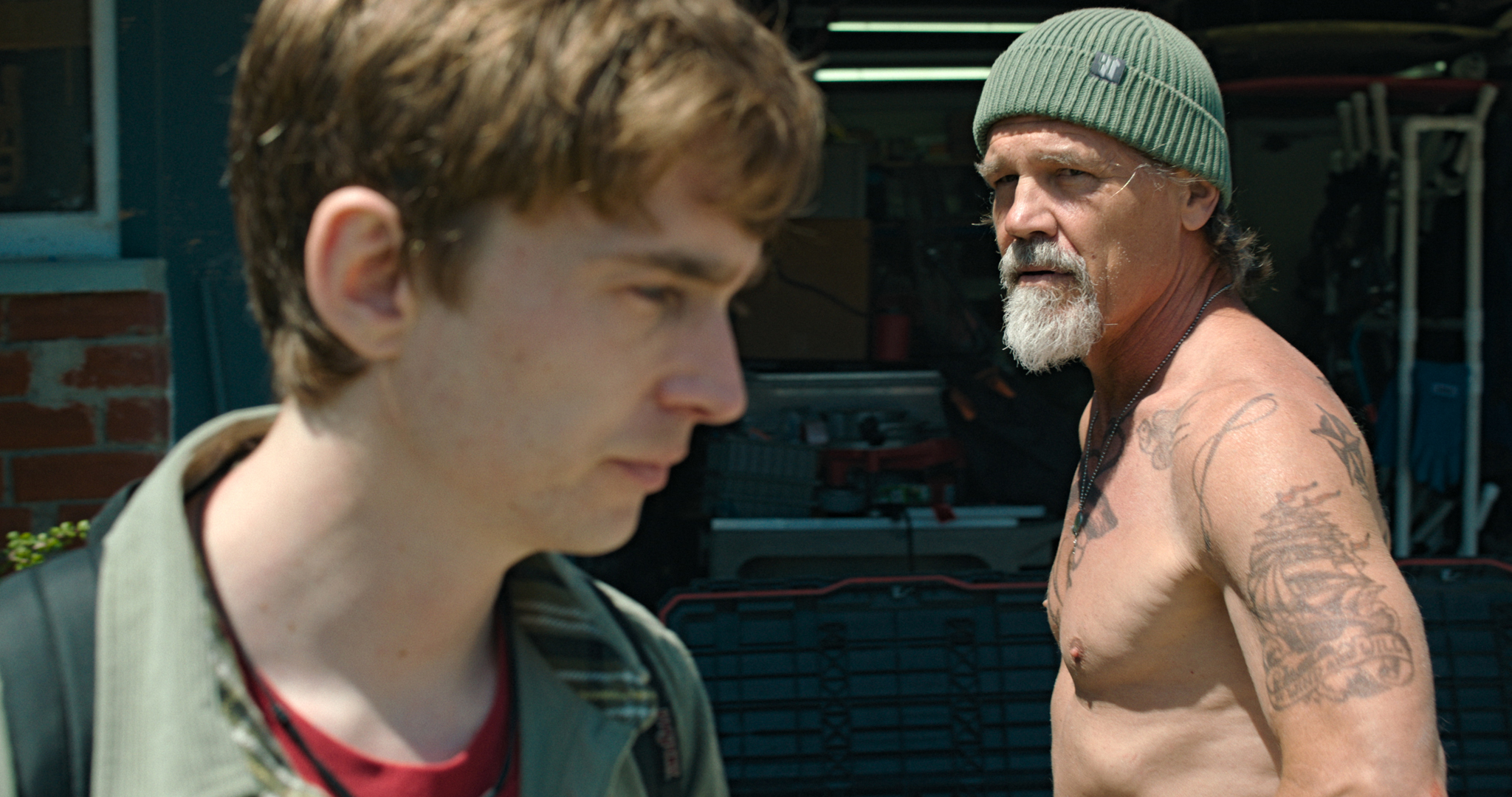
Josh Brolin is particularly effective as Mitt, bringing a commanding, frequently intimidating presence to a deeply flawed father. Gruff, stubborn and emotionally volatile, he’s a man more comfortable confronting the dangers of the ocean than expressing affection towards his own son. Brolin gives the character sufficient complexity to suggest that genuine concern exists beneath his abrasive exterior, even when his behaviour proves difficult to excuse. His scenes with Abrams provide some of the film’s strongest dramatic material, establishing the troubled relationship at the centre of the narrative.
The supporting cast also includes Elisabeth Shue as Jay’s grieving mother, Zara, alongside Jane Levy and Emily Rudd as his sisters, Eva and Nan. Each helps establish the emotional consequences of Mitt’s death, although their relatively limited appearances leave little opportunity for substantial character development. John Ortiz also contributes in a smaller supporting capacity, but this is very much a story carried by Abrams and Brolin.
Unfortunately, Whalefall begins to lose some of its momentum after that terrific initial burst of underwater mayhem. As the immediate excitement subsides, the narrative increasingly shifts towards flashbacks and psychological reflection, interrupting the urgency of Jay’s predicament. While these excursions are necessary to establish the emotional significance of his struggle, their frequency gradually becomes a hindrance rather than a strength. Certain memories and revelations begin to feel repetitive, while the central survival scenario occasionally struggles to generate the same excitement that made its opening passages so compelling.
At 106 minutes, this is essentially a lean 90-minute survival thriller stretched beyond its ideal running time. An additional sixteen minutes might not sound particularly excessive, but in a story built around a rapidly diminishing oxygen supply, every interruption makes itself felt. The film never becomes entirely dull, yet there are stretches where the pacing noticeably slackens and the tension begins to dissipate. A tighter edit, with greater emphasis on the immediate physical dangers, could have produced a considerably more gripping experience.
To its credit, the screenplay by Duffield and original novelist Daniel Kraus attempts something more meaningful than simply presenting an elaborate escape from the belly of a beast. The title itself refers to the natural phenomenon in which a dead whale sinks to the ocean floor, its remains providing nourishment and sustaining countless forms of marine life. It’s an intriguing concept that reflects the story’s underlying exploration of mortality, emotional inheritance and the possibility of finding something life-affirming in the aftermath of loss. The symbolism is occasionally a little heavy-handed, but the ambition behind it is certainly appreciated.
Ultimately, Whalefall is a visually ambitious and frequently entertaining survival adventure that works best when embracing the sheer absurdity and horror of its extraordinary premise. The performances are strong, the creature effects impress, and several sequences deliver precisely the kind of imaginative spectacle that deserves to be experienced on the big screen. However, its attempts to balance relentless physical danger with a more contemplative family drama aren’t always successful, resulting in an uneven journey that occasionally loses sight of what makes it so exciting in the first place.
In other words, there’s plenty to sink your teeth into here, even if Whalefall takes a little too long to spit you back out.
3 / 5 – Good
Reviewed by Stu Cachia (S-Littner)
Whalefall is distributed by 20th Century Fox Australia

