Resident Evil (2026)
A new era of evil.
For a franchise built around things that refuse to stay dead, Resident Evil has proven appropriately difficult to kill. Capcom’s survival-horror series first shuffled onto the PlayStation in 1996, trapping players inside the Spencer Mansion with limited ammunition, questionable voice acting and enough infected nasties to make opening a door feel like an act of extraordinary bravery. Hollywood eventually came calling in 2002, kicking off Paul W.S. Anderson’s six-film series with Milla Jovovich as Alice. Those movies gradually wandered further from the games while becoming increasingly interested in slow-motion gunfire, clones and finding new ways to launch Jovovich through plate glass. Johannes Roberts tried a more faithful reset with 2021’s Resident Evil: Welcome to Raccoon City, cramming characters and incidents from the first two games into a single movie with decidedly mixed results.
Which brings things to Zach Cregger. After proving his horror chops with the hits Barbarian (2022) and Weapons (2025), handing Cregger the keys to Raccoon City sounded like an inspired proposition. Apparently, not everyone agreed. The announcement that his Resident Evil would tell an original story without Leon Kennedy, Claire Redfield, Jill Valentine or the franchise’s other established heroes caused a predictable outbreak of its own, with a vocal section of the online fanbase questioning whether Cregger understood what people actually wanted from a Resident Evil movie. Cregger himself eventually admitted he had been “naive” about how badly some fans wanted a direct adaptation of Leon’s story. Turns out he had another idea. And it freaking works.
Medical courier Bryan (Austin Abrams) is having a rough night before the monsters even arrive. His girlfriend Michelle (voiced by Sara Paxton) has just dropped some life-changing news over the phone, Bryan isn’t entirely sure how to process it, and a difficult conversation is waiting for him at home. So when one final job comes through offering double pay for an out-of-zone delivery to Raccoon City General Hospital, Bryan decides to take it. The job seems simple enough: drive into Raccoon City and deliver one small green medical bag. The double pay certainly helps. Never mind that the weather is atrocious and his car is hardly equipped for snowy mountain roads. Easy. Except Raccoon City is currently having one of those evenings where getting across town without being eaten, infected, dismembered or absorbed into a gigantic writhing pile of human meat can probably be considered a win.
Written by Cregger and Shay Hatten, Resident Evil does something that almost feels revolutionary for a modern piece of franchise filmmaking: it stops trying to adapt the Wikipedia page. There is no desperate attempt to squeeze thirty years of Umbrella Corporation history into the screenplay. No parade of recognizable characters wandering into frame so an audience can clap because Jill Valentine has entered the room. No elaborate groundwork for three sequels, two streaming spin-offs and Resident Evil: The Raccooning. Cregger has instead made something far more interesting. He has made a new Resident Evil experience in the form of a movie.
Bryan effectively spends the film ‘moving through levels.’ He enters an environment, encounters a problem, searches for a way forward, acquires a weapon, counts his ammunition and keeps moving. Locked gate? Find another route. Shotgun? Great. Shells? Less great. Monster blocking the way? Figure it out. Each problem feels like the kind of objective that would flash onto a screen after a cutscene, except Cregger incorporates the mechanics so naturally that the film never feels as though somebody has simply pointed a camera at a videogame.
Better still, Bryan is absolutely not Leon Kennedy. This is a man who picks up a gun because there happens to be a gun nearby, not because the screenplay suddenly decides he is an action hero. Abrams makes his inexperience enormously entertaining, fumbling with weapons, panicking when things go wrong and generally reacting to unimaginable horrors like a person who has not spent the past twenty years preparing for the zombie apocalypse. His survival is frequently a combination of quick thinking, dumb luck and the monsters occasionally proving even less competent at killing him than he is at surviving them. That vulnerability is where much of the tension comes from, but also much of the comedy. Cregger has always understood that horror and humor make surprisingly comfortable bedfellows. A laugh releases pressure. The next scare immediately starts building it again. Resident Evil is frequently very funny, but importantly, the movie never stops being a horror film in order to tell a joke. And when Cregger wants to get icky, he really gets icky.
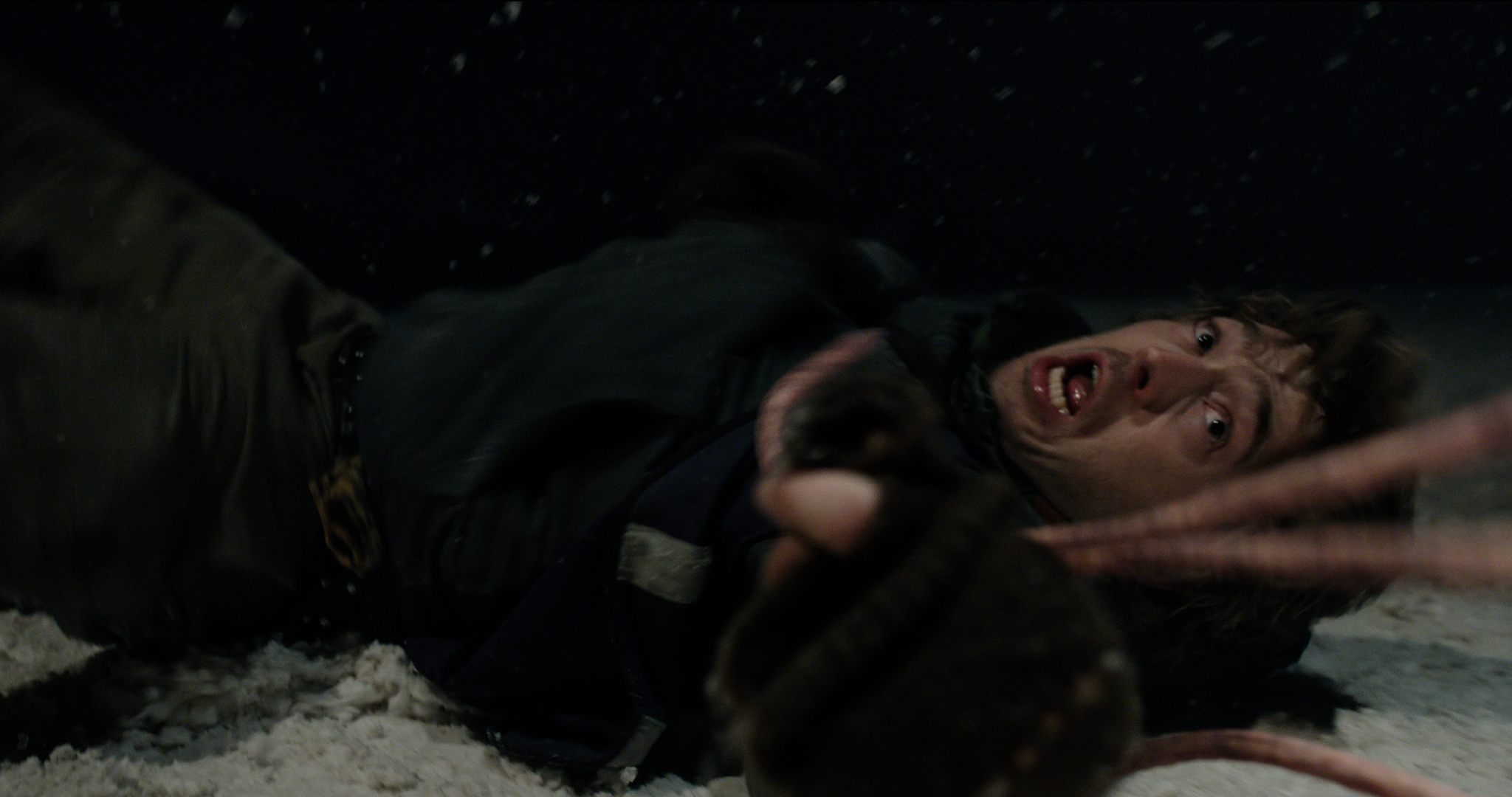
Calling Resident Evil a zombie movie is technically correct in the same way calling a crocodile a lizard is technically correct. It does not quite prepare anyone for the teeth. Cregger starts with recognizable infected humans before allowing things to become progressively more demented. Bodies fuse. Limbs stretch. Tentacles erupt from places where tentacles have absolutely no business being. Faces split open. People are devoured, torn apart and melded into increasingly disgusting biological creations. The further Bryan travels, the more Resident Evil begins looking like somebody dropped a zombie outbreak into John Carpenter’s The Thing and let it mutate unchecked.
An early farmhouse sequence makes the comparison particularly difficult to ignore. A seemingly familiar animal threat becomes something considerably less familiar once its face opens and the film announces exactly what sort of monster movie it intends to become. From there, the mutations keep escalating. Not everything resembles a typical infected human. In fact, after a while, the regular undead start looking rather comforting. The violence follows the same trajectory. Early bloodshed gives way to splatter, the splatter gives way to body horror and eventually Resident Evil appears determined to discover how many unpleasant textures can occupy the screen simultaneously. Blood. Slime. Pus. Acid. Meat.
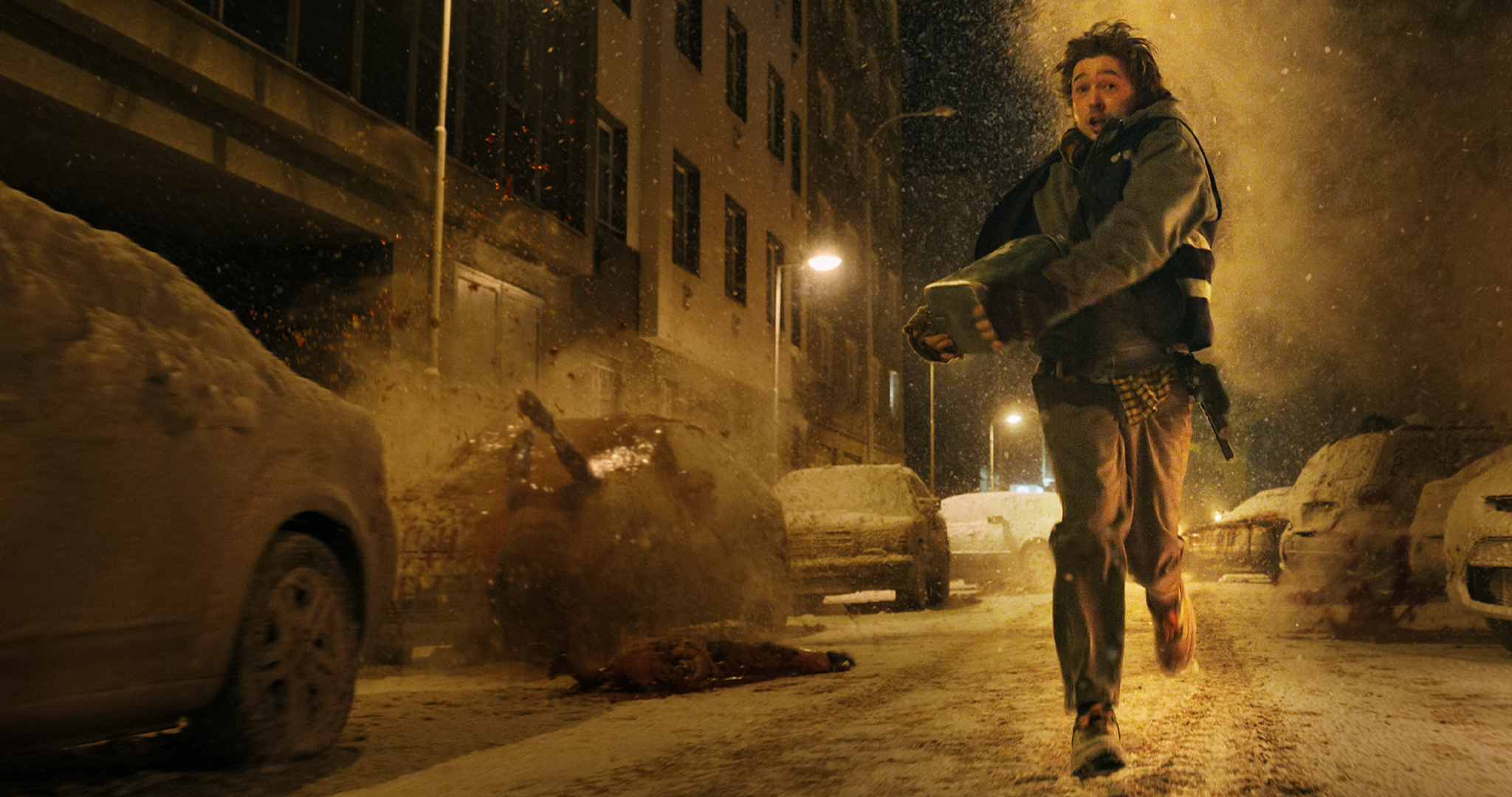
Yet the carnage rarely becomes exhausting because Cregger keeps changing the game. One sequence, already glimpsed in the film’s marketing, sees Bryan moving through the streets of Raccoon City while infected people begin hurling themselves from surrounding buildings, smashing down around him with an absurd mixture of horror and pitch-black comedy. Another takes place inside a maternity ward that has been transformed into a carnival of grotesquery. It is revolting, slimy, surreal and oddly playful, the kind of sequence where looking away feels sensible right up until curiosity wins. Then there’s the final stretch, where Resident Evil becomes an all-out creature feature and what began as a relatively straightforward snowy-road survival thriller descends into full-blown biological madness.
Somehow, it holds together. That escalation is perhaps the film’s cleverest connection to the games. A classic Resident Evil adventure can begin with a handgun, a creepy hallway and three bullets before eventually asking the player to unload industrial quantities of ammunition into a mutated nightmare the size of a bus. Cregger understands that rhythm. His film starts scary, gets stranger and eventually becomes completely bonkers. By the time it reaches its killer final level, watching Resident Evil feels less like watching somebody adapt one of the games and more like playing a brand-new one.
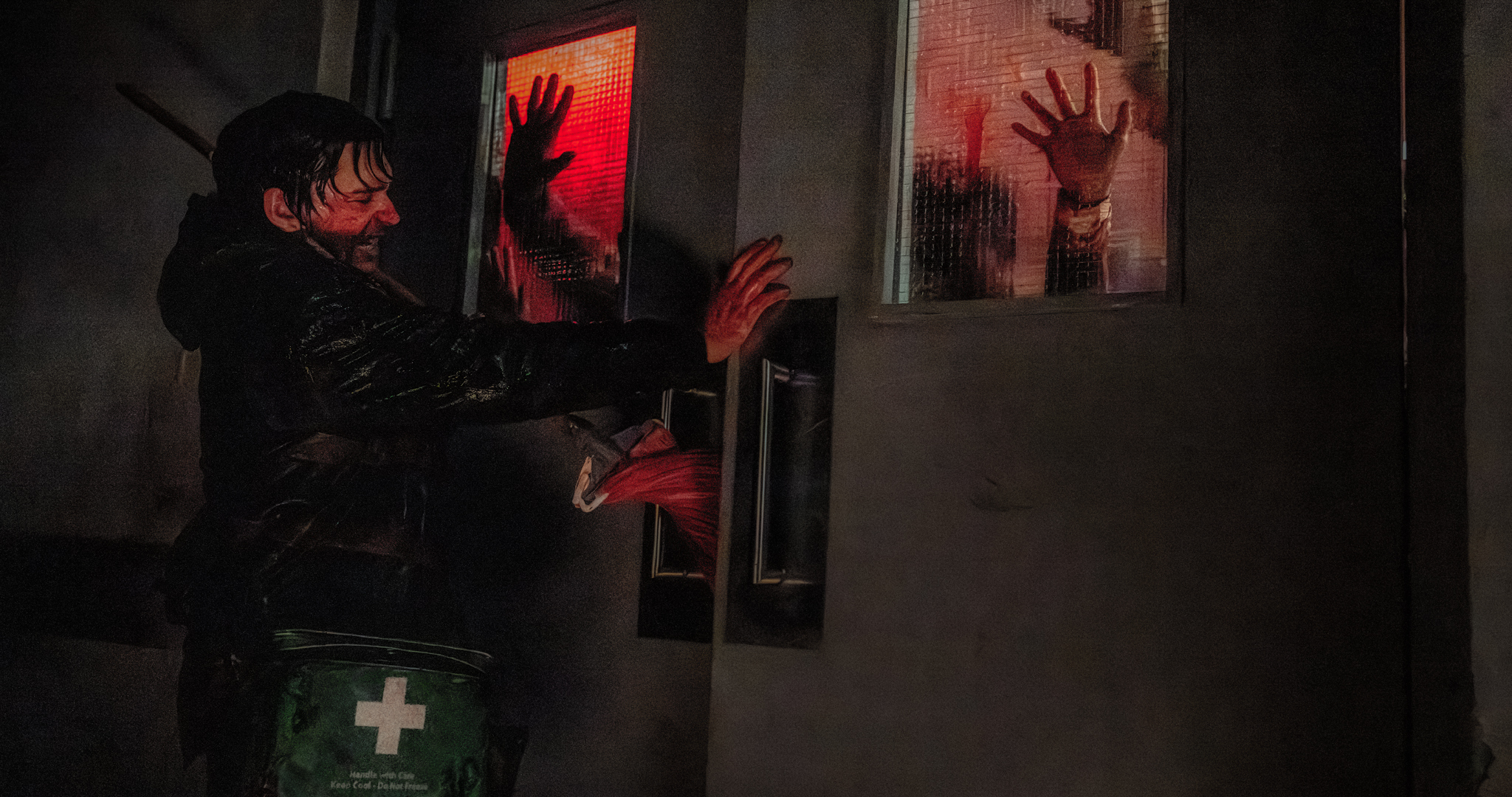
There are still treats scattered around for those who know where to look. A typewriter. Green herbs sit quietly in the background. Keys, obnoxiously secure locks, familiar weapons and ammunition recall the games’ mechanics, while Bryan rummaging through drawers for shells will immediately trigger memories in anyone who has ever desperately searched a room while pretending not to hear something growling on the other side of the door. His green delivery bag even resembles the First Aid Box from the games. Crucially, none of it stops the movie dead for applause. These are references rather than obligations, folded naturally into a story that is not interested in functioning as a feature-length teaser for something else. It follows one extraordinarily unlucky man through one horrifying night and, around 90 minutes later, it is finished. Remember when movies did that?
The stripped-down approach also means there isn’t an enormous amount of thematic meat underneath all the literal meat, although Cregger finds a surprisingly effective throughline in Bryan’s anxiety about becoming a father. His journey begins with fear over how dramatically his life may be about to change, before forcing him into a night where change becomes horrifyingly literal. Infection mutates bodies without permission, familiar people become something unrecognizable and Bryan keeps being shoved forward whether he feels ready or not. Ultimately, his journey is about responsibility: continuing forward when turning around would be easier and confronting the fact that sometimes life changes before anyone has decided they are prepared for it.
On a visual level, the film is similarly confident. Cinematographer Dariusz Wolski gives the opening stretch a particularly eerie beauty, with headlights, emergency lights and isolated pools of warmth cutting through the snowy darkness. Interiors become increasingly claustrophobic as the movie progresses before the scale opens back up for its larger creature sequences. Cregger also sneaks in visual compositions that evoke videogame perspectives without turning the entire production into a gimmicky first-person experiment. The effects are top-notch for the most part, particularly whenever the monsters have weight, slime and something tangible for the actors to react against. A few digital elements buckle slightly under closer inspection, but it scarcely matters when the creature design is this imaginative. Resident Evil wants its audience recoiling and grinning at the same time, and the effects department spends most of the running time finding new ways to make that happen.
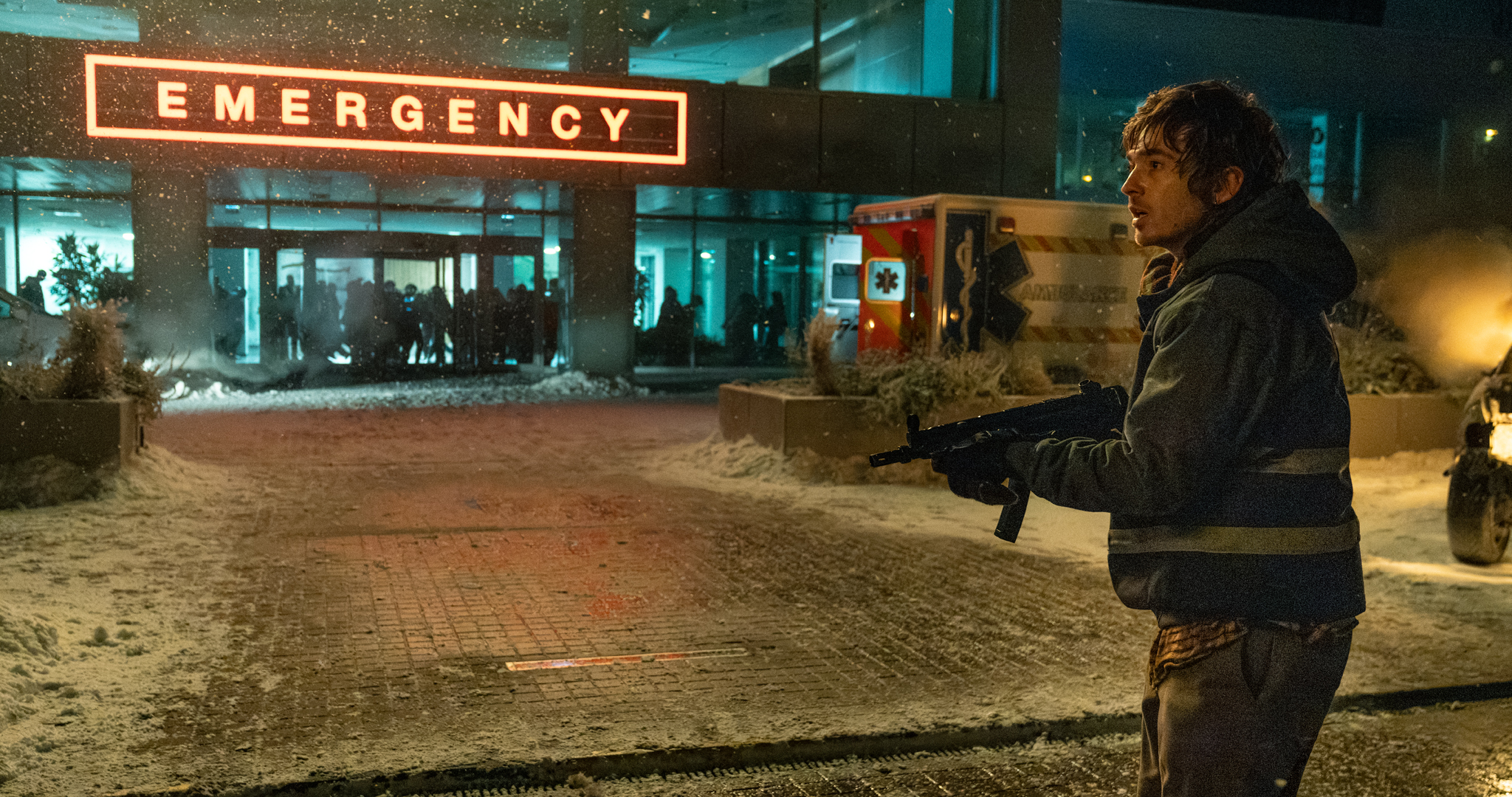
The cast also understands the assignment. Abrams carries much of the proceedings, proving that the twitchy, unpredictable energy he brought to Weapons can comfortably sustain a leading role. Bryan is funny because Abrams never appears to be begging for a laugh, and sympathetic because his fear feels genuine. He looks tired, frightened and increasingly filthy, which is basically the correct three-stage evolution for any Resident Evil protagonist. Paul Walter Hauser turns limited screen time into another wonderfully odd character, while Severance star Zach Cherry slides comfortably into the film’s increasingly bizarre Umbrella endgame. The supporting cast never overwhelms Abrams, but they provide a welcome change in energy before Bryan is inevitably thrown back into the nightmare alone.
There will undoubtedly still be fans disappointed that Leon never turns up, that Claire isn’t racing through the streets or that Cregger has not recreated a beloved game beat-for-beat. This movie makes a pretty convincing argument that he never needed to. Previous adaptations have spent years trying different combinations of fidelity and reinvention, sometimes borrowing the characters, sometimes borrowing the monsters and sometimes seemingly borrowing little more than the logo. Cregger finally cracks it by adapting something considerably harder to reproduce. The feeling.
Resident Evil gets it. It’s fun, scary, thrilling, disgusting, frequently quite funny. But most importantly, it is never boring. Cregger takes a franchise carrying three decades of mythology, strips it down to one man, one mission and one catastrophically bad night. Turns out Resident Evil never needed another resurrection. It just needed a new game. Not only is Zach Cregger’s Resident Evil one of the best films of the year, it belongs comfortably among the best videogame adaptations ever made. Game over? Not even close.
4 / 5 – Recommended
Reviewed by Dan Cachia (Mr. Movie)
Resident Evil is distributed by Sony Pictures Australia

