Moana (2026)
The ocean chose her for a reason.
Why remake a beloved animated classic that is less than a decade old, still feels relatively recent and remains readily available — especially when the live-action version still relies heavily on digital effects to bring its world and characters to life?
It’s a fair question, and one Disney continues to pose as its catalogue of animated favorites steadily transforms into live-action blockbusters. Occasionally, the results justify the exercise by offering a fresh perspective or expanding the material in meaningful ways — see Jon Favreau’s The Jungle Book (2016). More often, though, they simply reproduce what came before with diminishing returns.
Ironically, Moana succeeds for exactly that reason.
The film is so faithful to its animated predecessor that it rarely risks disturbing anything that already worked. It tells virtually the same story, follows the familiar emotional beats, revisits the beloved songs and preserves its uplifting message about identity, family and finding your place in the world. As unnecessary as this remake may initially appear, it remains an enjoyable experience because the material it inherits was excellent to begin with.
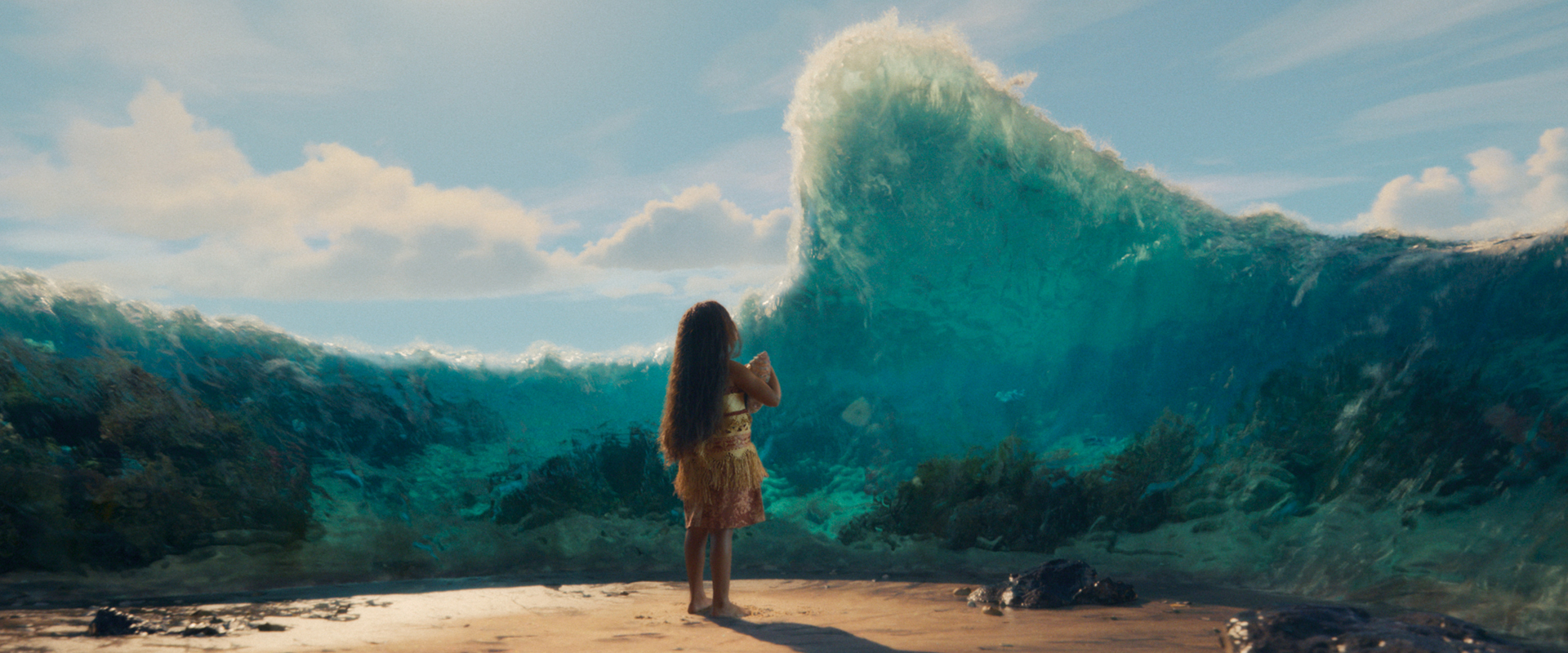
For those unfamiliar with the story, Moana follows the spirited daughter of a Polynesian chief who feels an irresistible connection to the ocean, despite her father’s insistence that she never sail beyond the reef. When a mysterious darkness begins spreading across the islands, she embarks on a dangerous voyage to find the legendary demigod Maui and enlist his help in returning the stolen heart of Te Fiti. Along the way, the pair encounter mythical creatures, perilous obstacles and impossible odds, as the voyage becomes a heartfelt journey of courage, responsibility and, ultimately, self-belief.
The narrative is every bit as charming, warm and emotionally satisfying in live-action. That is hardly surprising when so little has been altered, but it does serve as a reminder of just how strong the screenplay already was. Jared Bush, who wrote the screenplay for the 2016 animated feature, returns alongside Dana Ledoux Miller, who co-wrote and co-directed Moana 2 (2024). Their familiarity with this world protects its warmth and dramatic core, even as it further highlights how closely this version follows the established blueprint.
Helmed by Thomas Kail, the director behind Broadway’s Hamilton and its acclaimed 2020 filmed presentation, Moana moves with a confident rhythm while embracing the colorful fantasy, broad humor and adventurous spirit that made the story such a success in the first place. Kail makes little attempt to reinvent something audiences already know and love. Some viewers may have hoped for a bolder reinterpretation, but the familiar formula still works remarkably well.
Given Kail’s background in musical theatre, it’s no surprise that many of the film’s strongest moments arrive during its song sequences. He understands that these numbers are not merely pauses between plot points; they are the emotional heartbeat of the entire adventure.
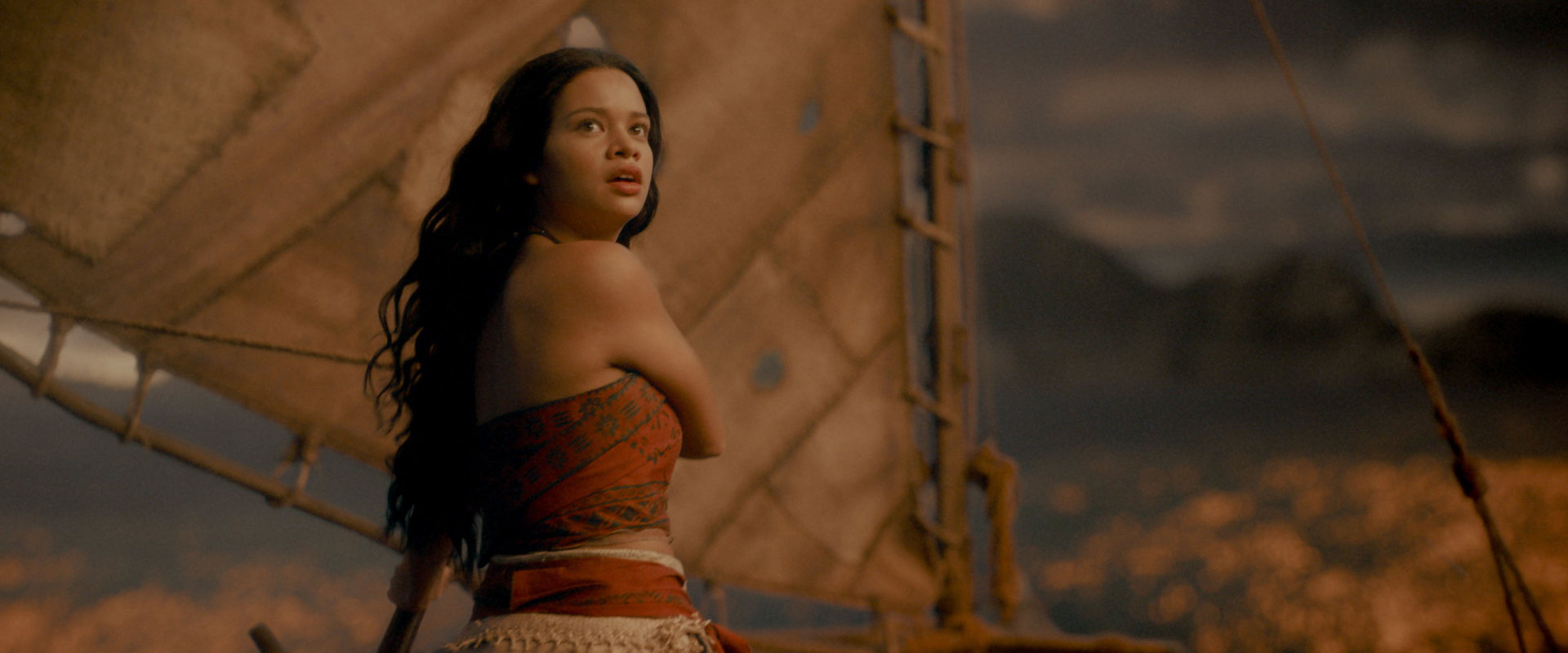
Unlike several of Disney’s recent adaptations, which have seemed strangely restrained or almost embarrassed by their animated roots, Moana fully commits to its theatrical energy. The musical sequences burst with color, movement and personality rather than being stripped back in the pursuit of realism. It’s a refreshing contrast to The Lion King (2019), where the technical achievement was impressive, but the songs often felt muted and emotionally distant. Here, the music drives the story forward, retaining the wonder and excitement that made these moments so memorable.
The performances also help sell the illusion.
Catherine Lagaʻaia brings warmth, determination and infectious enthusiasm to Moana, capturing the character’s optimism and fearless curiosity without simply imitating the animated performance. She’s energetic, sincere and immediately likeable, anchoring the film’s emotional center and proving herself a strong choice to carry such an iconic character into live-action.
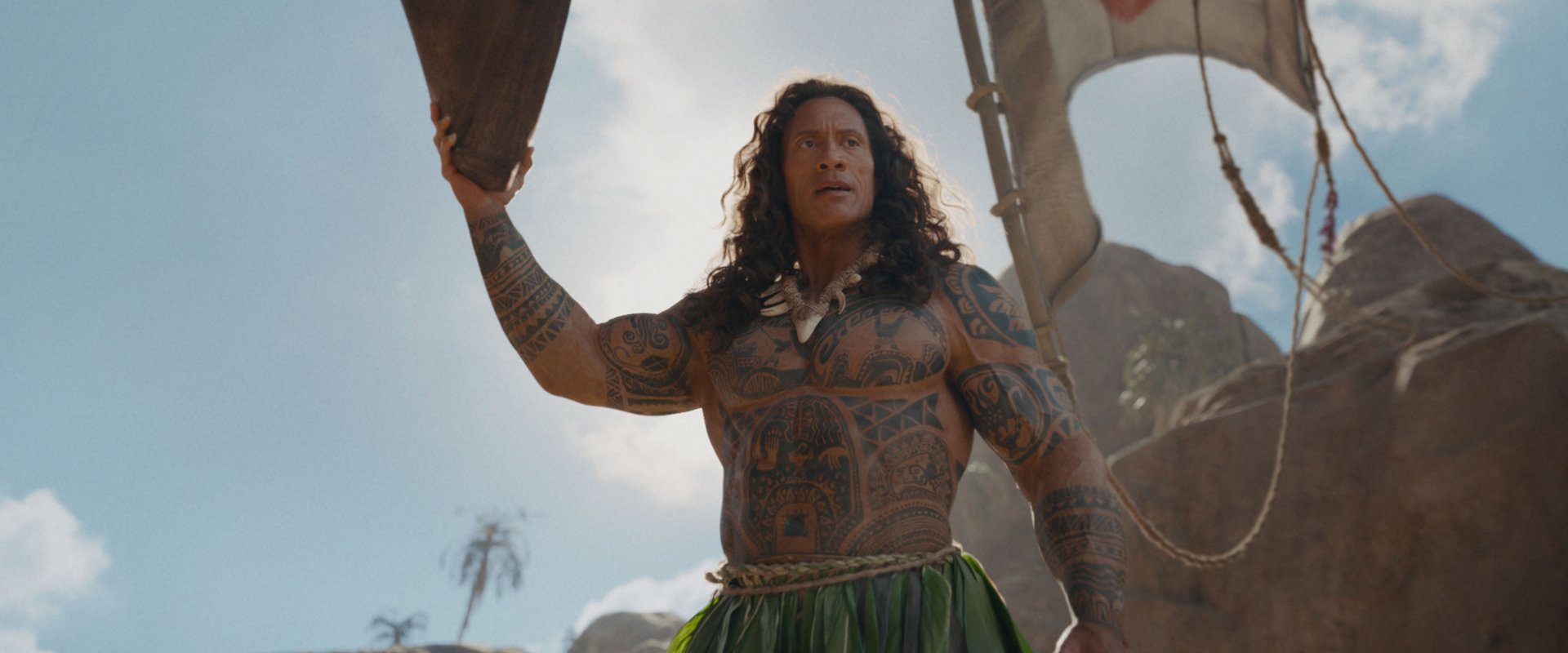
Opposite her, Dwayne Johnson clearly enjoys stepping back into the role of Maui. His natural charisma is undeniable and, despite the occasionally distracting muscle suit and rather questionable wig, he slips comfortably into the larger-than-life demigod audiences remember. Maui’s humor, vulnerability and reluctant heroism all survive the transition, making him one of the film’s most entertaining highlights.
Returning fan favorite Tamatoa — the egotistical, treasure-obsessed giant crab who proudly decorates himself with anything shiny — steals every scene in which he appears. Jemaine Clement reprises the role with the same gleeful arrogance and outrageous comedic energy that made the character such a standout. His appearance may be brief, but Tamatoa makes every second count.
The supporting cast is equally dependable, with Rena Owen as Gramma Tala and John Tui as Chief Tui emerging as particular standouts. It is especially pleasing to see Polynesian performers bringing authenticity and lived cultural connection to these characters, giving the film an identity that extends beyond the recreation of familiar imagery. That representation matters, and it adds weight to the foundation of the story.
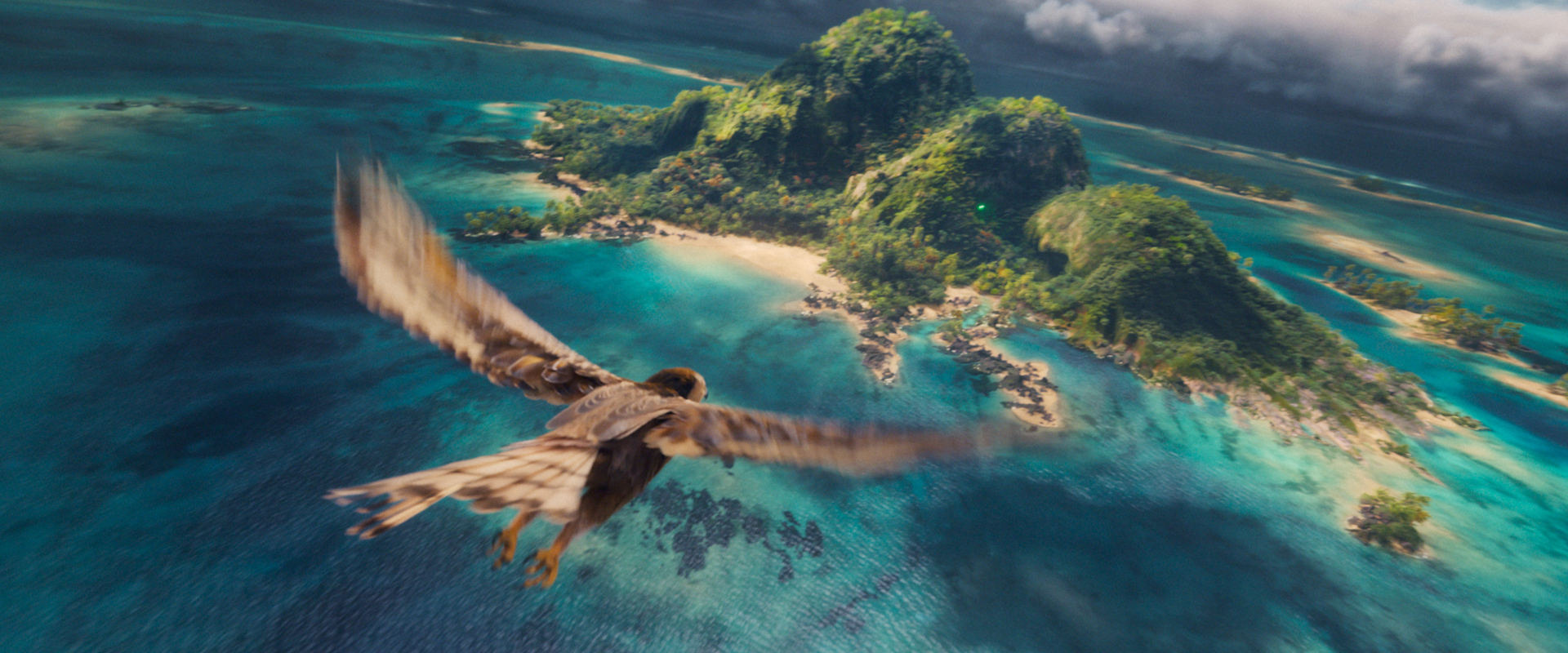
Visually, the production is frequently impressive, particularly during its ocean sequences. The water continues to behave almost like another character, while the islands, forests and mythical locations are brought to life with considerable detail.
Yet an unmistakably artificial sheen hangs over much of the film.
For all its beauty, everything often looks a little too pristine — almost as though it belongs on Disney+ rather than commanding the scale of a major theatrical blockbuster. The production design is attractive but rarely tactile. Costumes appear freshly pressed, environments feel digitally polished, and several sets lack the weathered texture needed to immerse audiences more completely in this world. It’s a surprisingly glossy presentation for a story built around ocean voyages, ancient mythology and dangerous exploration.
That is ultimately where the remake feels most restrained.
Rather than simply recreating the original animated film with remarkable accuracy, Disney could have used the opportunity to evolve it into something genuinely different. Imagine a version that leaned further into sweeping fantasy adventure in the vein of Pirates of the Caribbean — one that embraced practical spectacle, genuine danger and a broader cinematic scale while preserving the story’s soul. Such an approach may have encouraged older audiences, particularly those who grew up with the 2016 film, to discover something new instead of revisiting a tale they already know almost by heart.
Perhaps that is where Disney’s live-action strategy could be better utilized. Instead of repeatedly returning to animated films that remain beloved, successful and widely celebrated, the studio could look towards those that never received the recognition they deserved. Imagine applying this level of care and spectacle to overlooked classics such as Atlantis: The Lost Empire (2001) or Treasure Planet (2002) — richly imagined animated films filled with ambitious ideas and untapped cinematic potential.
A live-action adaptation of either could feel like a genuine revival rather than another recreation, introducing forgotten classics to a new generation while giving longtime fans an experience they have not already seen.
Instead, with Moana, Disney has delivered a beautifully assembled duplicate.
That isn’t necessarily a criticism. Audiences who loved the animated film will almost certainly enjoy this one too. The major moments still land, the songs remain wonderfully memorable, the humor continues to charm and the central message retains all its warmth. The problem is simply that very little feels essential.
It’s difficult to celebrate a remake whose greatest achievement is reminding you how great its predecessor was. Nearly every standout moment originated elsewhere, making it impossible to judge this film entirely apart from the legacy it is recreating. Even so, Moana is an entertaining, heartfelt and visually appealing adventure, powered by performances that bring genuine energy to familiar characters. Had this story never existed before, it would likely be considered one of Disney’s strongest family releases in years.
Ultimately, Moana is a good film — occasionally a great one — but its greatest strength is also its biggest limitation: the story was excellent to begin with. The magic survives, even if Disney rarely gives us a compelling reason to summon it all over again.
3.5 / 5 – Great
Reviewed by Stu Cachia (S-Littner)
Moana is distributed by Disney Australia

