Supergirl (2026)
Truth. Justice. Whatever.
Since first soaring into Action Comics #252 in 1959, Kara Zor-El has spent much of her history flying in the considerable shadow of her more famous cousin. Helen Slater carried the cape in 1984, Melissa Benoist gave the character a long television life, and Sasha Calle brought a tougher alternate version to The Flash (2023). Now, following her chaotic introduction in 2025’s Superman, Milly Alcock gets the chance to take center stage in the second big-screen chapter of James Gunn and Peter Safran’s new DC Universe. That’s a lot of history for one cape to carry. Unfortunately, while Supergirl certainly gets off the ground, this particular Woman of Tomorrow is still searching for a clearer direction today.
Kara Zor-El (Milly Alcock) is not exactly embracing life on Earth. Haunted by Krypton’s destruction and increasingly disconnected from her cousin Kal-El (David Corenswet), she spends her twenty-third birthday traveling between worlds beneath red suns, where her Kryptonian metabolism slows enough for her to get drunk. Along for the ride is Krypto, the super-powered dog and seemingly the only companion Kara trusts. During one of these intergalactic excursions, Kara crosses paths with Ruthye Marye Knoll (Eve Ridley), a young survivor seeking revenge against Krem of the Yellow Hills (Matthias Schoenaerts), the vicious leader of a gang of space pirates known as the Brigands. After Krem poisons Krypto and leaves him with only days to live, Kara reluctantly joins Ruthye on a hunt for the antidote. Their pursuit sends them hurtling across the galaxy and towards the grief Kara has spent years trying to outrun.
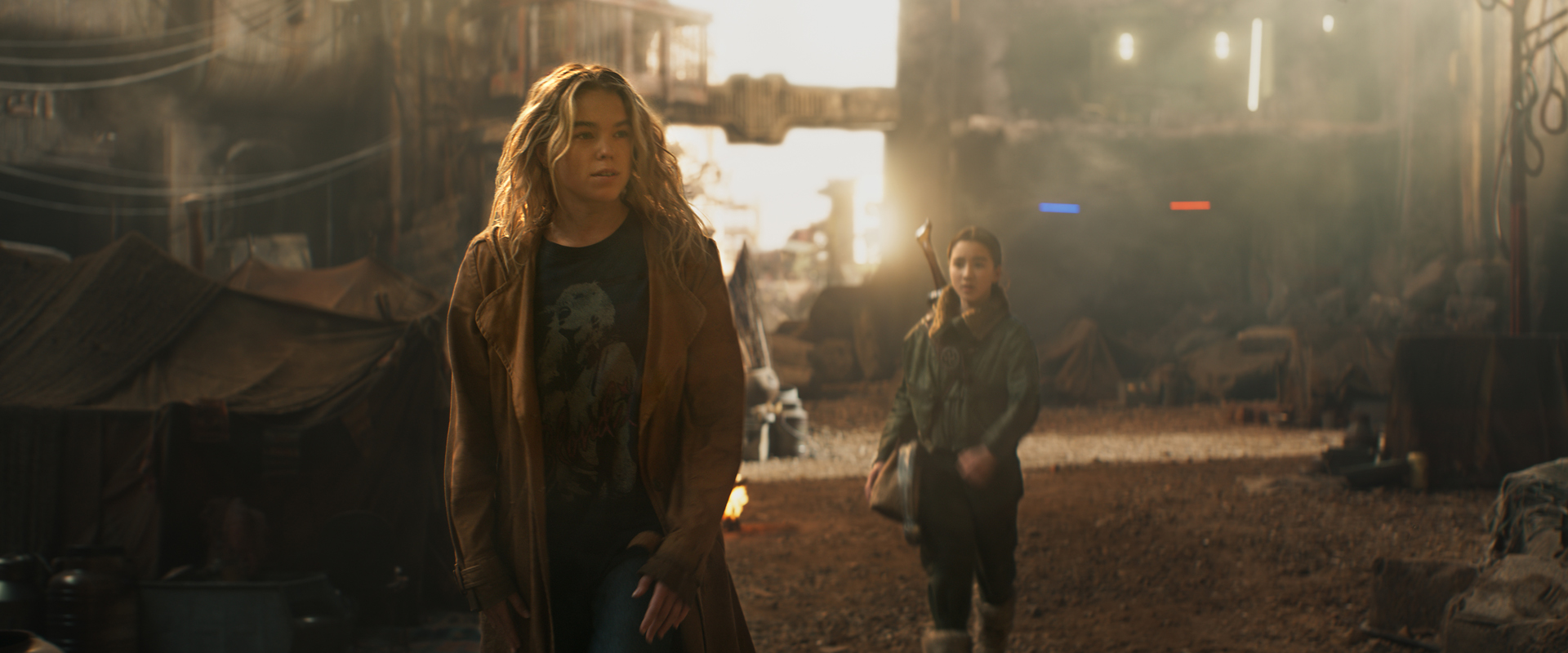
Although this was supposed to be based on writer Tom King and artist Bilquis Evely’s beloved Supergirl: Woman of Tomorrow comic, it’s barely anything like it. Ana Nogueira’s screenplay retains the basic ingredients — Kara, Ruthye, Krem, Krypto and a revenge journey across the stars — but does not really translate what made the original story so powerful. The comic was patient, lyrical and quietly devastating, using Ruthye’s perspective to examine Kara as both a damaged survivor and an almost mythic symbol of compassion. Here, much of that texture has been stripped away, rearranged or replaced until the source feels less adapted than butchered.
Instead, the production borrows heavily from Guardians of the Galaxy and Mad Max: Fury Road. The alien bars, retro tracks and battered technology carry the fingerprints of James Gunn’s Marvel work, while Krem and the Brigands look as though they escaped from a dusty post-apocalyptic convoy. Even the darker subplot involving the abduction and forced exploitation of young women pushes the story into Fury Road territory, only without the urgency, visual grandeur or righteous anger that made George Miller’s work hit so hard. There is nothing wrong with drawing from successful influences, but Supergirl does it so openly that its own identity begins to disappear. Kara misses Krypton, resents Earth and insists that she has no interest in becoming part of its culture, yet she wanders around in band T-shirts while listening to an iPod through headphones because, apparently, that’s now the required accessory for emotionally wounded cosmic heroes. Peter Quill did it first, and with considerably more purpose.
The handling of Kara’s abilities is just as frustrating. Her strength depends on the type of sun nearby, which should create interesting limitations. Rather, the screenplay treats her power level like a volume dial, turning it up or down whenever the next scene requires her to dominate, struggle or collapse. Red sunlight, stored yellow-sun energy and recovery times follow such elastic logic that it becomes difficult to understand what can hurt her or why certain threats matter. When Kara is effectively a living weapon, the rules need to be clear. Here, they are whatever the plot requires at that particular moment.
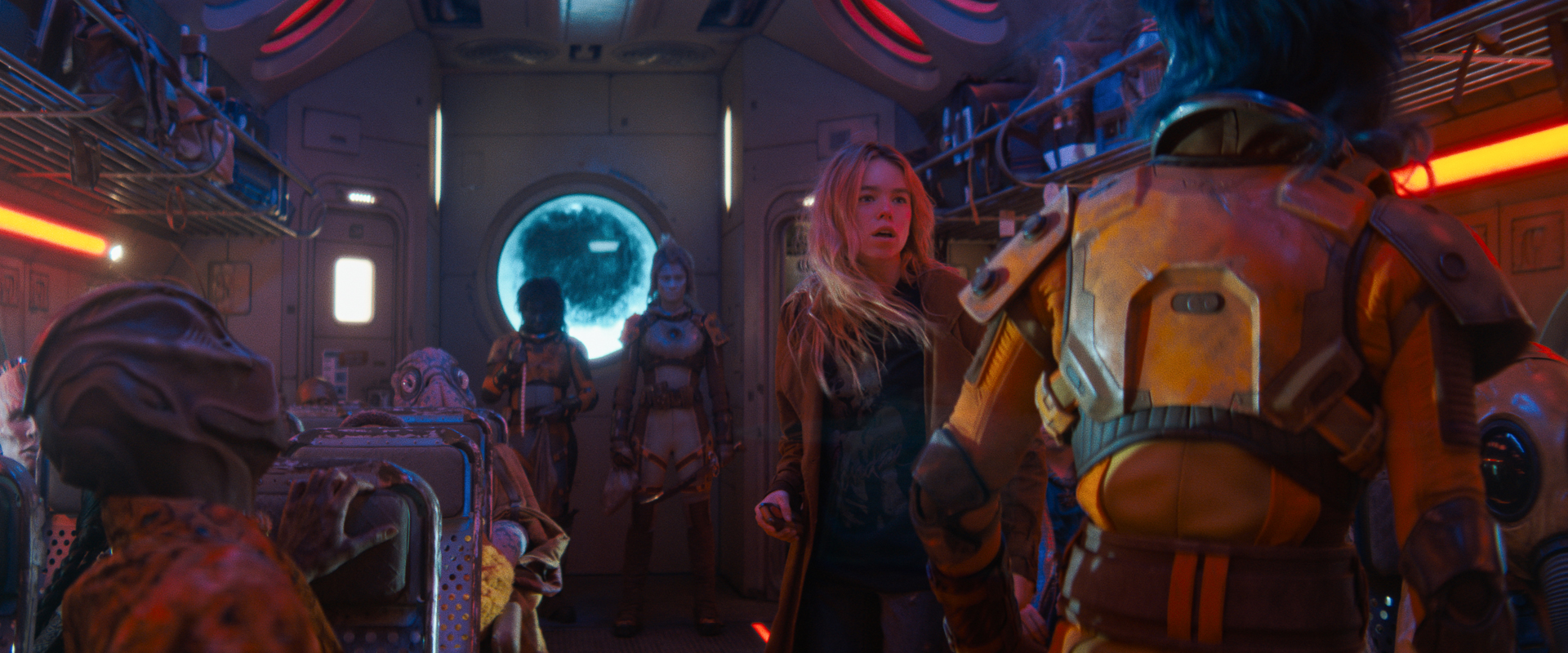
At its core, this is a story about grief, survivor guilt, revenge and forgiveness. Kara is not simply mourning Krypton; she is angry that Earth expects her to treat survival as a gift when it seems more like a sentence. Ruthye, meanwhile, sees vengeance as the only remaining link to the family taken from her. Their relationship should allow each to recognize the danger in the other’s pain. Some of this works when Alcock drops the attitude and exposes the exhaustion underneath, but the screenplay states its themes more effectively than it develops them. The bond between Kara and Ruthye never gains enough depth to make its lessons about mercy fully earned, while the trafficking material introduces harrowing ideas that the broader adventure cannot examine with much sensitivity. Both become buried beneath franchise obligations and distracting needle drops.
The strongest emotional material arrives during a brief flashback charting Krypton’s destruction and Argo City’s survival on a fragment of the planet. Kara escapes the catastrophe alongside her parents, Zor-El (David Krumholtz) and Alura In-Ze (Emily Beecham), only to watch their sanctuary succumb to radiation and decay. Krumholtz and Beecham bring immediate warmth to their limited screen time, while this glimpse of Kara’s former home gives real shape to her grief and resentment. For a few moments, the enormous cosmic tragedy becomes painfully intimate. Alas, the sequence is over almost as soon as it begins, leaving the impression that the most compelling version of Kara’s story was confined to its shortest chapter.
Director Craig Gillespie handles the material competently. His affinity for damaged outsiders suits this version of Kara, with occasional flashes of the sharp character work seen in I, Tonya (2017) and Cruella (2021). The problem is that his scrappy, grubby approach plays as niche rather than as a crowd-pleasing blockbuster. There is personality in the style, but very little grandeur. Worse, Supergirl is often ugly to look at. Rob Hardy’s photography leans into desaturated browns, dirty greys and muddy interiors, flattening worlds that should appear strange and visually distinct. Bilquis Evely’s comic artwork was dreamlike, colourful and packed with cosmic imagination. This version replaces much of that beauty with industrial corridors, dusty landscapes and digital murk.
The action does not help. There is surprisingly little of it, and what appears is messy, aggressively cut and difficult to follow. Kara crashes through groups of enemies while the camera shakes, bodies fly and another song competes for attention. The intention may be to reflect her anger, but the result is less emotionally expressive than visually exhausting. A hero this powerful should inspire action with weight, speed and clarity. Too often, these encounters amount to on-screen noise.
The integrated music is equally jarring. Tracks by Modest Mouse, Wolf Alice and Rilo Kiley are used as shortcuts to attitude, while a cover of Jimmy Eat World’s ‘The Middle’ strains for an anthemic moment it never earns. James Gunn made the soundtrack choices in Guardians of the Galaxy part of Peter Quill’s history and connection to his mother. Here, the songs seem pasted over scenes in pursuit of the same cool effect. Rather than giving the adventure rhythm, they repeatedly pull attention away from it.
Thankfully, the creature designs and practical puppetry are among the highlights. Many alien inhabitants are grotesque, slimy and just a little gross, providing a tactile strangeness missing elsewhere. The practical textures and odd faces suggest a universe that’s been lived in rather than freshly rendered. That ugliness works when it belongs to the creatures. It works considerably less when it covers the entire screen. Mainstream audiences may find the designs off-putting, but at least they provide something memorable.
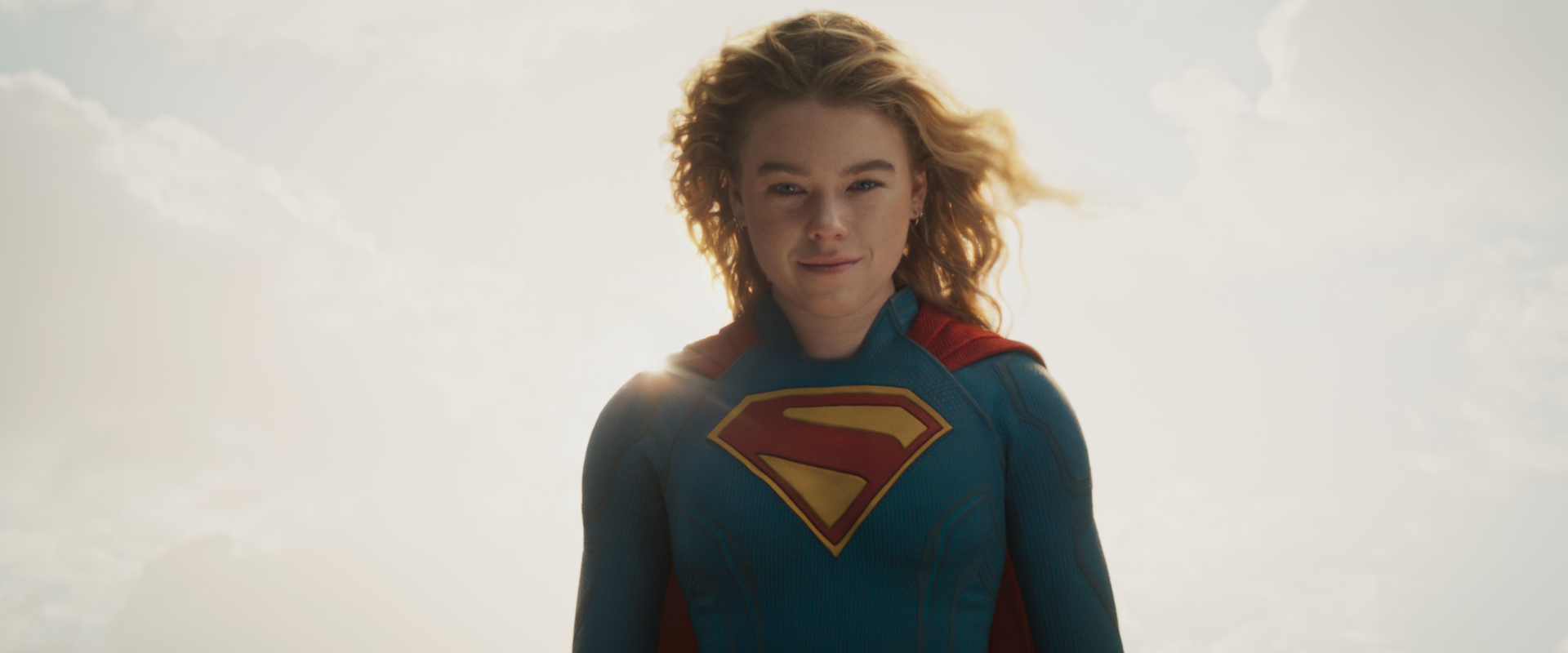
Milly Alcock is compelling in the central role and easily the production’s strongest asset. Her Kara is abrasive, damaged, amusing and visibly uncomfortable with being treated as a symbol. Alcock handles the physical confidence well, but excels when the swagger falls away and the frightened survivor emerges. This more abrasive interpretation is likely to divide general audiences. She is not an immediately lovable Supergirl and spends much of the runtime pushing people away. That’s an interesting choice, although not necessarily one that will connect with viewers expecting the hopeful hero associated with the cape.
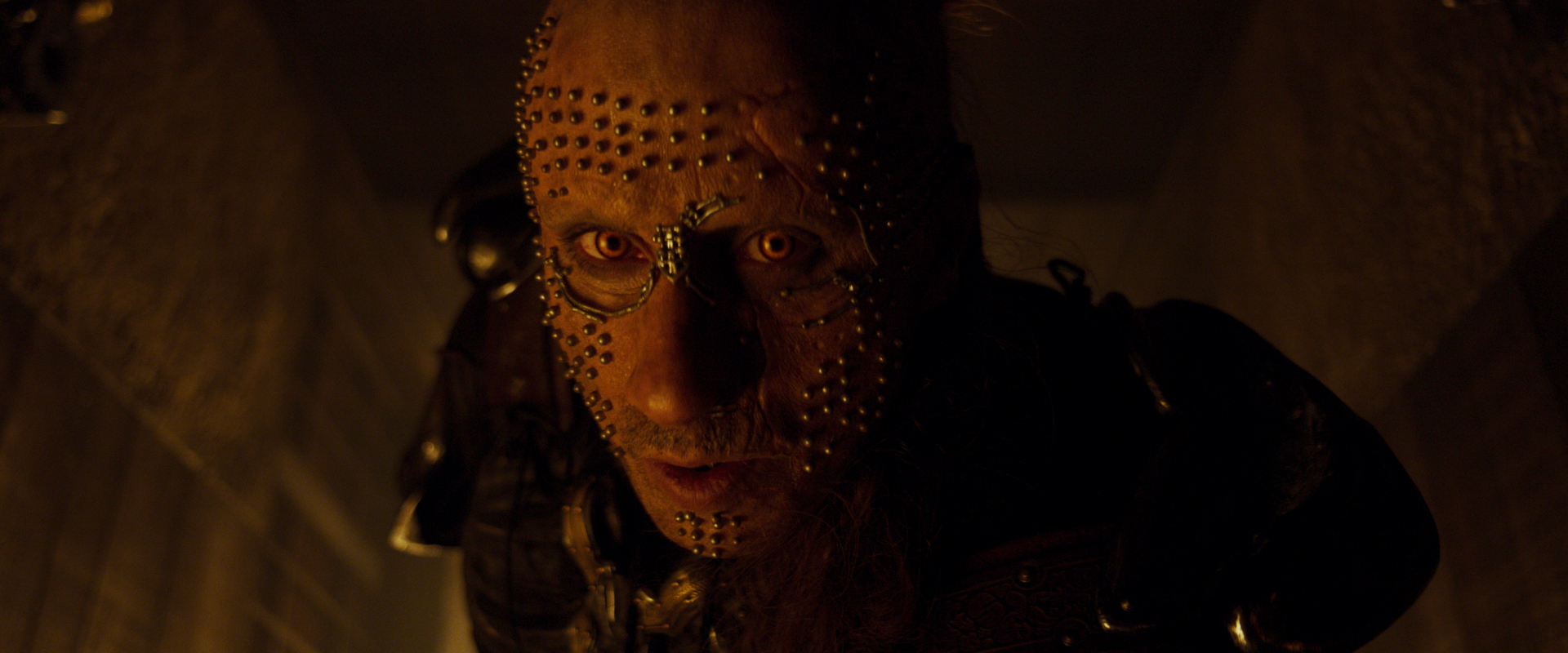
Matthias Schoenaerts is given far less to work with as Krem. Despite the elaborate piercings and Mad Max makeover, he remains one-note and forgettable. Krem commits terrible acts, but menace is repeatedly substituted for personality. Schoenaerts can be a commanding presence, yet the villain never becomes more than a growling obstacle waiting at the end of the chase. Eve Ridley fares slightly better as Ruthye, bringing determination and wounded resolve to a potential revenge device. Even so, she is saddled with stiff writing, while the departure from Bilquis Evely’s distinctive costume design remains a distracting annoyance. The original gave Ruthye a memorable storybook quality that suited the strange Western tone. Its replacement makes her look less specific and more like another generic young franchise companion. Elsewhere, David Corenswet is likeable and uplifting in his brief appearance as Superman, bringing the same sincerity and decency that made his earlier outing work. His Kal-El provides a welcome contrast to Kara, acknowledging her pain without making it seem childish or invalid.
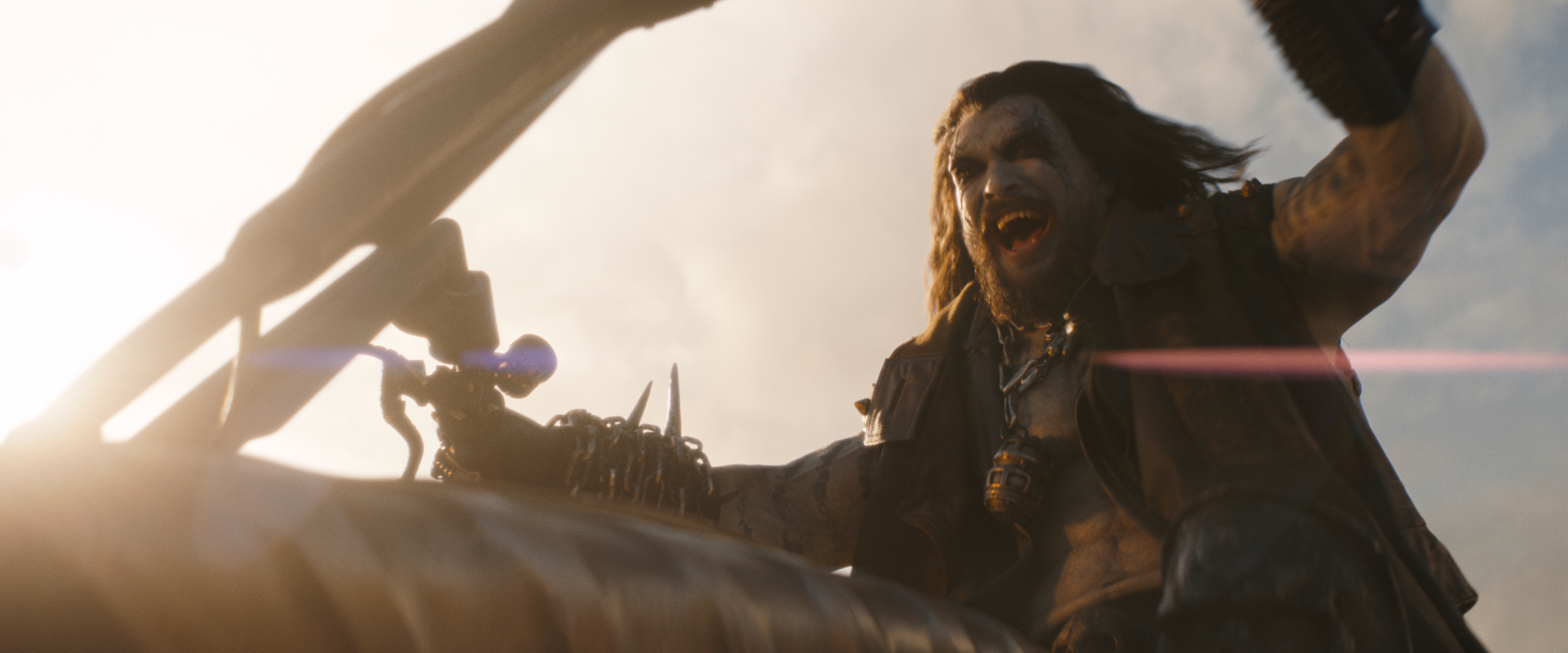
Then there is Jason Momoa as Lobo, DC’s cigar-chomping, ultra-beefed intergalactic bounty hunter. After years of openly wanting to play the role, Momoa is clearly having fun, and the enthusiasm is infectious. He looks comfortable beneath the makeup, leans into the character’s vulgar swagger and gives the adventure a much-needed jolt. He is genuinely solid in the role. Sadly, Lobo also feels completely shoehorned into the story, less a necessary character than a dangling carrot for viewers who might otherwise dismiss a female-led cosmic adventure: yes, this is Kara’s story, but look — it is Lobo. His presence screams future plans rather than current purpose.
Overall, Supergirl is good, but it is also extremely niche. Alcock gives the new DC Universe a compelling lead, the icky creatures are appealing and several emotional ideas almost break through the clutter. Yet the weak adaptation, inconsistent powers, bland villain and borrowed identity prevent it from becoming the soaring crowd-pleaser it should have been. Some viewers will connect with its grungy punk attitude, wounded heroine and dirt-under-the-fingernails approach to cosmic adventure. Others will wonder why one of DC’s brightest characters has been placed inside something so visually dim and stubbornly offbeat. That divide may prevent it from becoming the major hit DC Studios wants. Supergirl can fly, but this time the cape gets caught on too many borrowed ideas before reaching the stratosphere.
3 / 5 – Good
Reviewed by Dan Cachia (Mr. Movie)
Supergirl is distributed by Warner Bros. Australia

