Backrooms (2026)
You are not supposed to be here.
Some horror ideas arrive through novels, folklore or urban legend. Backrooms came from something far more modern: an anonymous image posted to 4chan in 2019, showing a drab commercial space with sickly yellow walls and fluorescent lighting. A reply imagined an endless maze beyond reality, and internet users soon expanded it into a sprawling mythology of levels, entities and lost travellers. Kane Parsons, better known online as Kane Pixels, gave that idea movement. At 16, he created the nine-minute short The Backrooms (Found Footage) with Blender and Adobe After Effects, then uploaded it to YouTube in 2022. Its appeal came less from explanation than atmosphere: an ordinary workplace stripped of people, purpose and logic. Studio interest followed quickly, but Parsons remained behind the camera for this A24 release, becoming the company’s youngest feature director. The result expands his nightmare without polishing away its strange digital origins.
Set in 1990, the story follows Clark (Chiwetel Ejiofor), a failed architect, problem drinker and recent divorcee now living in the pirate-themed furniture store he runs. His sessions with therapist Dr. Mary Kline (Renate Reinsve) repeatedly return to the patterns that have left his life stalled. Then a strange opening appears in the basement wall of his shop, leading to a seemingly endless network of yellow rooms, blind corridors and impossible architecture. Clark approaches the discovery as something to be mapped and understood. He enlists assistant manager Kat (Lukita Maxwell) and her boyfriend Bobby (Finn Bennett) to help document it, but curiosity soon hardens into obsession. As Clark ventures deeper into the maze, his erratic behaviour draws Mary across the threshold, where the Backrooms begin reflecting fragments of memory with increasingly distorted results.
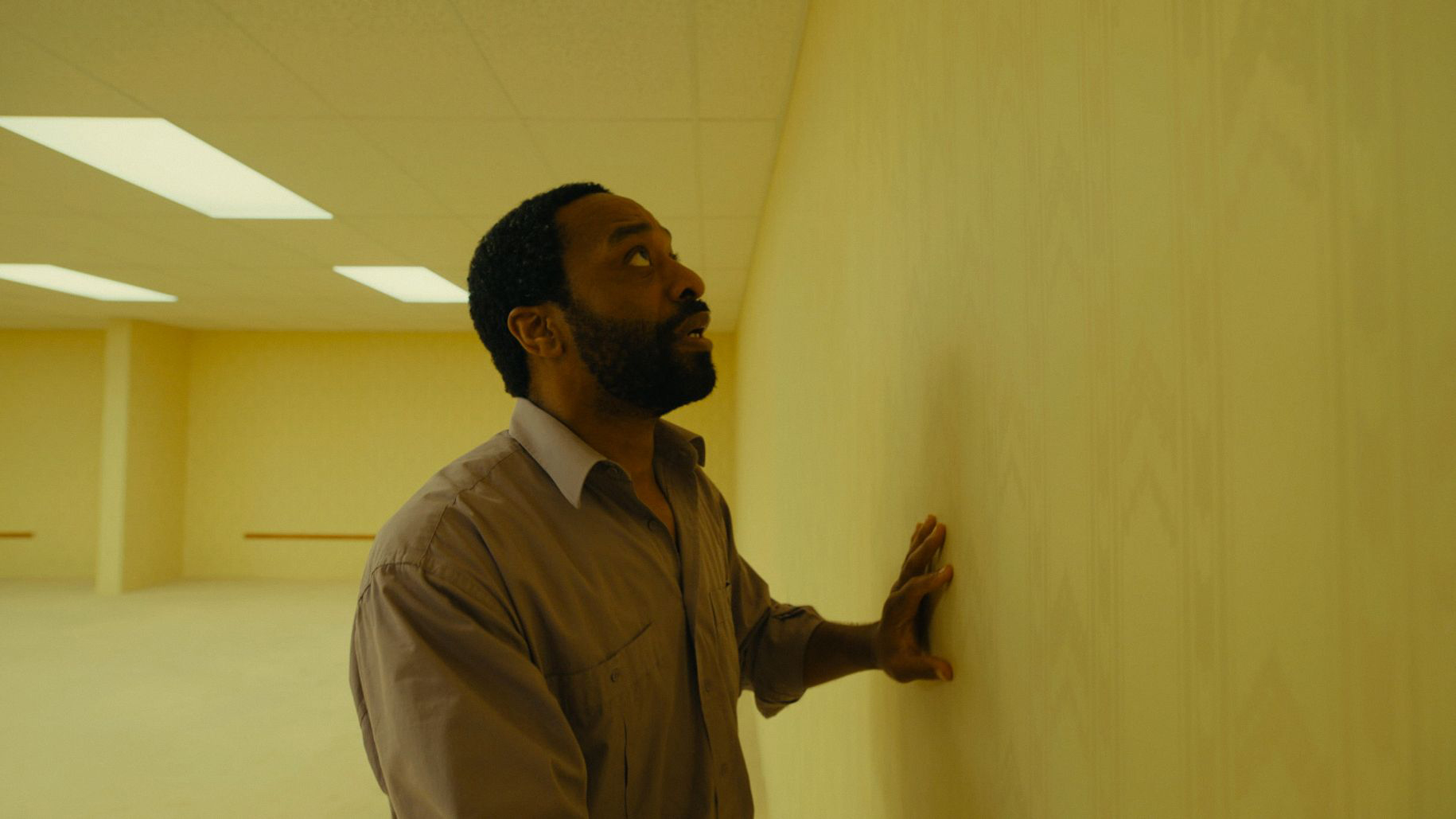
Will Soodik’s screenplay is deliberately simple for the most part, giving Parsons room to prioritise atmosphere over lore. That restraint is welcome — the less the space is explained, the more unsettling it becomes. The limitation is the therapist-patient subplot. Clark and Mary are both caught in destructive cycles, and there is a compelling idea in a therapist entering a physical manifestation of the patterns she asks others to break. It works, but remains surface-level. Mary’s past is suggested more than explored, while her insight into Clark rarely develops beyond recognising that he keeps repeating the same mistakes. Parsons’ direction is far more assured. He understands that the danger lies not only in what might be hiding within these rooms, but in their seemingly limitless scale. Long corridors, damp-looking carpet and subtly incorrect angles become threatening through duration and expectation. He holds on empty frames until the audience begins searching them, turning every dark opening into a possible hiding place. Threats do exist, yet the long stretches between encounters provide no relief; they make the viewer feel smaller and more exposed.
The mundanity of the environment is crucial. Most people have walked through an empty office, deserted showroom or silent shopping centre after closing. These are not traditionally frightening places, but removing the people also removes their purpose. The familiar becomes unreadable. Here, spaces apparently designed for human activity make human presence feel like an intrusion. Parsons also returns to degraded camcorder footage during key passages of the film, preserving the visual identity of his original shorts. Static, blown-out highlights and smeared movement make every shape uncertain, while Jeremy Cox’s cinematography moves smoothly between rough analogue material and more controlled imagery. Even the cleanest compositions feel unstable, as though reality and its recording are beginning to contaminate one another.
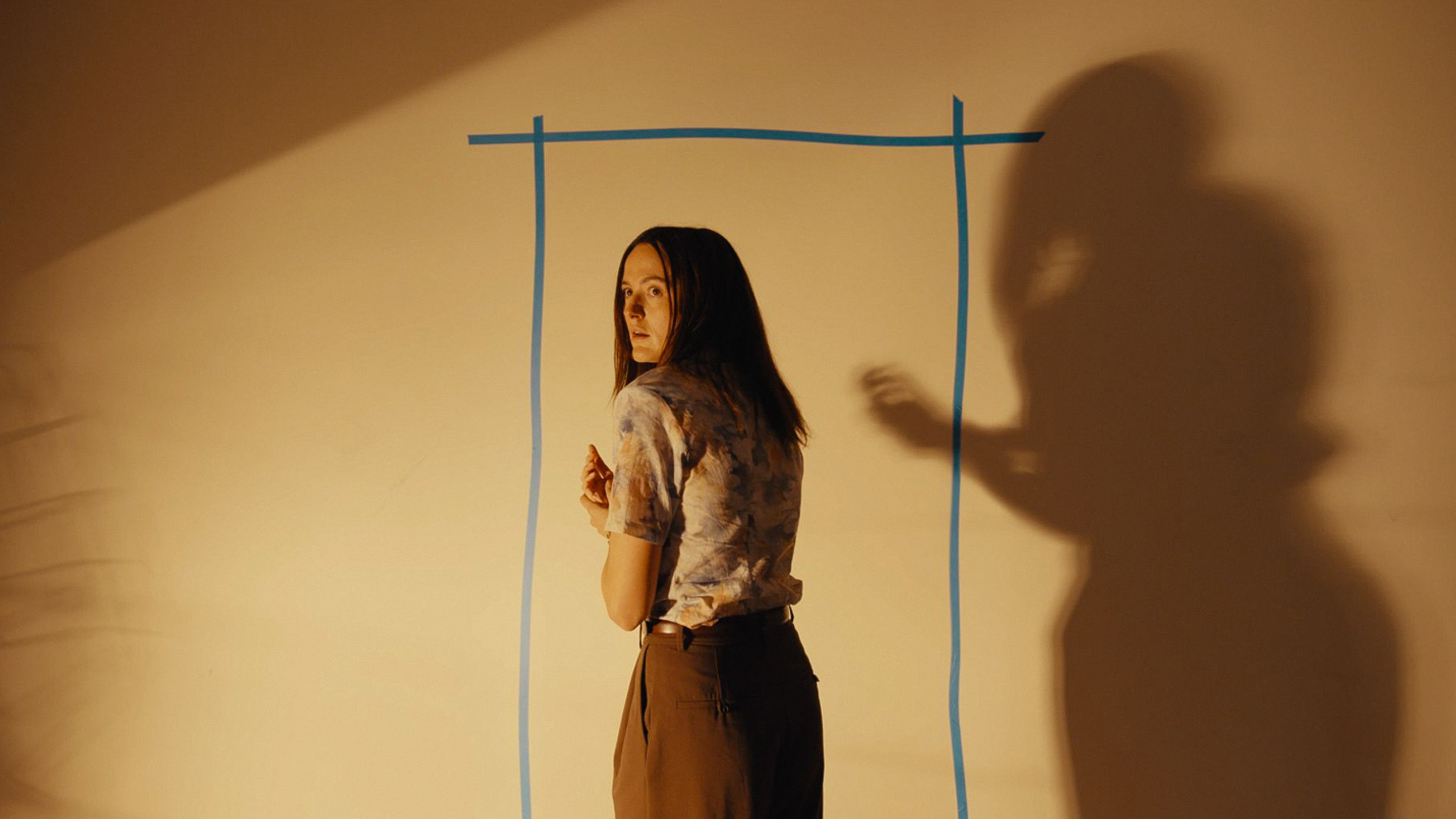
Production designer Danny Vermette turns Parsons’ digital concepts into a vast practical labyrinth spread across four sound stages. The achievement is not merely one of scale, but repetition with tiny variations: wallpaper shifts almost imperceptibly, walls distort in proportion and staircases promise direction before quietly erasing it. The sets are bland, ugly and magnificently oppressive. It is difficult to imagine a less inviting interior design catalogue. The sickly yellows, faded browns and washed-out greens deepen that effect. CRT screens, camcorders, dated advertisements and Clark’s themed store branding establish the 1990 setting while making the era feel imperfectly remembered. The period setting also removes easy access to search engines, uploads and drones, leaving the characters to confront the unknown with limited technology. The score by Parsons and Edo Van Breemen completes the atmosphere, blending dark ambient textures, electronic distortion and deceptively gentle melodies with buzzing lights and mechanical groans. At its best, the music feels less like accompaniment than another room closing around the audience.
The final act is likely to prove most divisive. Controlled architectural dread gives way to overtly surreal imagery and deliberately uncanny creature effects. Some viewers will find these creations terrifying; others may find them silly when the grotesque borders on absurdity. Even when they fail to frighten, however, their wrongness lingers. They resemble crude approximations produced by a place that understands human appearance without understanding humanity.
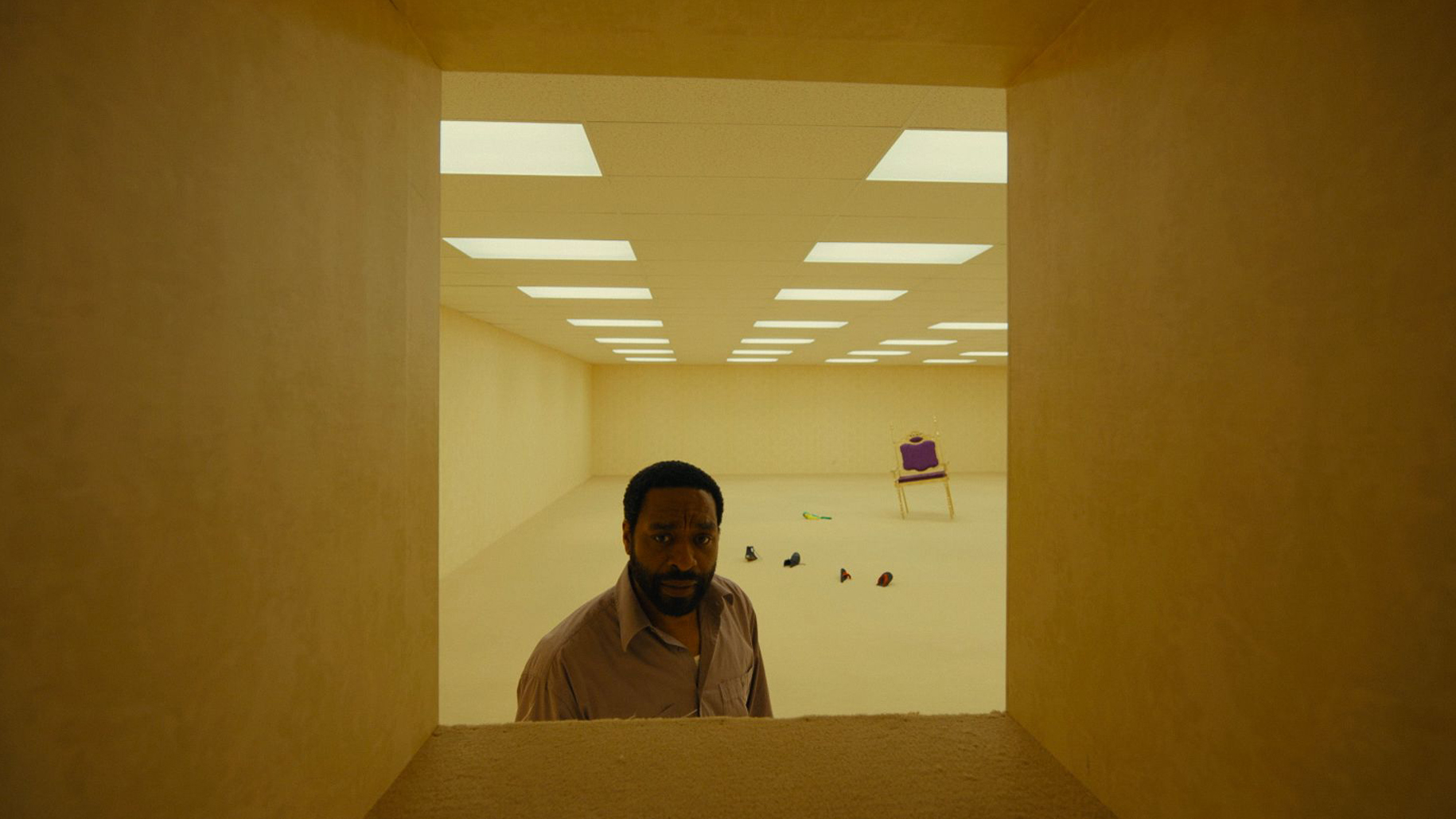
Ejiofor gives the story its emotional weight, finding the wounded pride beneath Clark’s obsession. The doorway is more than a mystery to him; it is a final chance to prove his life has not amounted to failure. Reinsve brings intelligence and quiet unease to Mary, giving an underwritten role more inner life than the screenplay provides. Maxwell and Bennett offer a grounded counterweight as Kat and Bobby, while Mark Duplass brings calm, bureaucratic menace to Phil, a scientist working for Async, the secretive research company investigating the Backrooms. His insistence that the impossible can be studied and controlled makes the organisation more unsettling than open villainy would.
Beneath its yellow wallpaper, Backrooms is concerned with memory: how it changes, deceives and traps us inside imperfect versions of the past. The maze seems able to reproduce the shape of places and people without understanding what made them meaningful, turning nostalgia into a kind of flawed simulation. That opens the door to readings about trauma, artificial intelligence and the danger of retreating into memories that can never be reconstructed exactly as they were. Clark’s abandoned architectural ambitions sharpen those ideas. He once wanted to design spaces for people to inhabit — now he sells manufactured comfort while wandering through architecture with no human purpose. His need to map the maze becomes another attempt to impose order on a life he has failed to control. Mary speaks about cycles, Clark walks through them, and Async reduces them to data. None finds an easy way out.
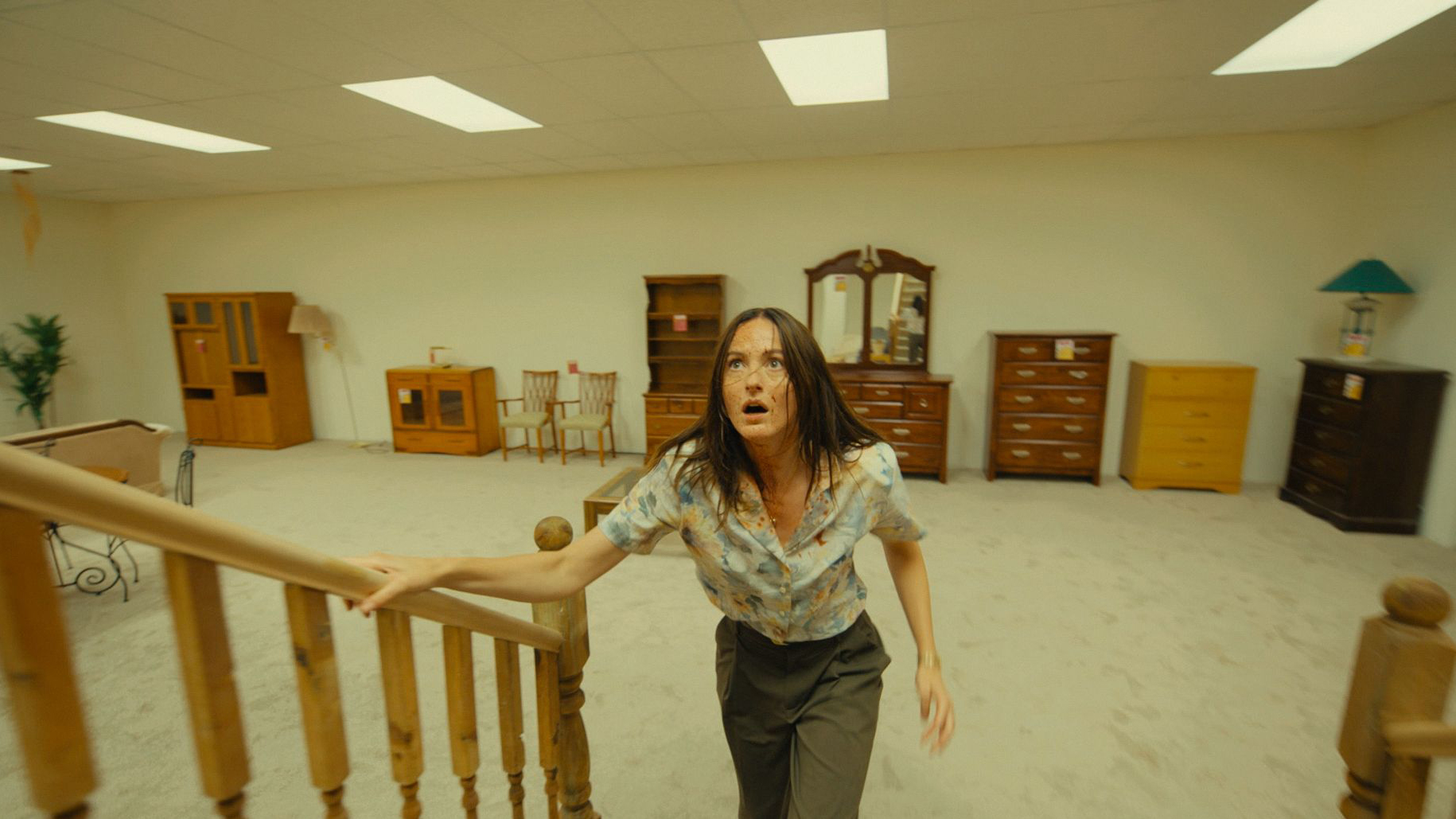
Backrooms will not work for everyone. Those seeking clear answers, constant creature action or neatly explained mythology may find its measured pace frustrating, while the surreal climax will divide audiences. Yet its refusal to become a conventional studio horror offering is precisely what makes it exciting. Parsons has expanded an internet-born concept without losing the emptiness, mystery and unease at its centre. Not every idea lands perfectly, but few recent releases feel this singular. Eerie, technically accomplished and thematically ambitious, Backrooms finds sadness beneath the viral sensation: the fear that a place might remember us after we no longer recognise ourselves. Several doors remain unexplained, and not every viewer will want to step through them. Then again, getting lost is half the point — and good luck finding the exit.
4.5 / 5 – Highly Recommended
Reviewed by Dan Cachia (Mr. Movie)

