The Mandalorian and Grogu (2026)
If you’re searching for a new adventure, this is the way.
For a while there, The Mandalorian and Grogu almost wasn’t a movie at all. Director and co-writer Jon Favreau and co-writer/producer Dave Filoni originally developed the project as a fourth season of The Mandalorian before Lucasfilm shifted gears and brought Din Djarin and the galaxy’s most marketable green gremlin to the big screen instead. It was probably the right call. After years of Disney+ shows becoming increasingly tangled in timelines, lore dumps and cameo bingo, Favreau and Filoni have delivered something refreshingly clean: a pulpy Star Wars romp that remembers these stories are supposed to be fun.
More importantly, this thing mostly works as a big-screen adventure. Not because everything is suddenly bigger, louder and more important, but because it taps into the Saturday-afternoon spirit George Lucas originally built Star Wars around. Serial storytelling. Weird creatures. Dusty bounty hunters. Simple stakes. Big spectacle. It doesn’t lean too heavily on callbacks, and despite its connections to the Disney+ series, there’s very little homework required. Favreau keeps the plot moving quickly enough that even viewers who haven’t spent the last few years memorizing Mandalorian clan politics probably won’t feel left behind.
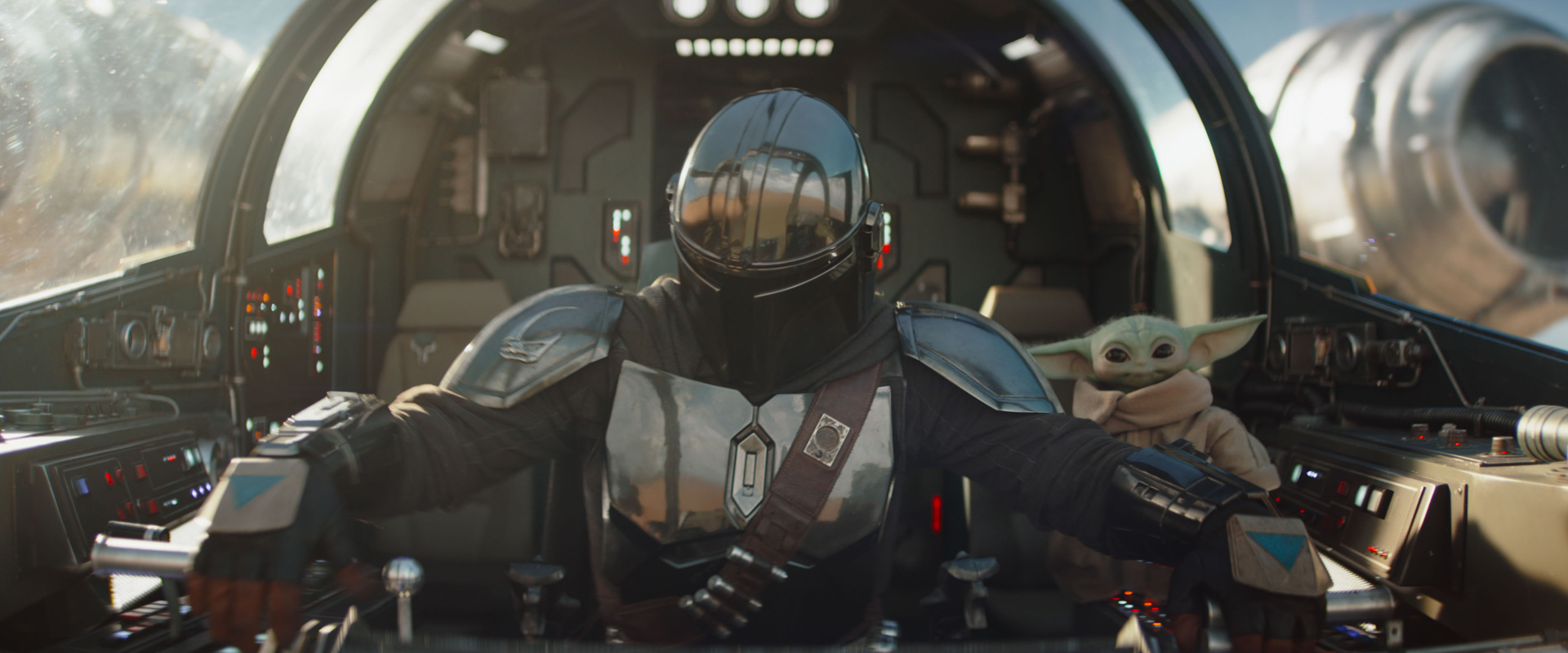
The setup is classic Outer Rim business. Din Djarin (Pedro Pascal) and Grogu are drawn into a New Republic mission by Colonel Ward (Sigourney Weaver), a tough Adelphi Rangers leader who needs the galaxy’s most reliable helmeted problem-solver for a rescue job involving Rotta the Hutt — yes, Jabba the Hutt’s son, now older, bigger and somehow still very much a Hutt. What starts as a straightforward assignment soon drags Mando and Grogu into the murkier corners of the galaxy, where Imperial remnants and the swampy underworld politics of Nal Hutta begin closing in.
And honestly? That stripped-back approach suits it. The story is simple, but mostly in the right way. At times, The Mandalorian and Grogu still feels like three episodes of the television series stitched into one long adventure, with stretches that have more of a “special event Disney+ finale” rhythm than the satisfying build of a fully theatrical narrative. Some story beats arrive, resolve and move on so quickly that the whole thing occasionally feels like it’s hyperspace-jumping between set pieces.
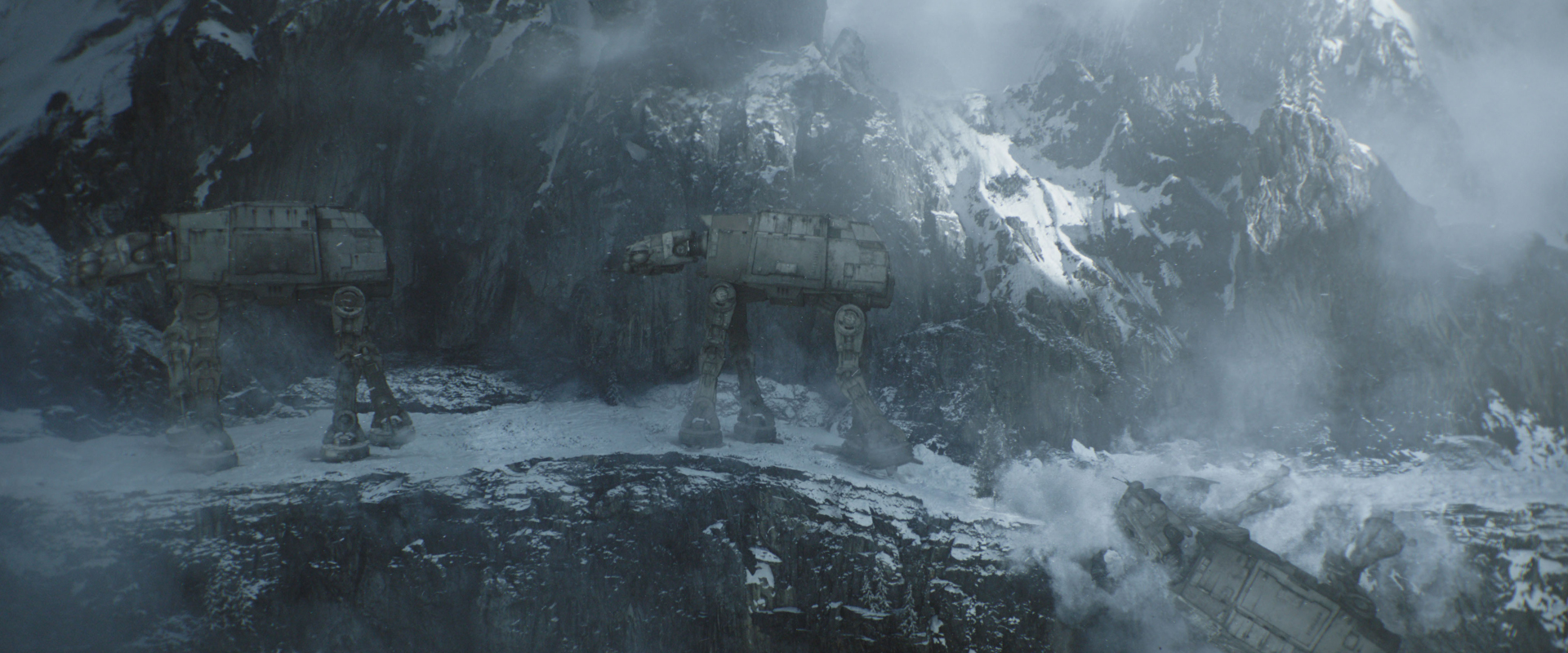
Still, this is a blast. Favreau leans hard into the serial-adventure DNA here, and when the movie locks into that pulpy rhythm, it really works. The whole thing plays like somebody unearthed a forgotten Star Wars creature feature from 1984 and gave it an IMAX budget. The opening is fantastic, with Din Djarin taking down three towering walkers on an icy planet in a sequence that feels like a kid smashing action figures together in the best possible way. Missiles fly, metal crashes, snow explodes everywhere and Ludwig Göransson’s score pumps underneath it all with a surprising synth-driven pulse, almost giving the movie an ’80s arcade energy at times.
Then there’s the gladiator arena sequence involving Rotta the Hutt — a gloriously strange slice of Star Wars madness tailor-made for the biggest screen possible. Large creatures roar across the arena floor, spectators scream from the sidelines, and Din Djarin gets thrown headfirst into the kind of monster mayhem the franchise hasn’t fully embraced in years.
The new worlds are a major strength too. Shakari is the standout: a smoky gangster planet with a Prohibition-era Chicago flavor, all shady streets, underworld swagger and old crime-movie attitude dropped straight into the Star Wars galaxy. Nal Hutta brings a completely different texture: grimy, humid, creature-filled and wonderfully swampy in that classic Hutt-space way. Between Shakari’s mobster energy and Nal Hutta’s marshy weirdness, the film is packed with the kind of tactile, oddball locations that make this universe feel alive again.
The humor generally lands. There’s an amusing sequence involving Mando desperately trying to get Grogu to fire up the Razor Crest, while several Baby Yoda moments feel engineered in a laboratory specifically to sell plush toys for the next decade — but somehow they still work. Grogu remains absurdly charming.
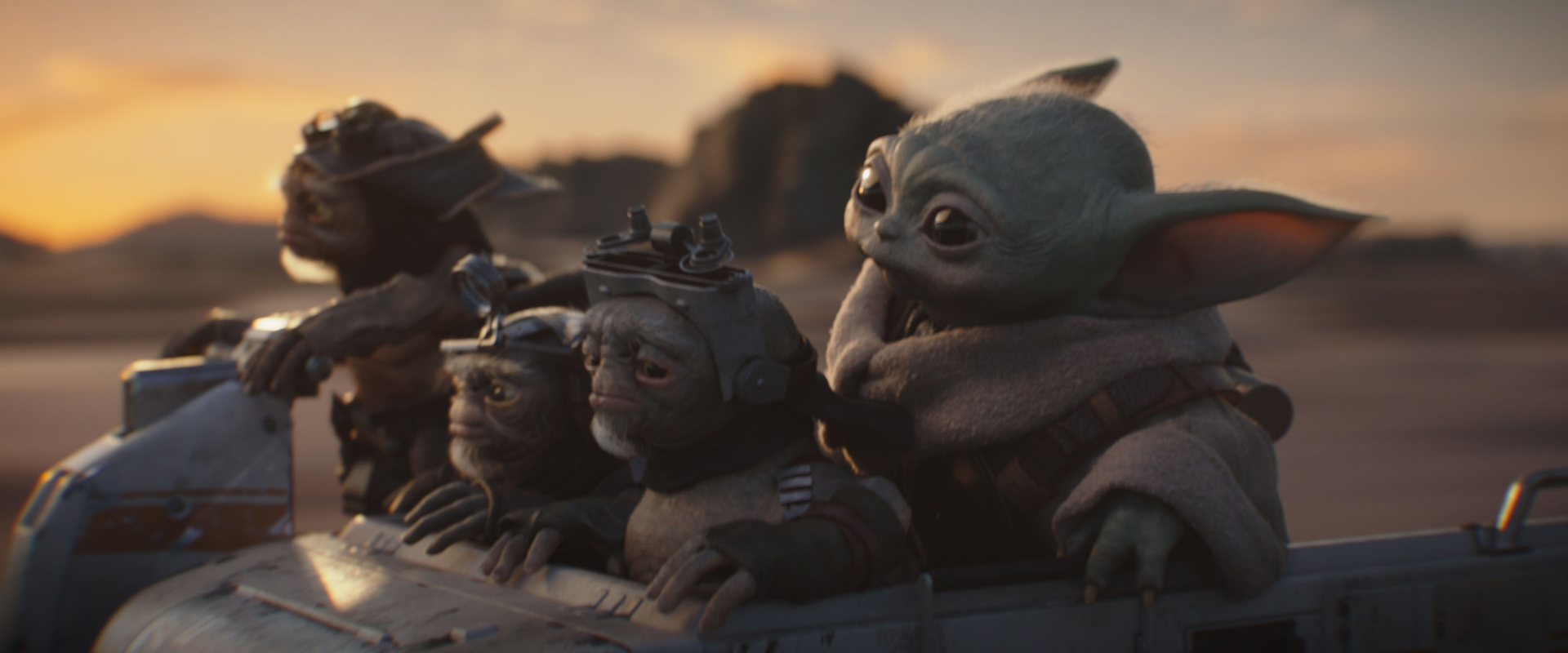
Strangely enough, the closest comparison might be the mid-1980s Ewok TV movies, Caravan of Courage: An Ewok Adventure and Ewoks: The Battle for Endor. Those odd little made-for-TV spin-offs had a scrappy fantasy-adventure energy that this movie taps into constantly. Forest creatures. Practical puppets. Silly humor. Kid-friendly danger. It’s all here. And despite the action, this is an extremely family-friendly Star Wars affair. Not soft exactly — there’s still plenty of blaster fire, scary monsters and spaceship battles ripping through Hutt territory — but the tone sits closer to a live-action Saturday morning cartoon than the heavier, lore-loaded entries of recent years.
The Anzellans — those tiny mechanics introduced in The Rise of Skywalker — return and are hilarious throughout, stealing several scenes with pure puppet charm. Even cooler is a stop-motion sequence from Tippett Studio that deliberately harkens back to the early ILM days. Seeing handcrafted stop-motion inside a modern Star Wars production feels weirdly emotional. That old movie magic still works.
Not all the visual effects are flawless. Some CGI shots look rough around the edges, especially during a few of the larger monster-driven sequences. But plenty of it looks terrific, particularly Embo, the imposing Kyuzo bounty hunter from The Clone Wars, who finally makes the jump to live action here. He even has a new anooba companion, Keibu, which works as a nice little nod to his old partner Marrok from the animated series. Embo’s live-action translation is awesome. His design looks great, his silhouette is instantly recognizable, and he brings genuine screen presence whenever he shows up.
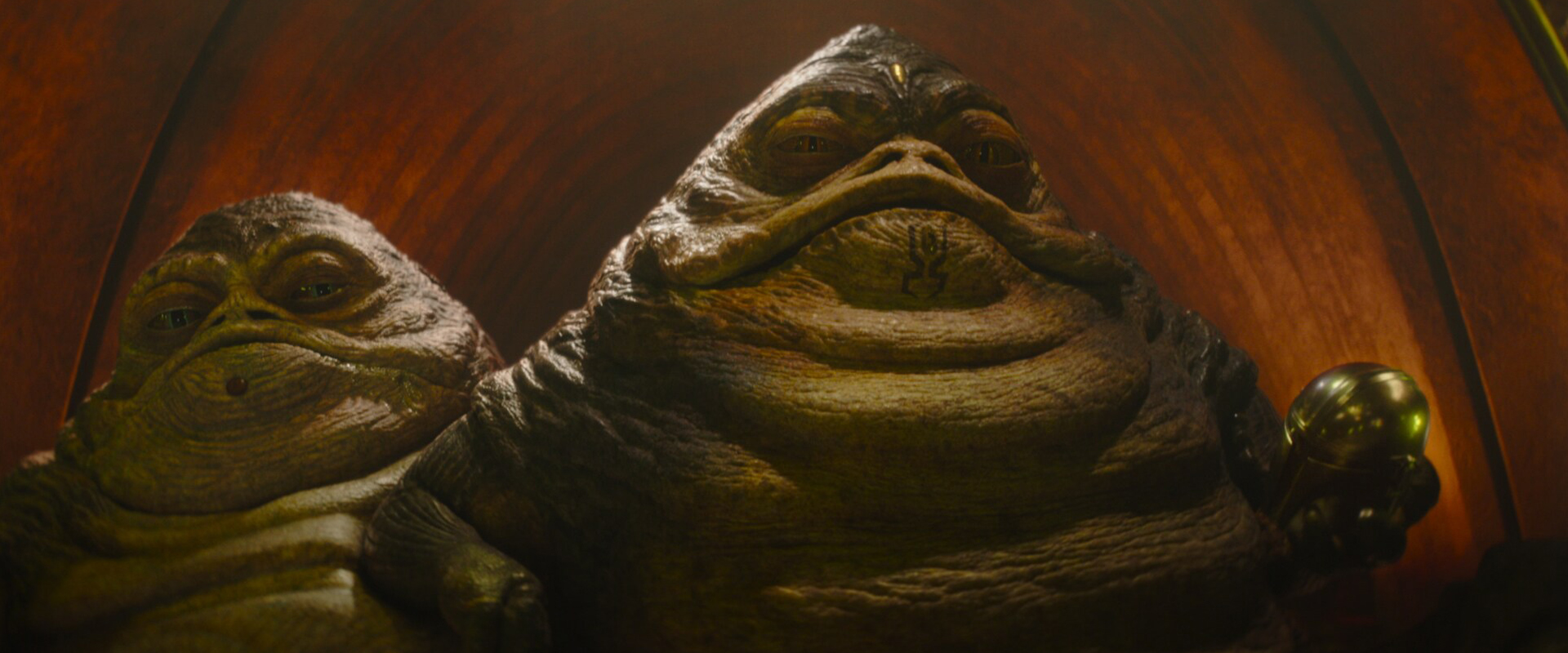
Underneath the creature-feature silliness, the story — written by Jon Favreau, Dave Filoni and Noah Kloor — still finds a little heart in its fathers-and-sons angle. Din and Grogu remain the emotional core, with their bond giving the adventure its warmest moments between all the galactic mischief. Rotta’s place in the story adds a warped mirror to that idea: Jabba the Hutt’s son, now grown up and stuck carrying the weight of one of the galaxy’s ugliest family names. The film doesn’t dig especially deep into any of this, but it gives the adventure just enough feeling beneath the scales, laser fire and Hutt-sized shenanigans.
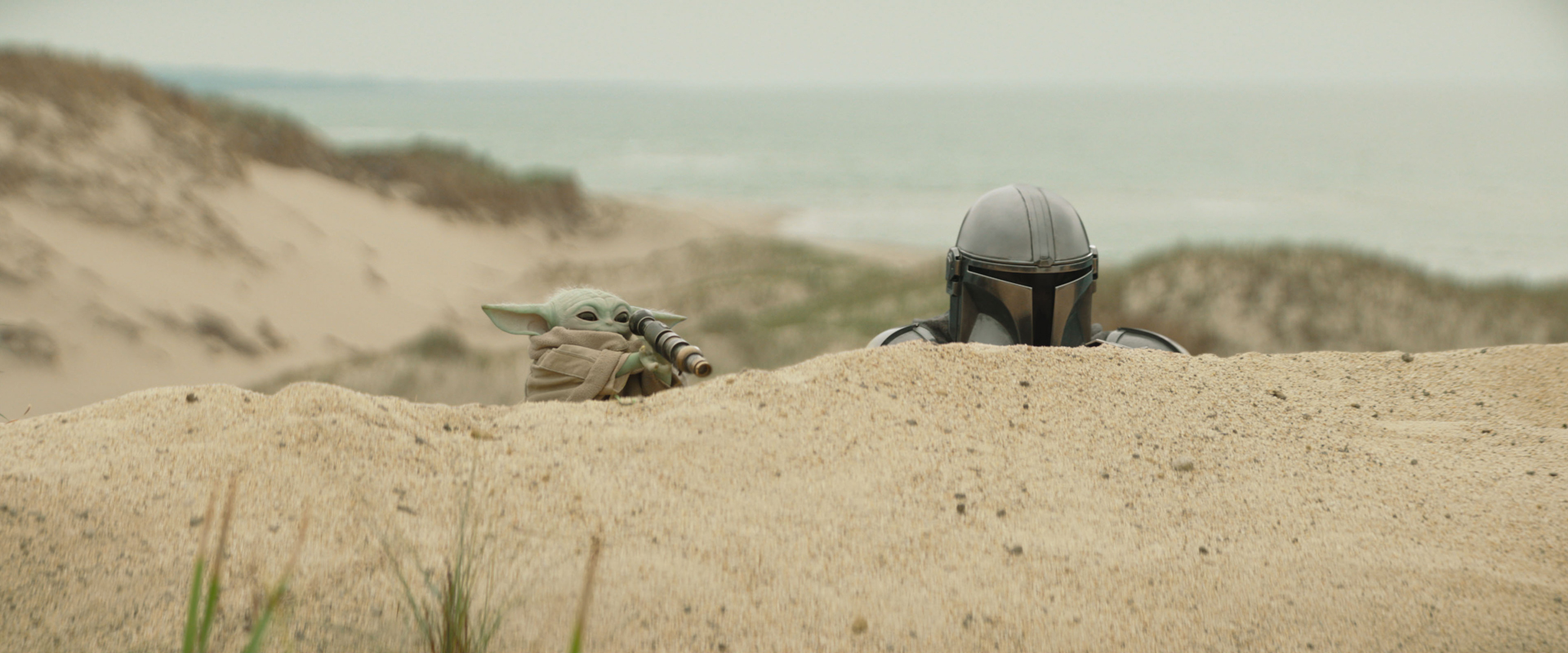
Grogu also gets more to do this time around. While Mando spends most of the movie kicking wholesale amounts of ass, Grogu gets an extended spotlight sequence in Nal Hutta’s forests where the puppetry and physical comedy take center stage. It’s cute, funny and probably the closest the franchise has come to full-on family adventure territory since 1983’s Return of the Jedi. A few Force moments sprinkled throughout also remind everyone that the tiny green guy can still absolutely save the day when necessary.
As for the cast, Pedro Pascal remains solid as Din Djarin, even if this isn’t exactly a huge growth chapter for the character. This isn’t a deeply introspective Mando story. He mostly walks into dangerous places, says cool things and powers through whoever gets in the way. Pascal’s dry delivery still gives the helmet plenty of personality, while Brendan Wayne and Lateef Crowder’s suit work keeps Mando moving with that familiar gunslinger swagger. Jeremy Allen White is surprisingly fun as Rotta the Hutt, giving Jabba’s son genuine personality and physical presence. Favreau has compared the character to Adonis Creed — a famous son trying to step out from a very large shadow — and honestly, that tracks.
Sigourney Weaver brings easy gravitas to Colonel Ward, the New Republic officer pulling Mando into the mission, even if the role itself is fairly straightforward. Jonny Coyne also works nicely as Janu, the leader of an Imperial remnant faction, giving the film the kind of slimy post-Empire threat this pulpy adventure needs. The returning voices and cameos add to the charm. Steve Blum is a welcome presence again as Garazeb “Zeb” Orrelios, now flying with the New Republic, while past small-screen Star Wars directors Dave Filoni, Rick Famuyiwa and Deborah Chow pop back up as X-wing pilots. And then, somehow, Martin Scorsese turns up as a four-armed Ardennian shopkeeper, which is so random, so funny and so strangely perfect that it basically qualifies as absolute cinema.
At the end of the day, The Mandalorian and Grogu succeeds because it remembers something modern franchise filmmaking occasionally forgets: not every story needs to reshape the galaxy. Sometimes a bounty hunter, a weird little green goblin, a swamp planet and a bunch of monsters are enough. Sure, it’s too long. Sure, it occasionally feels like deluxe television. And sure, some of the effects wobble harder than a malfunctioning protocol droid. Did any of that stop the grin from staying plastered across my face for most of the runtime? Not a chance. For fans of Return of the Jedi, the old Ewok adventures, creature-heavy pulp sci-fi and classic matinee energy, this thing fires on all thrusters. Not the perfect way. But still — very much the way.
4 / 5 – Recommended
Reviewed by Dan Cachia (Mr. Movie)
The Mandalorian and Grogu is distributed by Disney Australia

