Project Hail Mary (2026)
Believe in the Hail Mary.
Adapting a beloved science-fiction novel for the big screen is never easy, especially when the source material leans heavily on scientific problem-solving and internal narration. That challenge only grows when the book in question is as widely loved as Project Hail Mary by Andy Weir. Fortunately, the film captures the novel’s spirit while shaping it into a cinematic experience that feels both grand in scale and surprisingly personal. At the centre of it all is Ryan Gosling as Dr. Ryland Grace, carrying this interstellar odyssey with a rare blend of vulnerability, intelligence, and unexpectedly sharp comic timing.
From the opening moments, directors Phil Lord and Christopher Miller demonstrate an assured control of tone. Best known for their inventive work on animated hits like Spider-Man: Into the Spider-Verse (2018), the duo bring that same sense of playful imagination to live action without ever undercutting the story’s emotional weight.
The film begins in disorientation. Ryland Grace awakens alone aboard a spacecraft with no memory of who he is or how he got there. As fragments of his past begin to return, the narrative gradually reveals the extraordinary circumstances that led him to this moment. What unfolds isn’t just a science-fiction puzzle, but a character study wrapped inside an existential thriller.
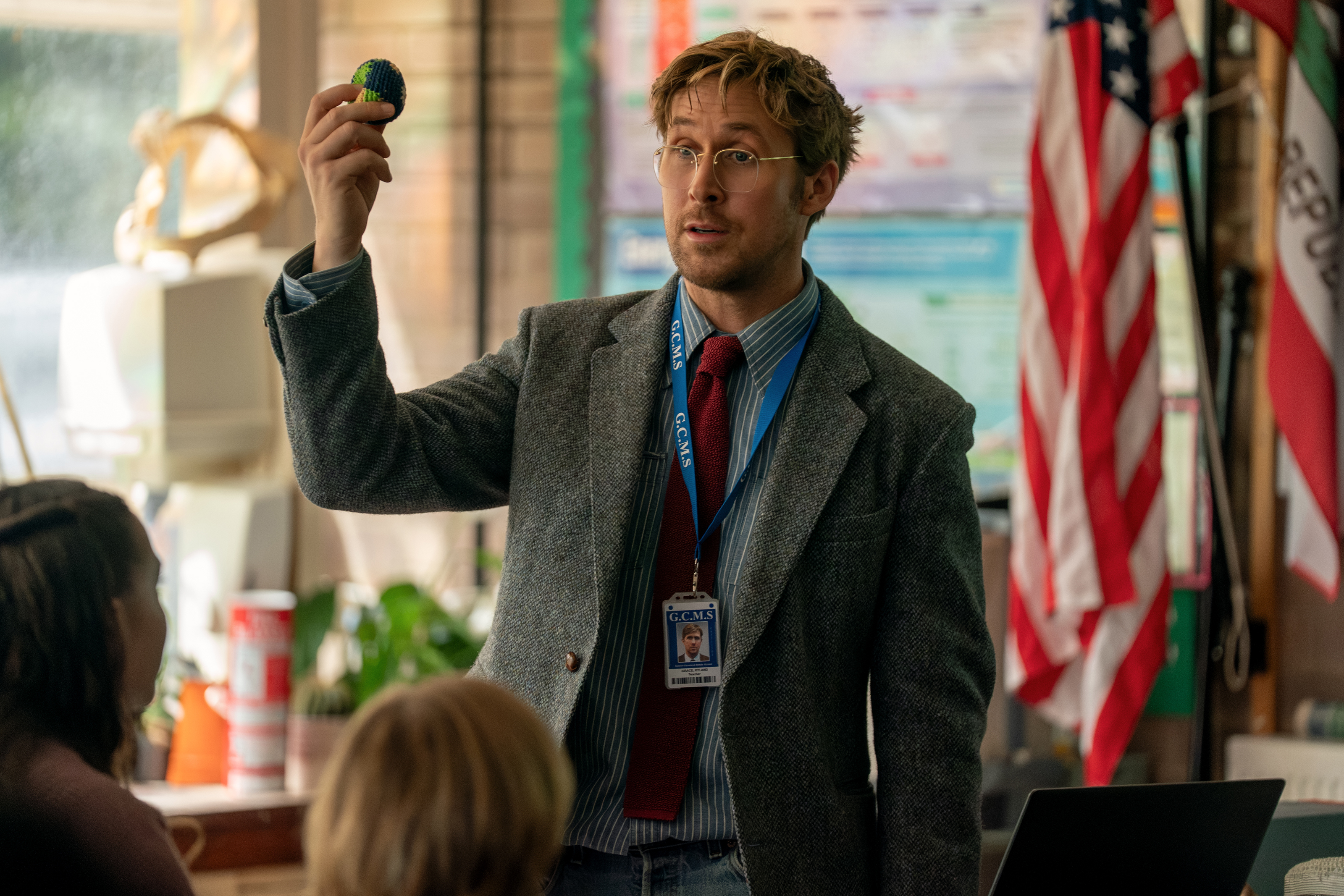
Grace is a fascinating protagonist precisely because he’s not a traditional action hero. A former middle-school science teacher, he represents a quieter kind of heroism — the sort that emerges not from bravado, but from curiosity, persistence and a deep belief in the power of knowledge. That grounding gives the story its heart.
Gosling is terrific here. Known for everything from musical romance to brooding drama, he taps into something refreshingly different in Project Hail Mary. His Grace is awkward, brilliant, occasionally panicked, and often unintentionally funny. Watching him navigate the increasingly strange reality of his situation provides many of the movie’s early delights, particularly as scientific explanations are delivered with a healthy dose of dry humour.
While the film certainly contains moments of spectacle, its greatest strength lies in its sense of discovery. Rather than leaning heavily on action set-pieces, the story finds tension and excitement in problem-solving, experimentation, and the thrill of scientific breakthroughs. In an era where many blockbusters rely on relentless noise, it’s refreshing to see one that trusts curiosity to drive its momentum.
The screenplay, adapted by Drew Goddard from Andy Weir’s bestselling novel, strikes a smart balance between large-scale stakes and quieter emotional beats. At the heart of the story is a desperate mission: Ryland Grace has been sent across the galaxy to investigate Astrophage, a mysterious organism feeding on the sun’s energy and threatening the future of life on Earth.
But Project Hail Mary isn’t simply a survival story set in space. A major turning point arrives when Grace encounters an alien spacecraft orbiting the same distant star. Inside is an engineer from the Eridian species — an alien civilisation facing the same cosmic threat that has placed humanity in danger. The creature resembles a sentient rock, prompting Grace to nickname him “Rocky.” Rather than a hostile encounter, the meeting becomes something far more unexpected: two scientists from entirely different worlds realising they’re trying to solve the exact same problem. Rocky’s introduction is handled with genuine wonder. In lesser hands the concept might have felt gimmicky, but here it becomes the emotional centrepiece of the movie.
Some of the most enjoyable moments come from the scenes in which Grace and Rocky attempt to communicate. Rocky speaks through strange musical tones, forcing Grace to slowly build a translation system from scratch. Watching the two characters gradually learn to understand each other is both fascinating and quietly charming — a reminder that curiosity and cooperation can be just as thrilling as any action set piece.
Rocky himself is a terrific creation. With a spider-like physiology and a perception of the world based on sound rather than sight, the character is visually distinctive, but it’s the personality that truly wins you over. Enthusiastic, brilliant and unexpectedly comic, Rocky quickly becomes more than just a clever alien design. The growing friendship between him and Grace feels authentic, built through shared challenges, scientific curiosity and mutual respect.
Pacing is another element worth highlighting. At over two and a half hours, Project Hail Mary could easily have felt bloated. For the most part, it breathes comfortably, moving with the rhythm of discovery — bursts of tension followed by moments of reflection — allowing the audience to absorb both the science and the human stakes. Flashbacks to Grace’s life on Earth are integrated smoothly, adding context without interrupting the narrative flow. That said, the story does begin to feel its length slightly toward the end, where the momentum softens just enough for the runtime to become noticeable. Even so, the emotional payoff largely earns the journey.
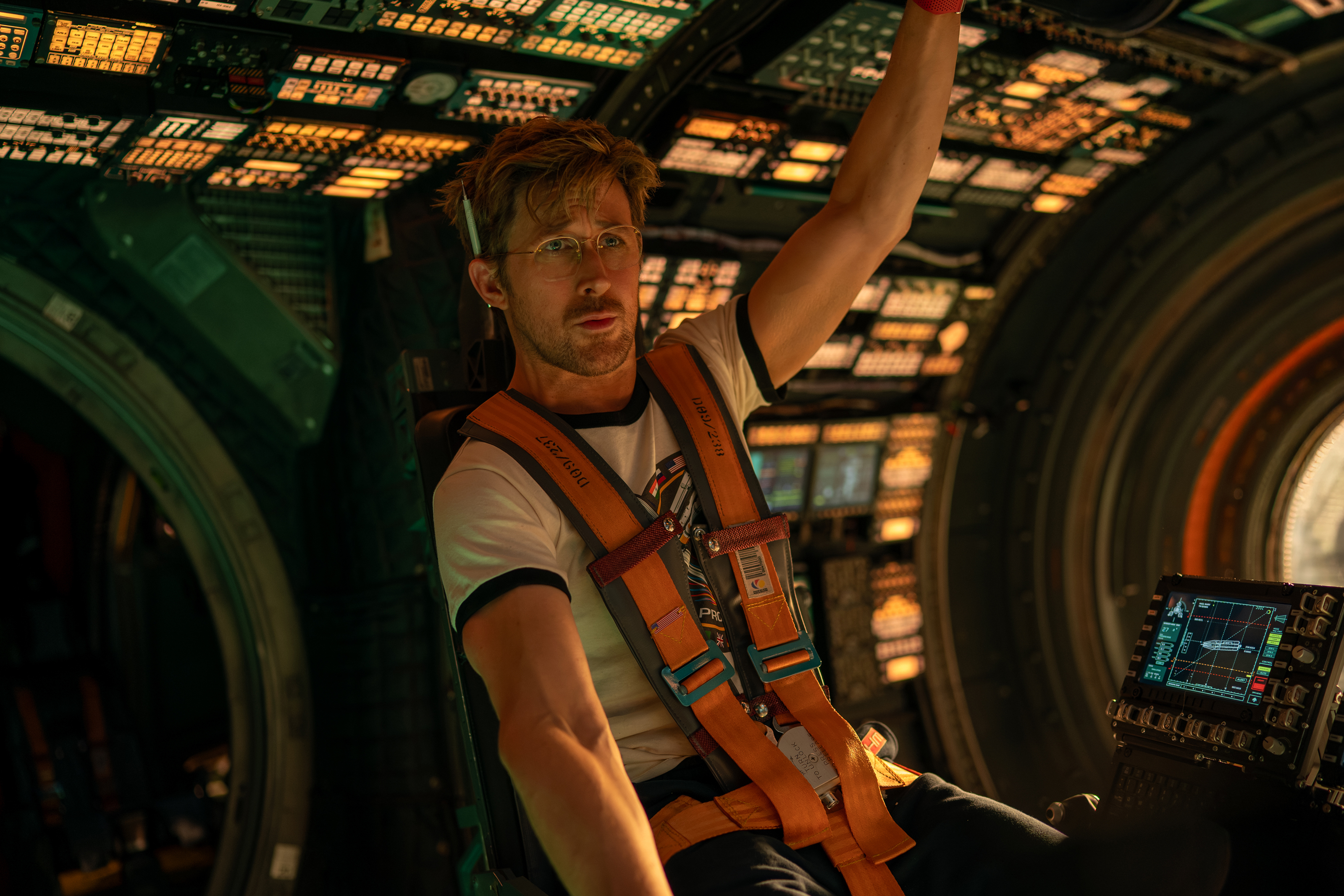
On a visual level, the film is breathtaking. Cinematographer Greig Fraser, no stranger to large-scale science fiction after his work on Dune (2021) and Rogue One: A Star Wars Story (2016), captures the vastness of space with elegant precision, making the cosmos feel both awe-inspiring and eerily isolating. His use of colour is particularly striking, creating subtle visual contrasts throughout the film. In the later stretch, the mysterious green glow of the nearby planet contrasts beautifully with the warm amber lighting inside the spacecraft.
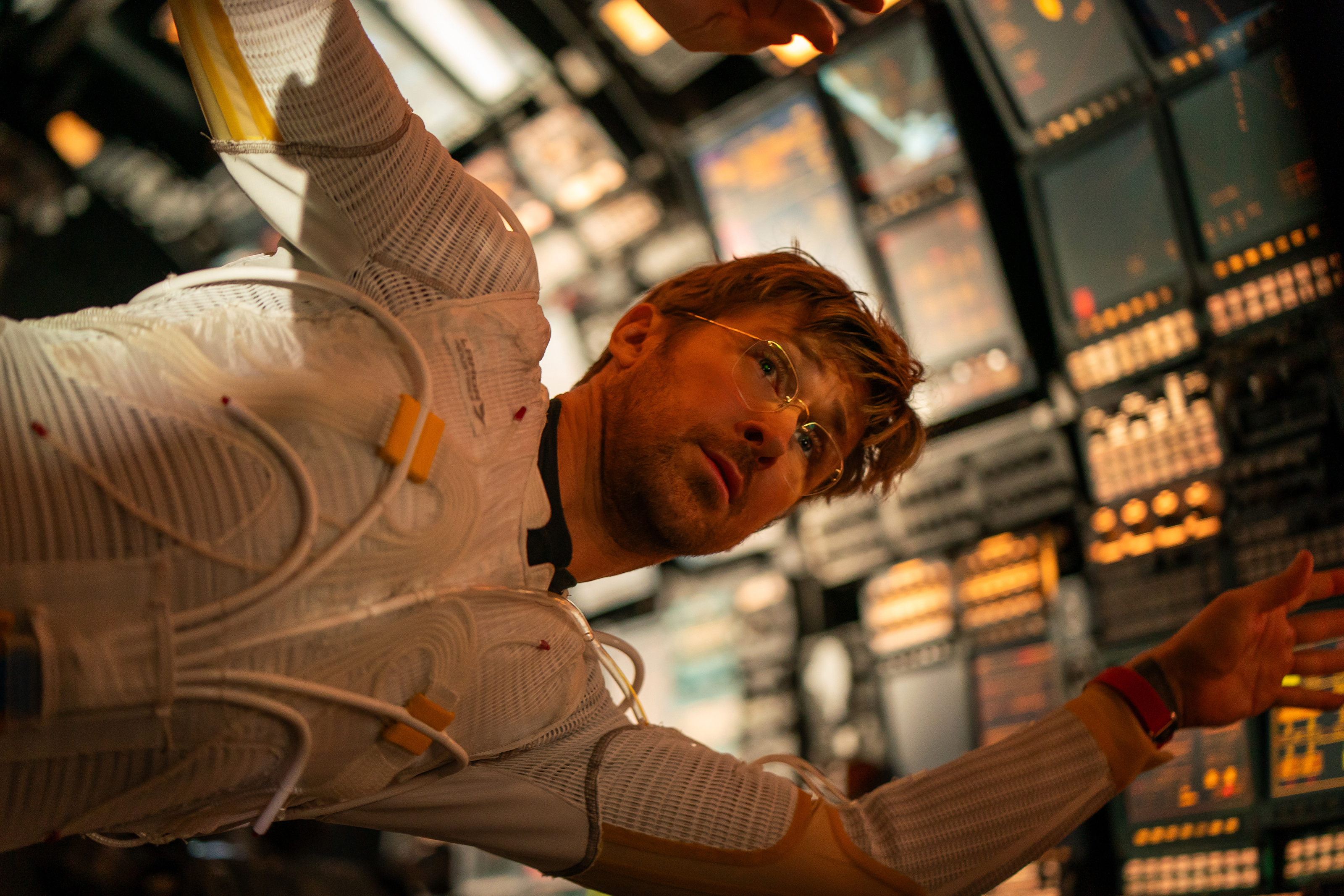
The production design by Charles Wood deserves particular praise as well. The spacecraft interiors feel tactile and believable, a convincing blend of practical engineering and cinematic imagination. When the camera ventures beyond the ship, the scale of the universe becomes almost overwhelming in the best possible way. Together with Greig Fraser’s cinematography, the design captures both the wonder of space exploration and the loneliness that comes with it.
Daniel Pemberton’s score complements the visuals beautifully. In quieter scenes, delicate themes create a reflective atmosphere, while the larger moments are lifted by sweeping orchestral passages that heighten the drama without overpowering it. Like the best film scores, it enhances the experience without demanding attention for itself.
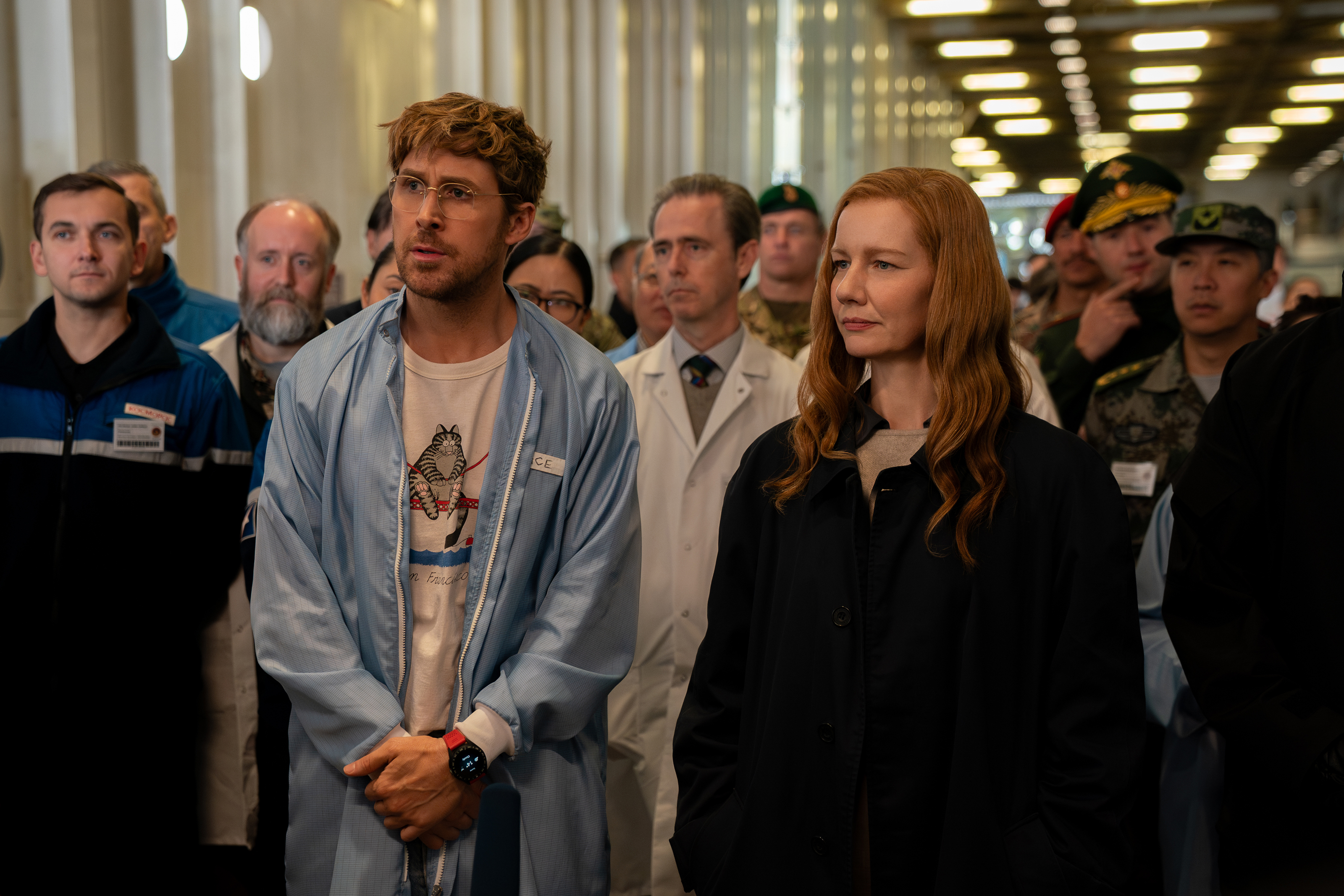
Supporting performances add welcome texture to the story. Sandra Hüller delivers a memorable turn as the pragmatic mission director Eva Stratt, overseeing humanity’s desperate efforts to survive. Ken Leung appears as Yáo Li-Jie, one of the astronauts tied to the Hail Mary mission, while Lionel Boyce brings relaxed charm to Carl, one of Stratt’s security agents who occasionally finds himself assisting Grace. Together, they help ground the film’s high-concept ideas with characters who feel recognisably human.
If the movie has a minor weakness, it’s that some of the scientific explanations may feel dense for viewers unfamiliar with the source material. Yet even in its more technical moments, it never loses sight of its characters or its sense of wonder.
Ultimately, what makes Project Hail Mary stand out isn’t just the clever science — though there’s plenty of that — but the way it turns those ideas into something genuinely moving. At its core, it’s a story about curiosity, courage, and the stubborn human drive to explore the unknown.
In a cinematic landscape often crowded with interchangeable spectacle, Project Hail Mary feels refreshingly distinct: intelligent without being aloof, heartfelt without tipping into sentimentality, and epic without losing sight of the people at its centre.
By the time the credits roll, you’re left with something increasingly rare in modern blockbuster filmmaking — the feeling that you’ve taken part in a real journey. For audiences craving a science-fiction adventure that’s smart, funny and visually stunning, Project Hail Mary is one of the year’s most invigorating cinematic experiences. Two thumbs down — trust me, that’s a compliment.
4 / 5 – Recommended
Reviewed by Stu Cachia (S-Littner)
Project Hail Mary is distributed by Sony Pictures Australia
 Mr. Movie's Film Blog