How to Make a Killing (2026)
$28 million inheritance. 7 relatives standing in the way.
Written and directed by John Patton Ford, How to Make a Killing is a glossy, darkly comic thriller that reimagines the spirit of the 1949 British classic Kind Hearts and Coronets for a modern audience. At the centre is Glen Powell as Becket Redfellow, the disowned heir to an eye-watering billionaire fortune who realises the quickest way back into the family fold might just be to remove the seven inconvenient relatives standing between him and a $28 billion inheritance. Not exactly the healthiest family dynamic. It’s a premise soaked in moral rot, but Ford handles the mayhem with enough wit, style, and mischievous energy to make Becket’s downward spiral perversely entertaining.

The film opens with Becket on death row, calmly recounting the events that led him there to a quietly attentive priest — an immediate nod to classic noir confessionals. From this stark framing device, the story rewinds to chart his fall from overlooked family outcast to meticulous architect of a murderous inheritance plot. Estranged from his obscenely wealthy relatives and embittered by years of exclusion, Becket discovers that a distant clause in the family fortune places him within reach of unimaginable wealth — provided the current heirs meet untimely ends.
What follows is a calculated campaign to remove each obstacle, with Becket insinuating himself into their privileged world while carefully orchestrating a series of “accidents” designed to look anything but deliberate. As his confidence grows and his methods become bolder, the line between righteous reclamation and naked ambition begins to blur. Throughout, Ford leans confidently into genre conventions: in-universe narration, shadow-drenched interiors, and carefully composed frames that emphasize isolation, desire, and the corrosive pull of entitlement.
Powell anchors the film with a performance that walks a careful line between charm and quiet opportunism. His Becket is articulate, self-aware and oddly endearing, even as his body count rises. Powell’s natural charisma ensures we remain invested in a protagonist whose actions should make him irredeemable. He understands that the role hinges not on menace alone, but on making Becket someone we enjoy listening to — particularly in those sardonic voiceovers that invite us to become complicit in his schemes.

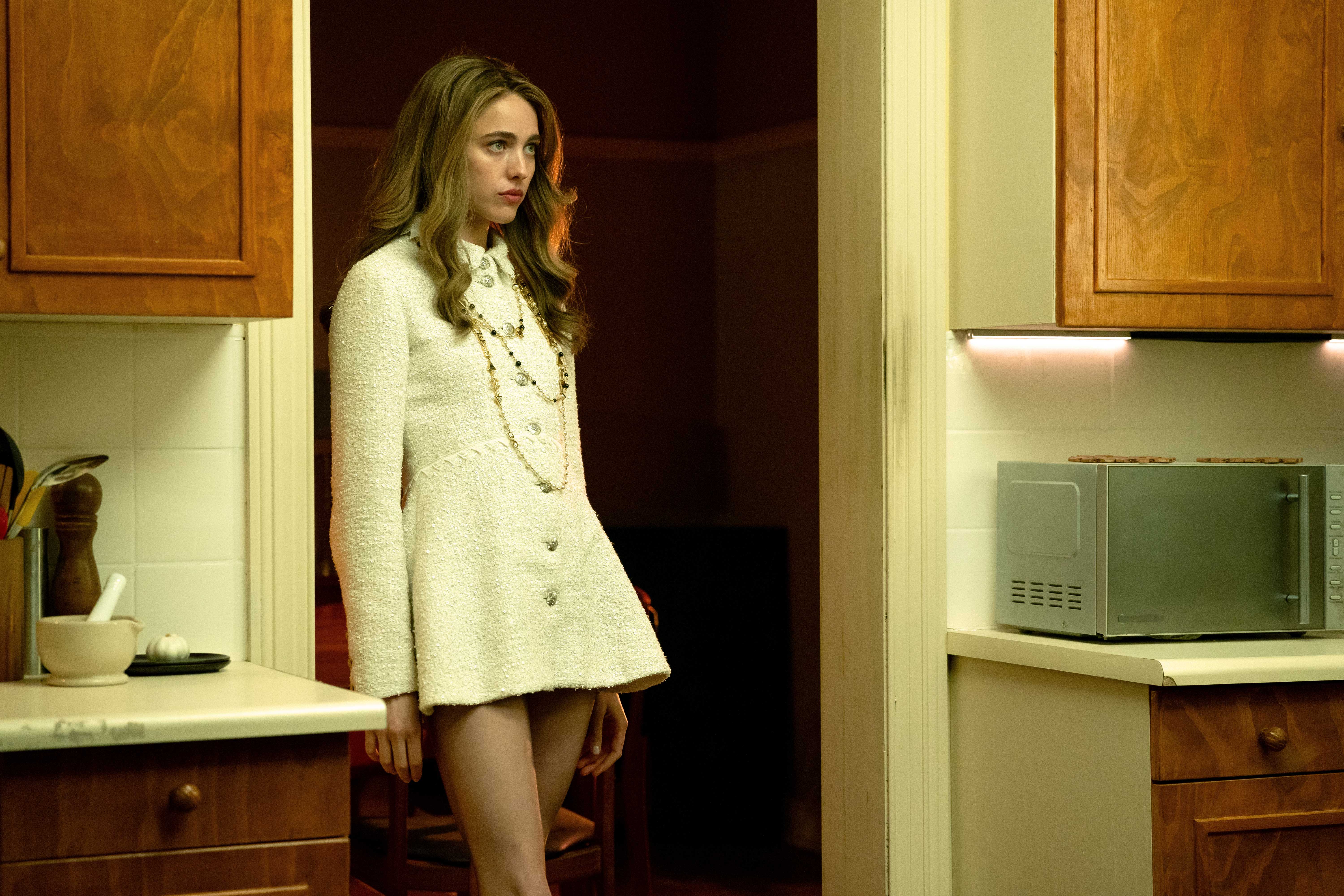
Margaret Qualley is equally compelling as Julia, Becket’s childhood confidante who gradually evolves into the story’s seductive catalyst — essentially a modern incarnation of the magnetic, dangerous muse. Qualley embraces the noir archetype without ever feeling confined by it, bringing intelligence, control, and a quiet sense of calculation to a character who could easily have been reduced to mere ornamentation. Her physical presence becomes integral to the performance, and the camera frames her with deliberate attention, capturing her movements, posture — and yes, those legs, which may quietly walk off with the movie — as a form of visual storytelling that underscores her power within the narrative. Qualley moves with precision and assurance, often commanding a scene with little more than a glance or a carefully measured line of dialogue. Opposite Glen Powell, she generates a dynamic charged with tension, desire, and shared ambition, shifting scenes with a kind of cinematic elegance — and lingering in the viewer’s mind long after she exits the frame.
Jessica Henwick provides the film’s moral compass as Ruth — a grounded, quietly sincere figure who sees something in Becket beyond the glitter of wealth and the pull of vengeance. Henwick plays the role with warmth and a welcome touch of restraint, ensuring Ruth feels like an actual person rather than just a plot device keeping Becket’s conscience in check. Meanwhile, Topher Grace pops up as an exuberant preacher cousin and clearly relishes the opportunity to chew a little scenery, delivering a slyly comedic performance that flirts with theatricality without tipping into outright caricature. Ed Harris, as expected, brings his trademark gravitas to the proceedings, his steely composure lending weight to the powerful family dynasty Becket both resents and secretly longs to claim. The rest of the ensemble fills out the film’s murderous carousel with gusto — even if a few players are clearly there to keep the narrative gears turning rather than leave a lasting impression.

Structurally, the story unfolds with deliberate efficiency. Each murder is staged with escalating creativity, blending dark humor with calculated suspense. While the beats can feel familiar — revenge dressed as justice, ambition curdling into obsession — Ford keeps the pacing tight. At a lean 105 minutes, the film avoids lingering long enough for its repetition to feel tedious or fatiguing. The satire occasionally pulls its punches, hinting at sharper commentary on wealth and entitlement than it ultimately delivers, but the momentum rarely falters.
The cinematography by Todd Banhazl leans into cool palettes and sharp contrasts, bathing mansions and cityscapes alike in a glossy, almost icy sheen. It’s a handsome production and immaculately designed — sometimes so polished that it slightly softens the bite of the film’s satirical edge. Still, the overall aesthetic cohesion is hard to deny. Jo Katsaras’ costume design, in particular, does plenty of heavy lifting in defining character. Becket’s tailored suits and increasingly refined wardrobe chart his gradual transformation from sidelined outsider to self-styled aristocrat, while Julia’s sharply tailored silhouettes and elevated hemlines nod to classic femme fatale iconography, refreshed with a crisp, contemporary edge.
A late twist subtly nudges the story away from the expectations shaped by both the original source material and the usual brand of noir fatalism. It’s not a radical reinvention by any means, but it reframes Becket’s journey in a way that quietly lingers once the credits roll. The narration threading through the film helps underline the thematic undercurrent as well — greed, identity, and that nagging fear of “dreaming small.” One line lands with surprising weight, suggesting that the real terror isn’t failure, but settling for less than the life we imagine for ourselves. It neatly captures the film’s fascination with ambition pushed to its darkest, most obsessive extreme.
At its strongest, How to Make a Killing revels in the pleasures of a stylish revenge tale told with a wink and impeccable tailoring. At its weakest, it can feel a little like a beautifully wrapped package that doesn’t quite cut as deeply as it could. Even so, the craftsmanship, performances, and confident visual identity keep the whole thing ticking along nicely. It may not redefine noir for a new generation, but it delivers a sharp, entertaining spin on a classic formula — and honestly, sometimes that’s exactly what you want from a night at the movies.
In other words: sharp suits, dangerous schemes, and a femme fatale whose legs may quietly be running the whole operation — all wrapped up in a pretty entertaining ride while it lasts.
3.5 / 5 – Great
Reviewed by Stu Cachia (S-Littner)
How to Make a Killing is distributed by Studio Canal Australia
 Mr. Movie's Film Blog