The Testament of Ann Lee (2025)
The Earth will shake and tremble.
Historical biopics and experimental musicals rarely overlap, but The Testament of Ann Lee boldly steps into that unusual space, blending religious history, ecstatic ritual, and musical storytelling into something that feels both deeply rooted in the past and strikingly modern. Directed by Mona Fastvold, it explores the life and legacy of Ann Lee, the visionary founder of the Shaker movement, through a lens that prioritizes emotional immersion over conventional narrative beats. The result is an ambitious work from the opening moments — unafraid to challenge expectations and willing to embrace spiritual intensity in ways mainstream cinema often avoids.
The story follows Ann Lee (Amanda Seyfried), the 18th-century English religious leader who would become the founding figure of the Shakers — an early American sect defined by communal living, celibacy, and a radical (for the time) emphasis on spiritual equality. Born in Manchester, England, Lee eventually leads a small group to colonial America in 1774, where they settle in what is now Albany County, New York, and build a utopian community based on their beliefs. The film charts Lee’s transformation from a life marked by hardship and profound grief into a fervent leader revered by followers who see her as a holy vessel — “a woman clothed by the sun,” to borrow the movie’s own mythic framing.
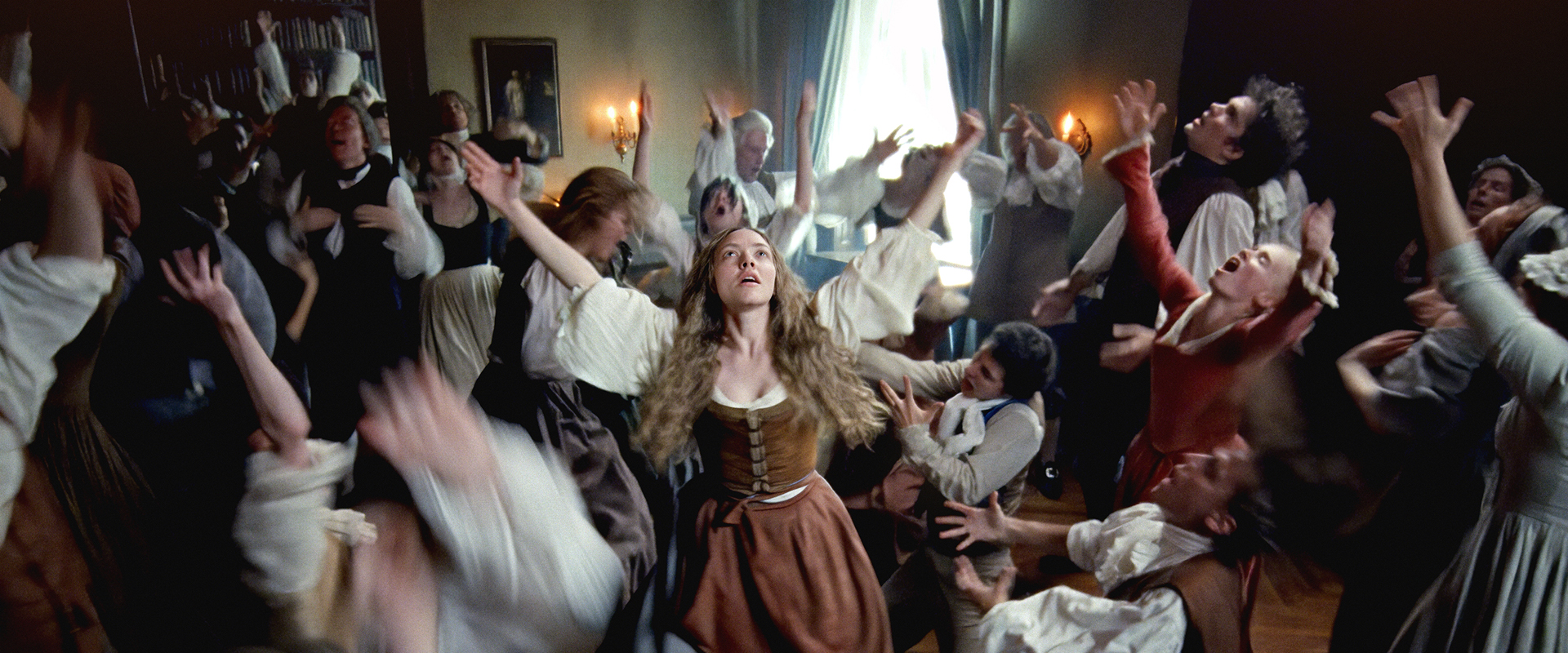
Structurally, this is less a tidy rise-and-fall narrative than a series of lived chapters: persecution, the gathering of believers, the testing of faith, and the growing toll of leadership when one person’s body becomes the battleground for collective salvation. Rather than relying on clear-cut historical signposts, the storytelling favors emotional progression, recognizing that religious movements are rarely built on logic so much as longing — often desperate, often contagious.
Fastvold’s direction is confident in a way that may frustrate viewers expecting clean cause-and-effect storytelling. She appears less interested in the mechanics of plot than in the sensation of belief itself, allowing scenes to stretch past conventional comfort — and then pushing further, until discomfort edges toward transcendence. That approach pays off most in the work’s “ritual” passages, where worship is not depicted as decorous hymn-singing but as a physical phenomenon — breath, sweat, tremor, release. The choreography by Celia Rowlson-Hall does not resemble Broadway staging transplanted into period dress; instead, it feels like bodies attempting to exorcise trauma through movement.
This is also where the film’s divisive qualities begin to emerge. Its structural looseness can feel intentionally hypnotic — or simply languid — depending on one’s tolerance for experiential storytelling. The direction opts for immersion over explicit explanation, allowing atmosphere and emotion to carry the weight of meaning. A memorable example comes during the transatlantic crossing, where Lee and her followers continue their relentless chanting aboard a storm-tossed ship; their fervor initially tests the patience of their fellow passengers, but their steadfast faith in the face of adversity ultimately earns a kind of reluctant respect from some of the crew. The sequence blends a wry touch of humor with the film’s deeper spiritual undercurrents, capturing both the friction and the humanity at the heart of the community.
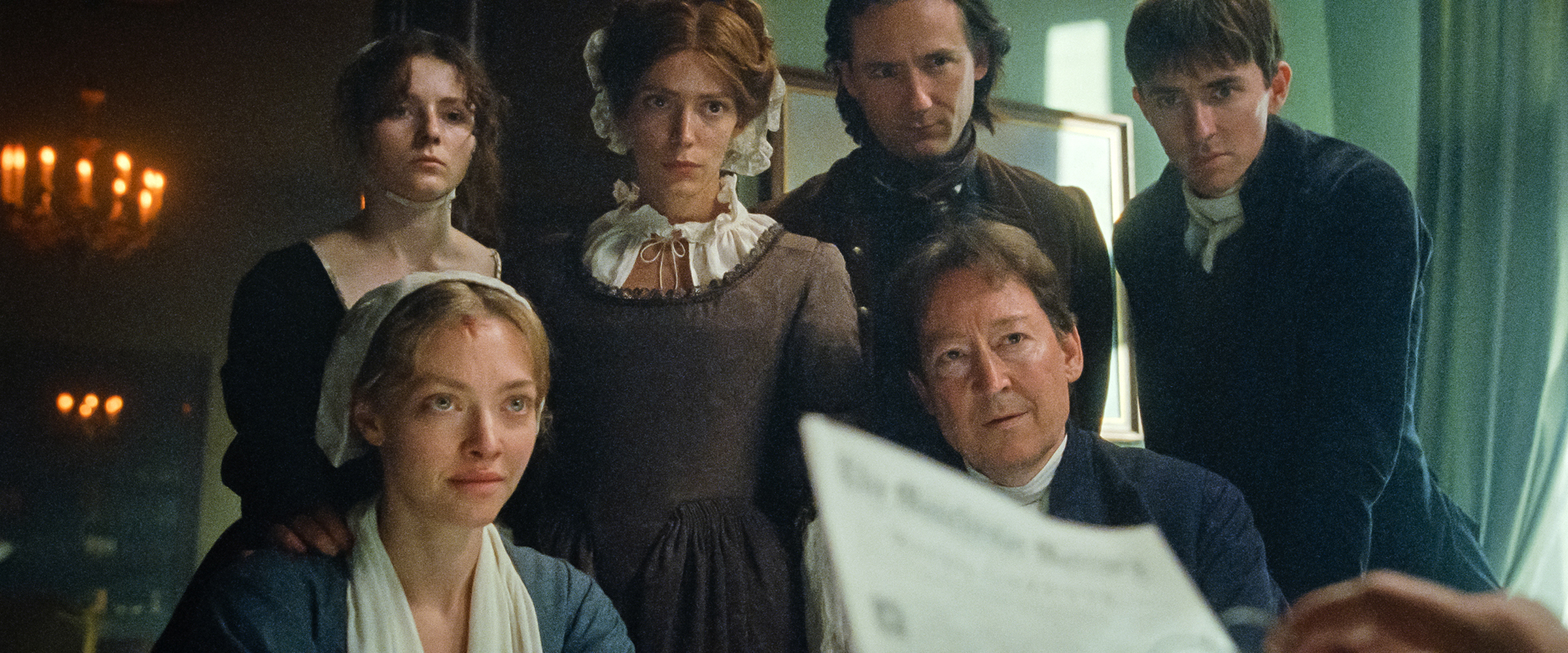
Music is the engine here, not garnish. Fastvold leans into traditional Shaker hymns — reimagined as communal surges of sound — alongside an original score and songs by Daniel Blumberg. The musical sequences rarely arrive as traditional numbers with clear beginnings or endings; instead, the hymns emerge organically from the world itself, rising from the group or from Ann’s internal state rather than interrupting the narrative flow. Blumberg reshapes hymn structures into something raw and emotionally charged, favoring spiritual intensity over polished musicality. Songs such as “Clothed by the Sun” and “Hunger & Thirst” stand out less for spectacle than for character insight, with vocals that feel strained and searching, capturing urgency rather than conventional beauty. That said, the musical density can occasionally overwhelm. The layered sound design creates an immersive atmosphere, but the sustained force of it sometimes risks flattening emotional variation, as if the trance-like momentum forgets the dramatic power of silence.
Under the hymns and historical sweep, this is fundamentally a story about grief — and how grief can shape belief. Ann’s journey is defined by loss, and by how private suffering becomes shared purpose within a community. Fastvold avoids framing Ann’s rise as simple manipulation; instead, she portrays it as a deeply human response to suffering — the need to find meaning, structure, and some explanation for pain. The story also engages thoughtfully with gender and social equality, not as modern commentary imposed on the past, but as a genuine force of disruption within the world itself. Ann’s authority is both spiritual and political, and the film remains keenly aware that any “utopia” is always haunted by hierarchy — even when it claims to erase it.
There’s also a tension the story never lets the audience forget: the Shakers’ ideals of purity and celibacy exist alongside deeply physical worship. It lives in that paradox — desire transmuted into devotion, bodies becoming instruments, ecstasy framed as holiness.
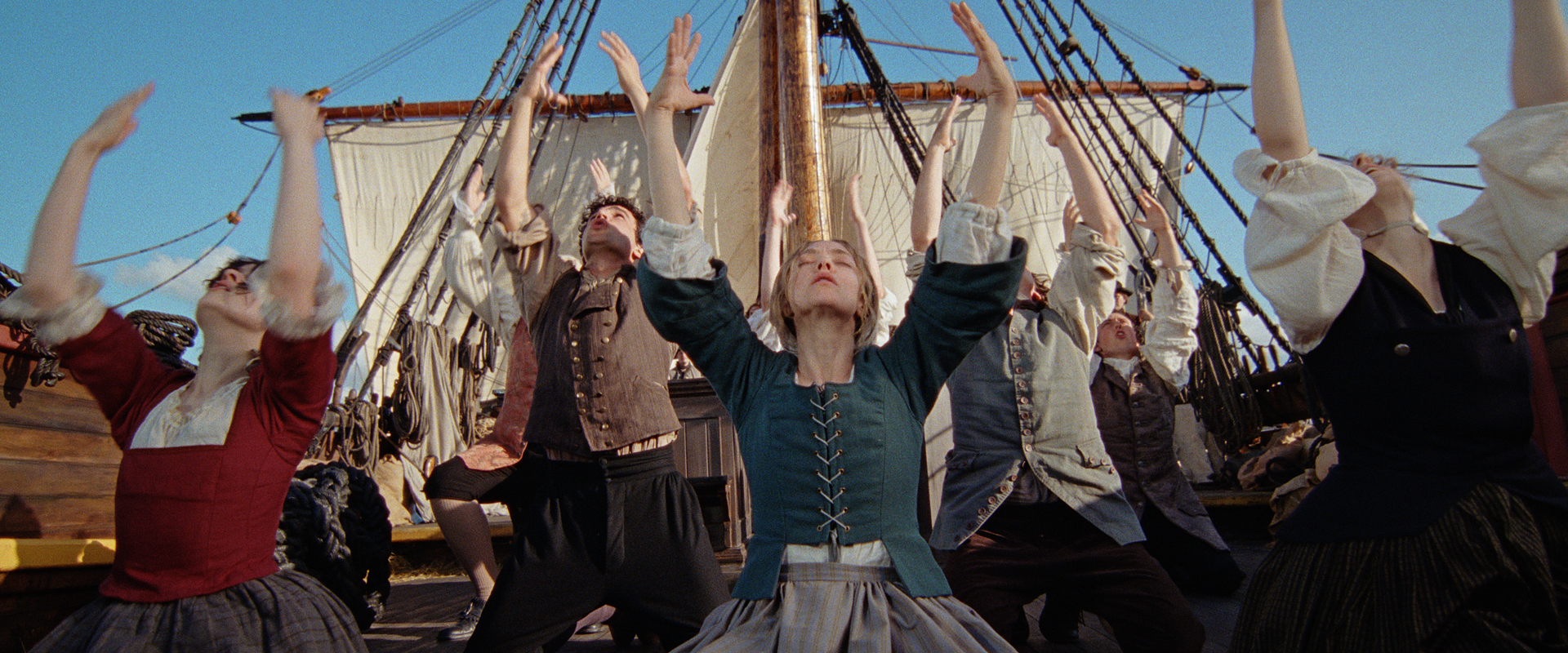
In terms of its look, the project is striking in a grounded, tactile way. The camera often feels embedded within the community, moving through rituals before pulling back to reveal the ordered simplicity of Shaker life — a balance that reinforces both emotional immediacy and communal discipline. The visual style avoids a polished, museum-like period aesthetic, opting instead for something lived-in and immediate. Costume designer Małgorzata “Gosia” Karpiuk’s work is central to that authenticity. The modest, period-inspired garments reflect the Shakers’ philosophy while allowing the physicality of the performances to remain fluid and expressive. Simple in palette but rich in texture, the costumes quietly reinforce themes of labor, ritual, and devotion, complemented by production design that leans towards organic realism over decorative display.
Ultimately, the movie belongs to Amanda Seyfried, who delivers a performance of remarkable precision and emotional range. What distinguishes her work here is not simply force but control; she shifts seamlessly between spiritual iconography and fragile humanity, embodying both the mythic figure her followers see and the exhausted individual beneath that projection. Her singing — raw, searching, and at times almost wild — avoids polished theatricality, instead conveying the sense of a voice straining toward revelation. It is a portrayal that embraces contradiction, suggesting both transcendence and the heavy personal cost of belief.
The supporting cast provides strong grounding around her. Lewis Pullman, as Ann’s brother William Lee, brings a quiet devotion that anchors some of the more abstract moments, while Thomasin McKenzie’s Mary Partington — who serves as both follower and narrative voice — adds a sense of reflective distance that helps frame Ann’s legacy. Christopher Abbott gives Ann’s husband, Abraham Standerin, a tense unpredictability that underscores the personal cost of her spiritual transformation, and Tim Blake Nelson delivers a measured, authoritative turn as Pastor Reuben Wight, embodying institutional resistance without slipping into caricature. David Cale, as fellow believer John Hocknell, introduces a note of understated comic relief, his warmth and gentle humor providing brief moments of levity without diminishing the gravity of the story. Together, the ensemble maintains emotional credibility even when the storytelling leans into more experimental territory.
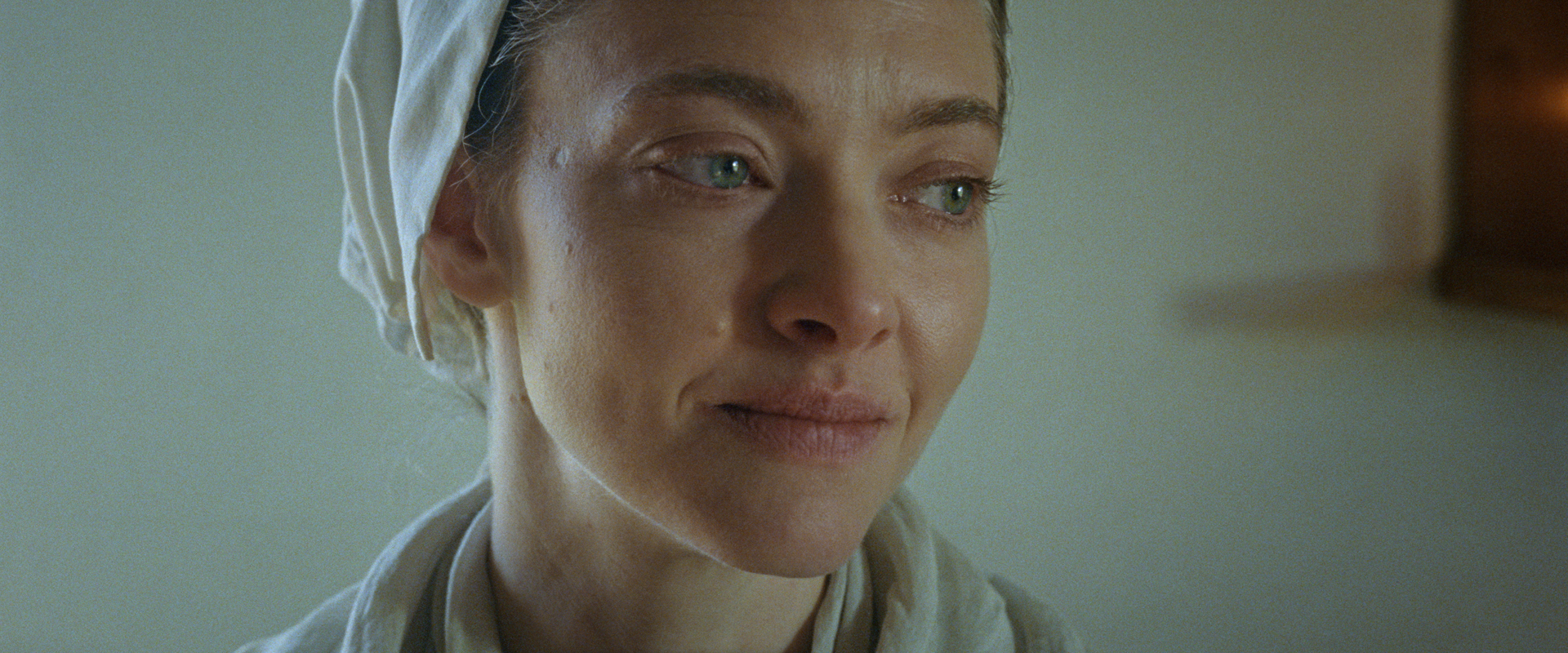
The Testament of Ann Lee is a bold, immersive piece of filmmaking — part biopic, part ritual, part fever-dream musical. Frequently arresting and anchored by an exceptional performance from Seyfried, it lingers long after the final frame. Yet it remains deliberately demanding and structurally unorthodox; those drawn to conventional pacing or clearly signposted narrative arcs may find it more admirable than immediately accessible. In the end, it stands as an act of cinematic devotion — deeply moving for those willing to surrender to its rhythm, but unlikely to convert non-believers.
4 / 5 – Recommended
Reviewed by Dan Cachia (Mr. Movie)
The Testament of Ann Lee is distributed by 20th Century Fox Australia
 Mr. Movie's Film Blog